
Environmentally friendly polyurethanes based on non-isocyanate synthesis
Afsoon Farzan, Sedigheh Borandeh , Hossein Baniasadi, Jukka Seppälä
, Hossein Baniasadi, Jukka SeppäläVol. 18., No.1., Pages 88-101, 2024
DOI: 10.3144/expresspolymlett.2024.7
DOI: 10.3144/expresspolymlett.2024.7
Corresponding author: Jukka Seppälä 
GRAPHICAL ABSTRACT
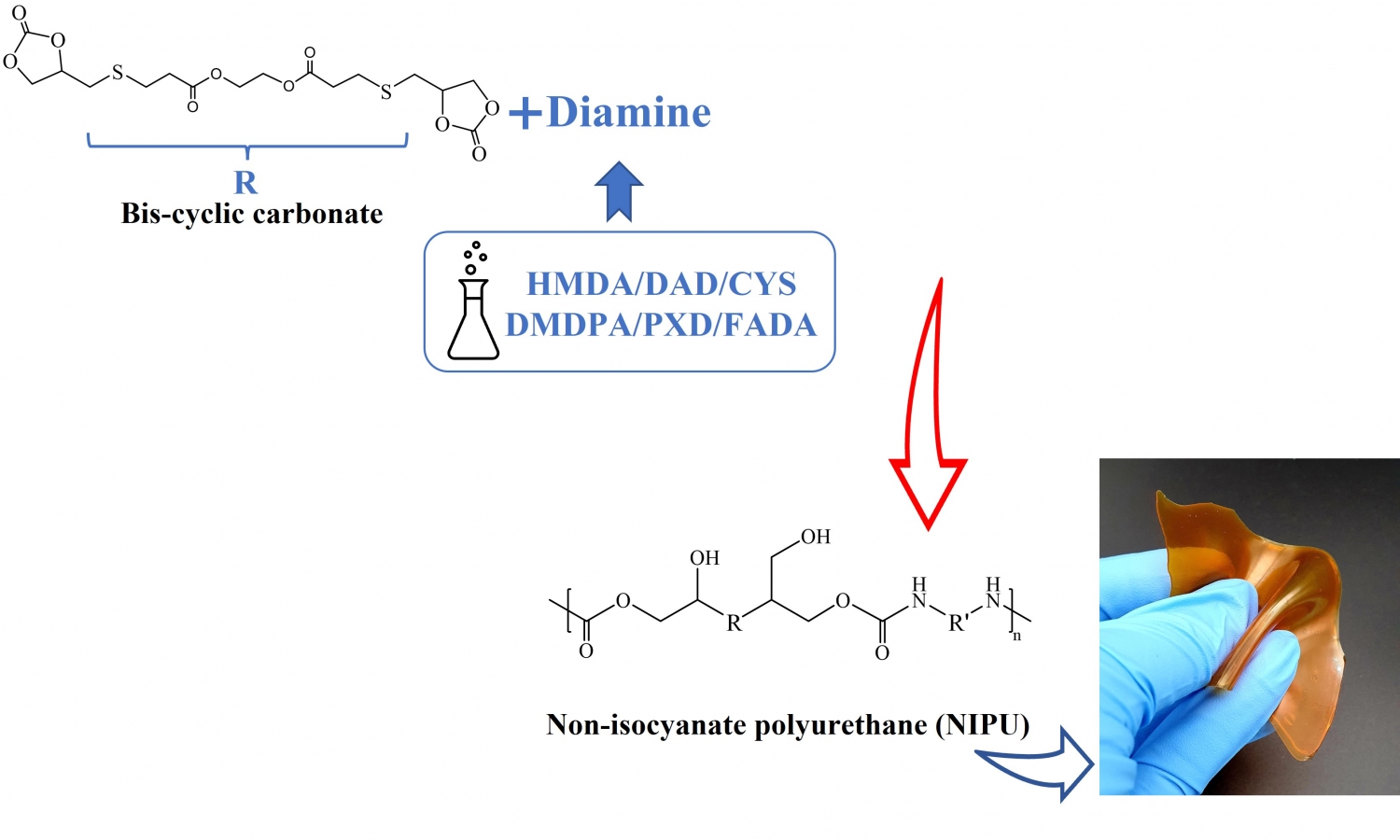
ABSTRACT
A series of environmentally friendly non-isocyanate polyurethanes (NIPUs) was synthesized through a polycondensation reaction of as-synthesized semi-bio-based bis-cyclic carbonate with diamine derivatives. The synthesis of biscyclic carbonate was realized, for the first time, from 1-thioglycerol and polyethylene glycol diacrylate via thiol-ene click and transcarbonation reaction, respectively. The impacts of using different diamine derivatives on the chemical structural, mechanical properties, thermal stability, and surface wettability of the NIPUs were determined. It was found that the NIPU containing fatty acid-based diamine decomposed at a lower temperature than that of other polymers. Besides, it demonstrated a lower Young’s modulus and a higher tensile strain at break, possibly due to its four-branched structure and greater flexibility. Meanwhile, the NIPU prepared with p-xylylenediamine provided the highest decomposition temperature, owing to an aromatic moiety in the polymer’s backbone, which improved its stiffness and thermal stability. Furthermore, it was understood that the NIPU containing diamino-N-methyldipropyl-amine exhibited a higher Young’s modulus and a lower tensile strain at break, as it had a nitrogen atom in its structure and a trigonal pyramidal configuration with the highest density of hydrogen bonds between polymer chains. Most of the developed NIPUs displayed hydrophobic surface properties, offering promising alternatives to isocyanate-based coating materials.
RELATED ARTICLES
Tiantian Han, Jingen Li, Chang Li
Vol. 20., No.7., Pages 708-723, 2026
DOI: 10.3144/expresspolymlett.2026.54
Vol. 20., No.7., Pages 708-723, 2026
DOI: 10.3144/expresspolymlett.2026.54
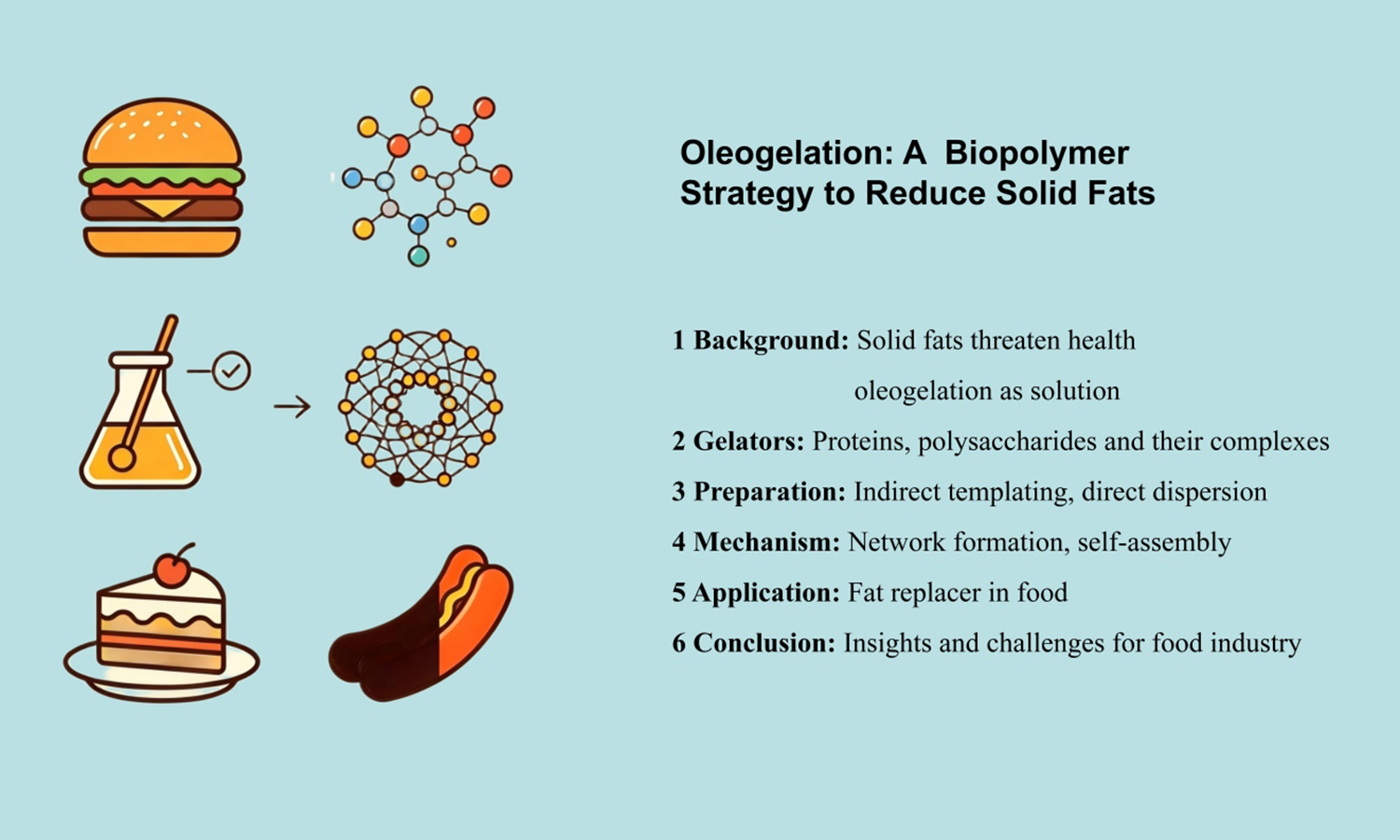
An excessive intake of high-fat foods may pose a threat to human health. Oleogelation provides a promising strategy to reduce trans and saturated fatty acids in solid fats. Compared with small-molecule gelators, macromolecular gelators, particularly proteins, polysaccharides and their complexes are more suitable for this purpose. In this review, we systematically discuss the development potential of biopolymer-based oleogels. First, we elaborate the application of proteins, polysaccharides and their complexes as gelling agents. Second, despite the inherent hydrophilicity of these biopolymers, significant progress has been made in developing various preparation approaches, ranging from indirect templating strategies to direct dispersion methods. Third, we briefly discuss the underlying structuring mechanisms of these oleogels. Subsequently, we review their applications as fat replacers in specific food products. Finally, we present the conclusions and remaining challenges in this field. We aim to provide valuable insights into the utilization of biopolymer-based oleogels in the food industry.
Evangelia Balla, Panagiotis Klonos, Apostolos Kyritsis, Dimitrios Bikiaris
Vol. 20., No.2., Pages 154-167, 2026
DOI: 10.3144/expresspolymlett.2026.13
Vol. 20., No.2., Pages 154-167, 2026
DOI: 10.3144/expresspolymlett.2026.13
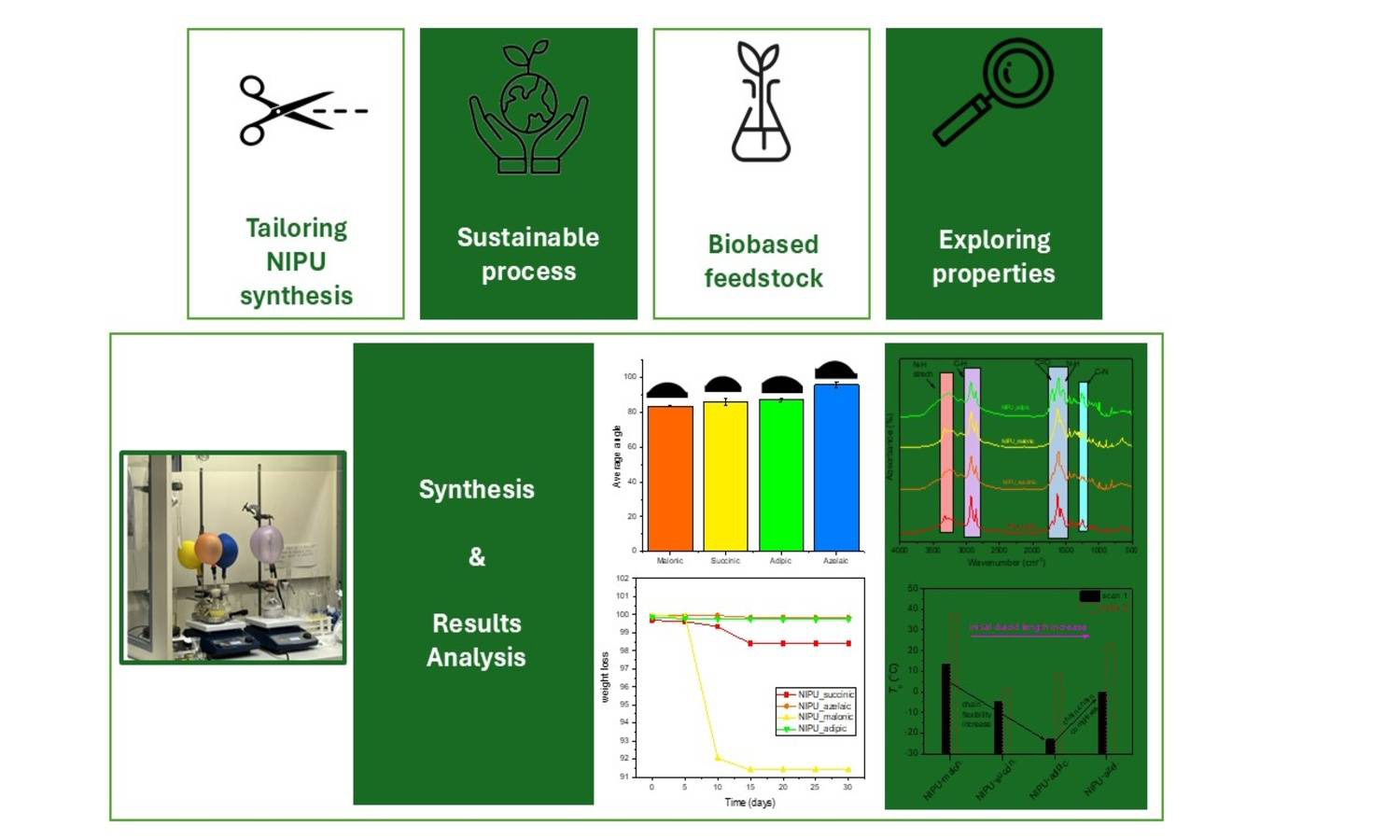
In recent decades, numerous efforts have been dedicated to the investigation of eco-friendly non-isocyanate polyurethanes (NIPUs) as alternatives to conventional polyurethanes (PUs). Since isocyanates are classified by the EU as hazardous and toxic compounds, NIPUs offer a promising route to mitigate isocyanate-related health risks as well as other environmental concerns associated with traditional PU synthesis. In the present study, we report the synthesis as well as the detailed structural and thermal characterization of a new series of fully biobased non-isocyanate polyurethanes (NIPUs) based on aliphatic dicarboxylic acids of different chain lengths. The NIPUs were prepared via a two-step polyaddition reaction involving glycerol carbonate and diamine. Their synthesis enables a sustainable pathway to tailor NIPUs’ physicochemical properties via diacid structure control. Studies of their structure, thermal behavior and trends, morphological, and hydrolytic findings confirmed strong diacid chain length dependence on glass transition temperature (Tg ~13, 0, ‒5 and –23 °C), molecular weight, surface wettability, and enzymatic degradability. Short-chain diacids yielded NIPUs with rapid hydrolytic degradation, while their longer-chain analogs were hydrophobic and thermally stable. Contact angle measurements (~75–85°) also confirm these trends. The tunable properties position these materials among strong candidates for biomedical applications.
Emir Avcioglu
Vol. 19., No.1., Pages 3-14, 2025
DOI: 10.3144/expresspolymlett.2025.2
Vol. 19., No.1., Pages 3-14, 2025
DOI: 10.3144/expresspolymlett.2025.2
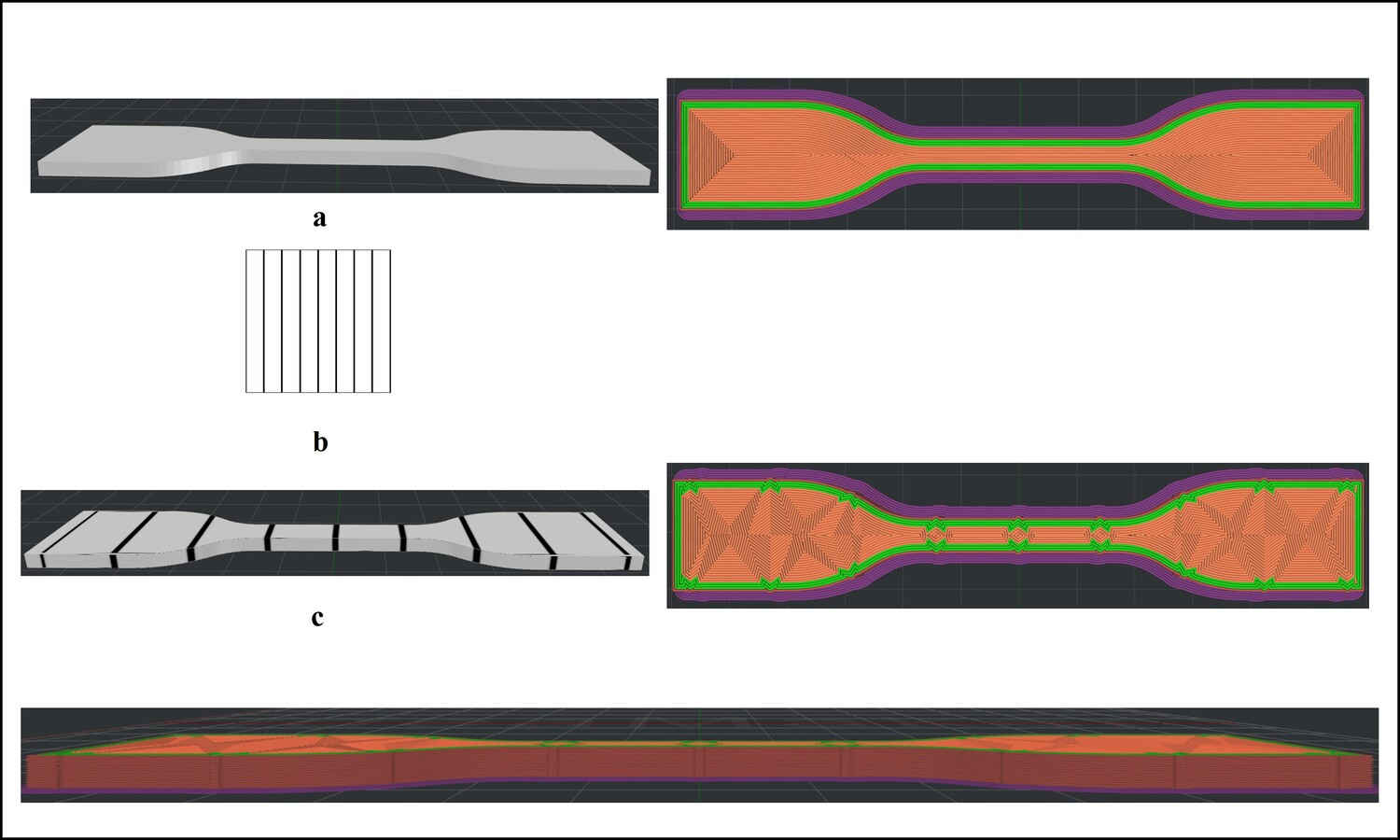
Additive manufacturing is favored for its capacity to create intricate geometries and enhance component functionality more efficiently than traditional methods. Applying texture to materials is one of the processes used to add functionality to products, wherein it can improve adhesion and tribological behavior in biomedical applications while also controlling mechanical properties and providing perceptual and aesthetic improvements. In this study, custom black-white images containing vertical lines were prepared and added as textures to the design of tensile test specimens during slicing. Custom textured and untextured tensile test specimens were fabricated using the Fused Deposition Method with polylactic Acid filament to evaluate the effect of texture parameters, such as protrusion offset (0.25, 0.50, 0.75 mm), number of protrusions (3, 6) and infill pattern (rectilinear, line, concentric), on the tensile strength of the specimens. Through the analysis of tensile test results and examination of microscopic and slicing software images, it was found that texturing resulted in a reduction in ultimate tensile strength due to nozzle trajectory deviations and stress concentration. The least detrimental texturing parameters observed in this study were 0.5 mm protrusion offset and 3 protrusions with concentric and line infill patterns, resulting in a reduction in tensile strength of 2.36 and 5.79%, respectively when compared to untextured specimens.