Heat-sealable paper fabricated using a latex coating based on modified natural rubber filled with gelatin
Rattanawadee Ninjan , Bencha Thongnuanchan, Natinee Lopattananon, Subhan Salaeh, Phakawat Thongnuanchan, Pornsuwan Buangam
, Bencha Thongnuanchan, Natinee Lopattananon, Subhan Salaeh, Phakawat Thongnuanchan, Pornsuwan BuangamVol. 18., No.11., Pages 1077-1093, 2024
DOI: 10.3144/expresspolymlett.2024.83
DOI: 10.3144/expresspolymlett.2024.83
Corresponding author: Bencha Thongnuanchan 
GRAPHICAL ABSTRACT
ABSTRACT
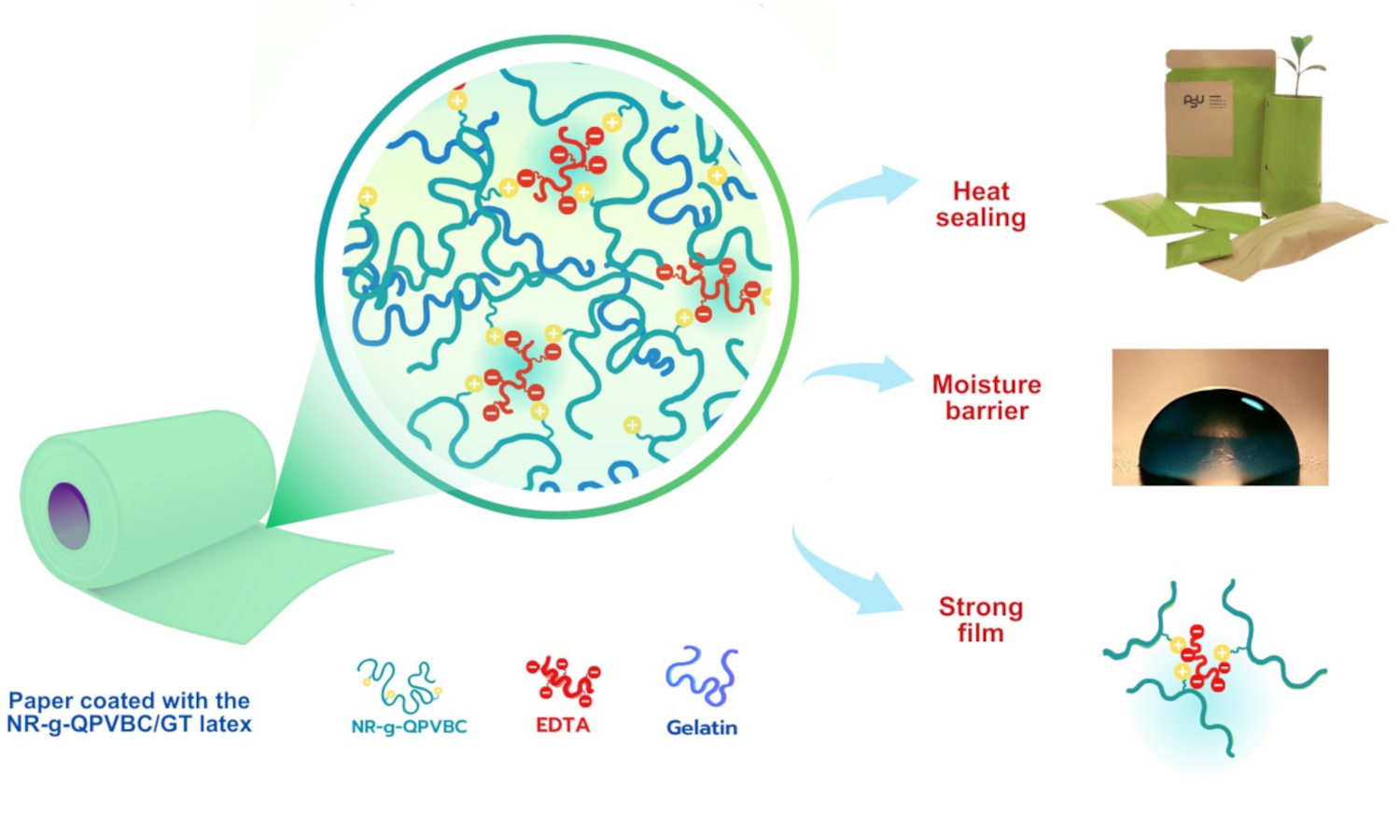
Research into sustainable packaging materials has gained increasing importance due to the pressing environmental concerns related to plastic waste. The present study focused on developing a sustainable paper coating based on modified natural rubber (NR) latex filled with gelatin (GT). The graft copolymer latex of NR and poly(vinylbenzyl chloride) bearing quaternary ammonium groups, abbreviated as NR-g-QPVBC, was first synthesized. GT was then incorporated into the latex, and the combination of these materials resulted in a heat-sealable film with good tensile properties and a water barrier. The ionic crosslinking of the latex film was achieved by the reaction with ethylenediaminetetraacetic acid (EDTA). Heat-sealing studies of the NR-g-QPVBC latex film filled with GT (NR-g-QPVBC/GT) revealed its heat-sealability at 160 °C. Scanning electron microscope (SEM) analysis further confirmed the diffusion of the chains across the interface during heat sealing. Dip coating was a method for depositing latex film on kraft paper. The paper coated with the NR-g-QPVBC/GT latex showed a significant increase in dry and wet-tensile strength compared to the uncoated paper. The sealing process was optimized to achieve a heat-seal strength of 755.31 N/m at a dwell time of 3 s and a temperature of 160 °C. The research's practical application was demonstrated by transforming the coated paper into various heat-sealable bags using a handheld bag sealer.
RELATED ARTICLES
Nabil Hayeemasae, Siriwat Soontaranon, Abdulhakim Masa
Vol. 20., No.7., Pages 664-676, 2026
DOI: 10.3144/expresspolymlett.2026.50
Vol. 20., No.7., Pages 664-676, 2026
DOI: 10.3144/expresspolymlett.2026.50
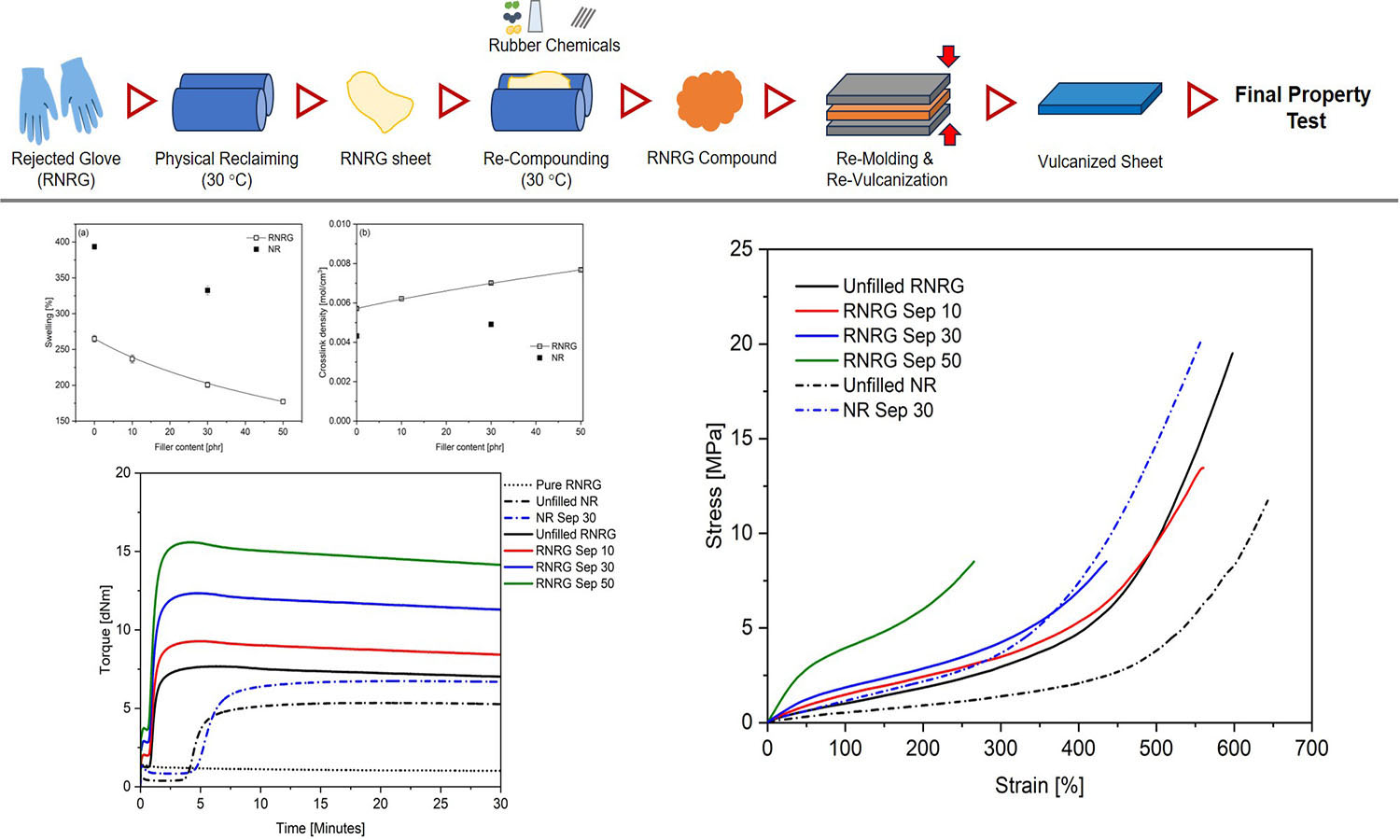
We investigated the possibility of applying rejected natural rubber gloves (RNRGs) as a matrix for rubber composites filled with sepiolite. The virgin natural rubber (NR) samples were also prepared for comparison. Clearly, the RNRGs can be re-mixed with rubber chemicals, re-shaped, and revulcanized. Maximum torque increased with sepiolite loading during vulcanization, along with stress at 100 and 300% strains and strain-induced crystallization ability, whereas the tensile strength and elongation at break of the RNRG composites exhibited an opposite trend. The unfilled RNRG possessed high tensile strength (~19.86 MPa) and extensibility (~600%), which was about 67% higher than that of the unfilled NR sample. However, increased sepiolite loading decreased the thermomechanical properties of the RNRG composites because the RNRG had undergone vulcanization before re-mixing and revulcanizing; the NR-based composite showed the opposite trend. Based on the results, the RNRGs can be re-used as the rubber matrix of rubber compounds when thermal properties are not critical.
Wu Qin, Rui Zhang, Long Zheng, Danling Wang, Sheng Chen, Huiming Ren, Shui Hu, Shipeng Wen
Vol. 20., No.6., Pages 551-562, 2026
DOI: 10.3144/expresspolymlett.2026.42
Vol. 20., No.6., Pages 551-562, 2026
DOI: 10.3144/expresspolymlett.2026.42
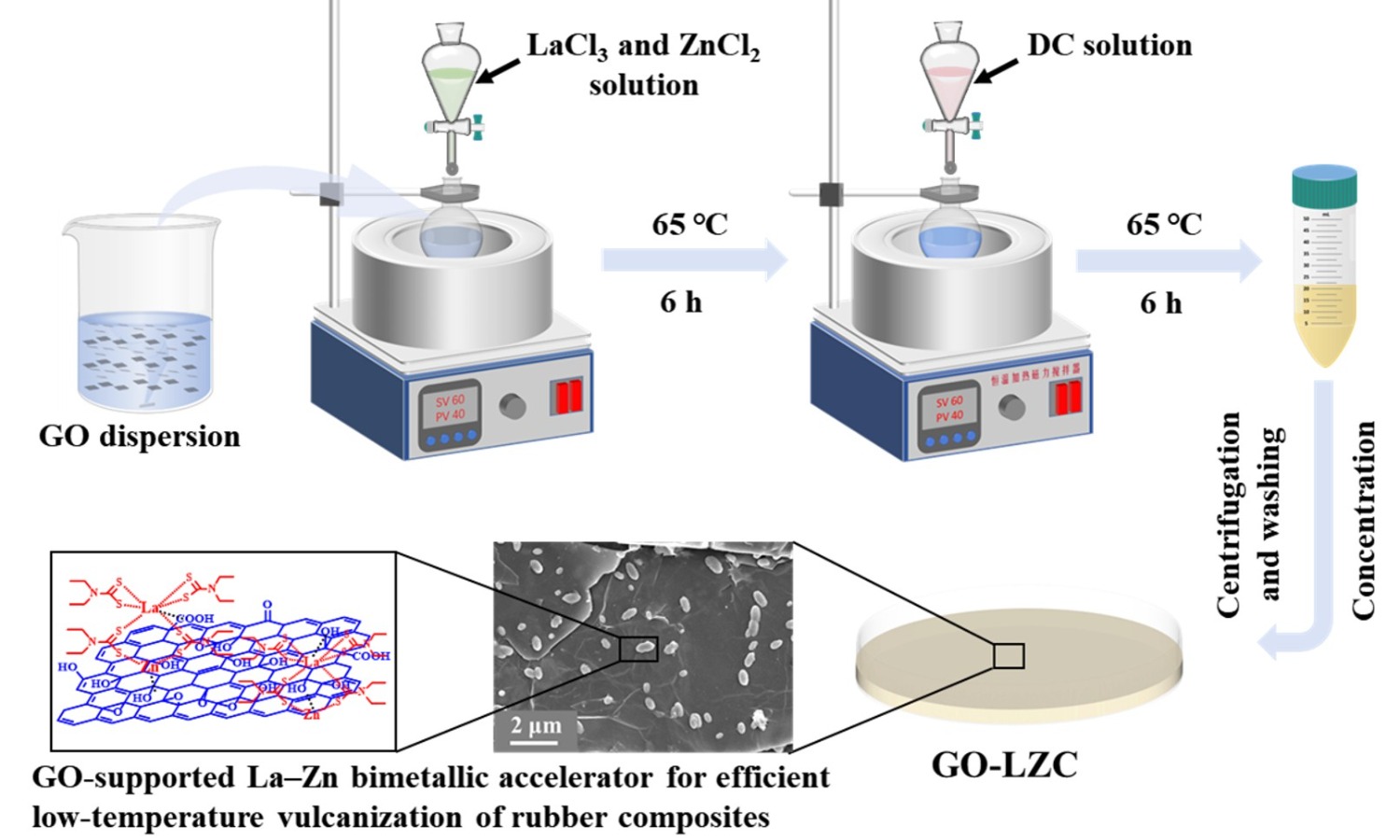
Conventional sulfur vulcanization in rubber manufacturing depends on elevated curing temperatures and zinc oxide activators, resulting in high energy consumption and increasing environmental concerns associated with zinc release. To overcome these limitations, a novel graphene oxide (GO)-supported rare-earth-containing accelerator (GO–LZC) was designed by coordinating lanthanum(III) and zinc(II) ions with sodium diethyldithiocarbamate (DC). At the same time, the oxygen-containing groups on GO further participated in ligand coordination. The resulting GO-immobilized complex exhibits a well-defined chelating structure and uniform nanoscale dispersion, which together enhance the accessibility and reactivity of active sulfurating species during curing. When incorporated into solution-polymerized styrene–butadiene rubber (SSBR), GO–LZC markedly promotes crosslink formation at reduced thermal input. Kinetic analysis reveals a substantial decrease in the apparent activation energy, and curing and mechanical tests confirm that efficient vulcanization can be achieved at 130 °C, representing a 20–40 °C reduction relative to typical industrial curing conditions. This work demonstrates a viable strategy for developing low-zinc, energy-efficient, and high-performance vulcanization systems. It highlights the potential of rare-earth/GO hybrid catalysts for sustainable rubber processing.
Using dual-cure architectures in HNBR: A detailed insight into their structure-property relationship
Sharmistha Dhar, Arshad Rahman Parathodika, Dibyendu Dey, Kinsuk Naskar
Vol. 20., No.5., Pages 514-530, 2026
DOI: 10.3144/expresspolymlett.2026.39
Vol. 20., No.5., Pages 514-530, 2026
DOI: 10.3144/expresspolymlett.2026.39
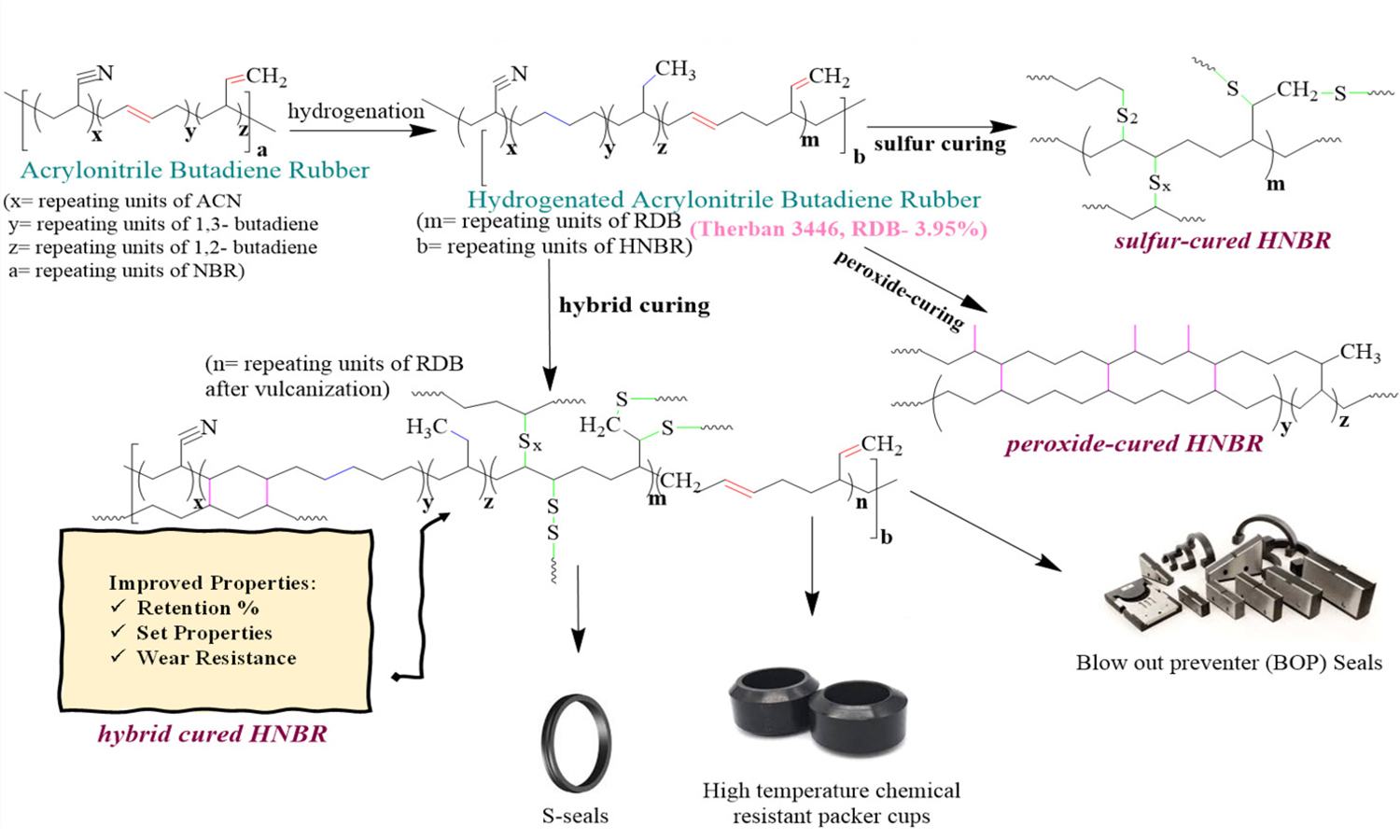
Hydrogenated acrylonitrile–butadiene rubber (HNBR) is widely used in automotive and sealing applications due to its oil resistance and mechanical durability; however, its long-term performance is significantly influenced by the curing chemistry. Sulfur vulcanization offers superior elasticity but restricted thermal stability, while peroxide curing improves heat resistance at the expense of flexibility. In this study, we investigate hybrid sulfur–peroxide curing to integrate these benefits. The hybrid pathway encompasses competitive and sequential processes, such as partial radical quenching and accelerator oxidation, resulting in a dual crosslink network. Dynamic mechanical, thermal, and temperature scanning stress relaxation (TSSR) evaluations demonstrate that hybrid systems provide precise modulation of the operational temperature–frequency range, broaden the glass-transition relaxation, and control stress dissipation. The coexistence of sulfur and C–C crosslinks results in a heterogeneous structure characterized by diverse crosslink densities and bond energies, leading to numerous relaxation modes and an optimal blend of elasticity, strength, and thermal stability. Microscopy confirms the absence of phase separation, indicating that hybrid vulcanization is a viable approach for producing robust, high-performance HNBR elastomers.
Dibyendu Dey, Sharmistha Dhar, Barkat Aziz, Sambhu Bhadra, Sujith Nair, Kinsuk Naskar
Vol. 20., No.2., Pages 127-141, 2026
DOI: 10.3144/expresspolymlett.2026.11
Vol. 20., No.2., Pages 127-141, 2026
DOI: 10.3144/expresspolymlett.2026.11
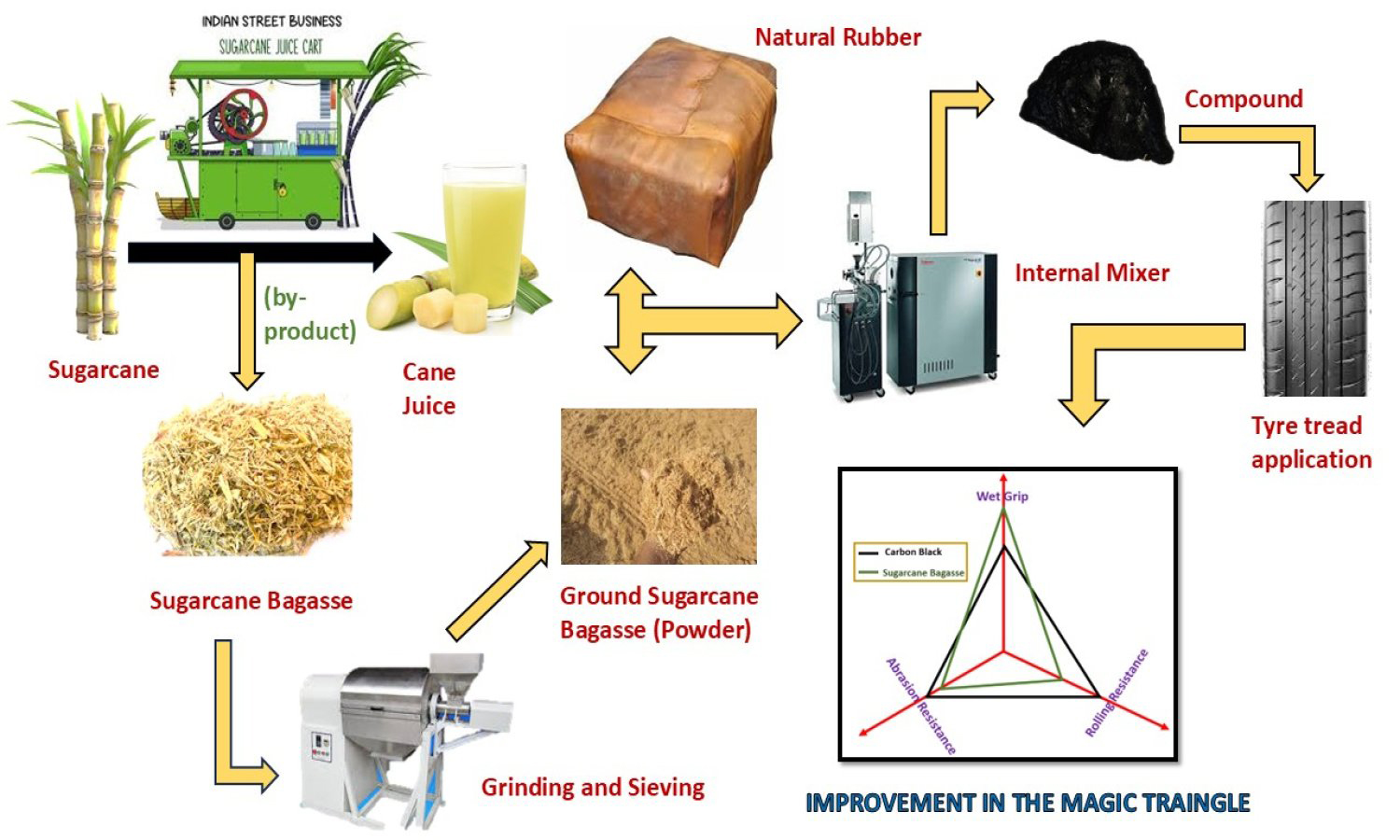
Ground sugarcane bagasse (GSB), an agro-waste rich in lignocellulosic components, was studied as a sustainable bio-filler in natural rubber (NR) tread compounds to lessen reliance on petroleum-derived carbon black (CB). A control formulation with 45 phr CB was compared to hybrid formulations with 40, 35, and 30 phr CB mixed with 5, 10, and 15 phr GSB. Tensile strength 13.1 MPa, elongation at break 700%, and hardness 67 Shore A were all optimally balanced by the compound containing 10 phr GSB (S2), while also exhibiting good cure behavior and thermal stability. Improved tire performance characteristics were confirmed by a dynamic mechanical study, which showed that tan δ at 60 °C decreased by 8.0% (resulting in lower rolling resistance) and increased by 3.9% (improving wet traction) at 0°C. The Payne effect showed improved filler dispersion as a result of GSB partially replacing CB. The results show that appropriately dispersed GSB can partially reinforce NR, enhancing energy efficiency and sustainability. However, larger GSB loadings decrease modulus, tear strength, and abrasion resistance due to lower interfacial adhesion and the presence of micro-voids. According to this study, pulverized sugarcane bagasse shows promise as an environmentally friendly filler for green tire applications, promoting the circular economy and lowering the carbon footprint of rubber compounding.
Xavier Colom, Scott Martínez, Fernando Carrillo-Naverrete, Javier Cañavate
Vol. 20., No.2., Pages 114-126, 2026
DOI: 10.3144/expresspolymlett.2026.10
Vol. 20., No.2., Pages 114-126, 2026
DOI: 10.3144/expresspolymlett.2026.10
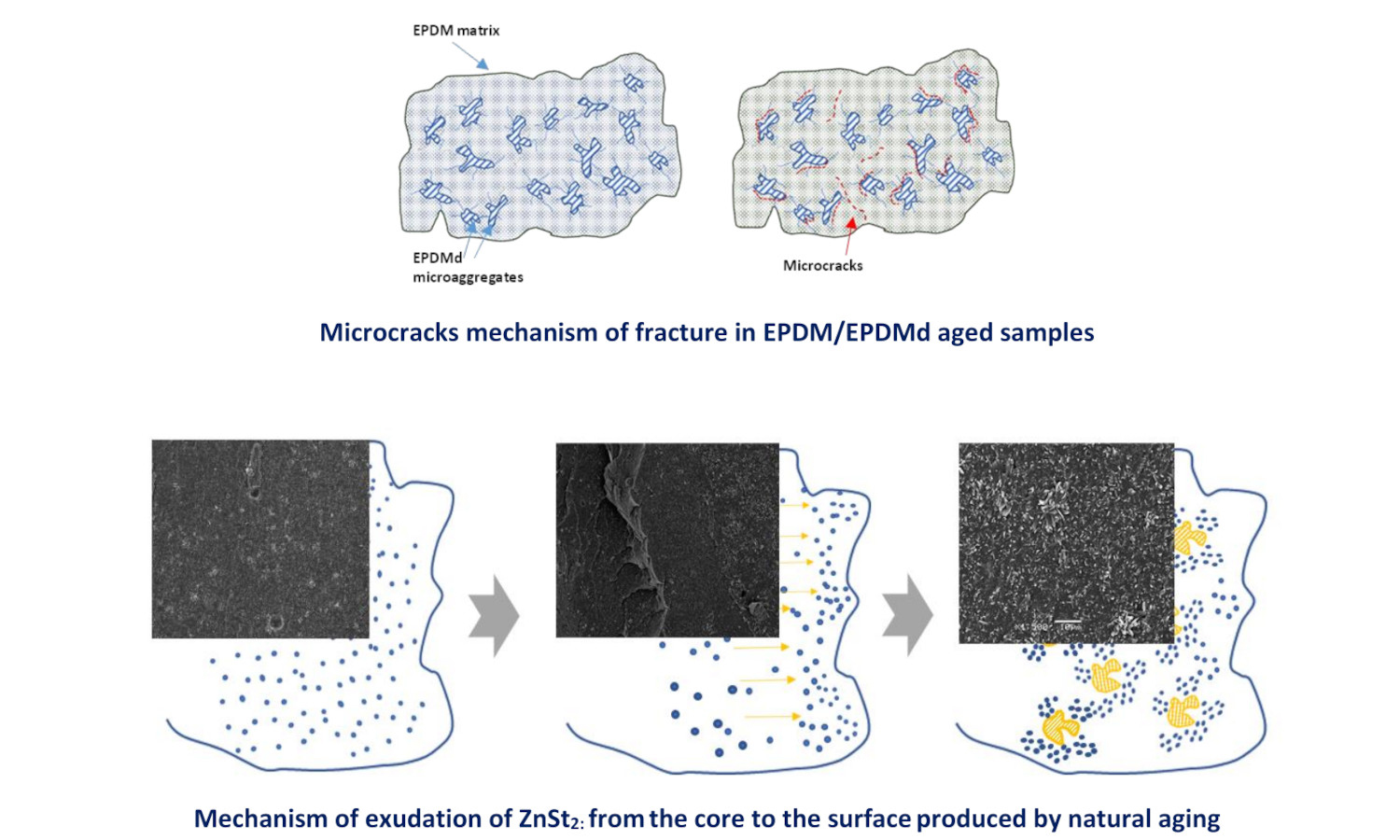
The need to recycle elastomeric waste requires studying its viability in industrial applications. This study investigates the feasibility of recycling elastomeric waste by analyzing whether virgin ethylene-propylene-diene monomer (EPDM) can be replaced by blends of virgin EPDM and thermomechanically and microwave devulcanized EPDM (EPDMd) in industrial applications from the perspective of environmental degradation. Two types of samples were examined: conventional EPDM used to roof membranes, and EPDM blended with different amounts (20, 40, and 50 phr) of EPDMd. Samples were subjected to natural aging in coastal and mountainous environments. Results show that mechanical properties decline with higher EPDMd content and, to a lesser degree, with prolonged outdoor exposure. The coastal climate proved more aggressive than the mountainous one when EPDMd content exceeded 40 phr. Zinc stearate (ZnSt2), a byproduct of vulcanization, was found to influence the evolution of the mechanical behavior. The combined analysis of scanning electron microscopy (SEM), Fourier transform infrared spectroscopy (FTIR), abrasion tests, and thermogravimetric analysis (TGA) provided insights into the degradation processes of these elastomeric blends.