
Synthesis and reactivity of self-immolative pDTT-g-pGMA bottlebrush polymer
Marie Uth , Magnus Hansen-Felby, Jakob Rørbæk Saugbjerg, Andreas Sommerfeldt, Sunirmal Pal, Martin Lahn Henriksen, Steen Uttrup Pedersen, Kim Daasbjerg
Vol. 19., No.12., Pages 1216-1225, 2025
DOI: 10.3144/expresspolymlett.2025.90
DOI: 10.3144/expresspolymlett.2025.90
Corresponding author: Steen Uttrup Pedersen 
GRAPHICAL ABSTRACT

ABSTRACT
Post-polymerization modification of self-immolative polymers expands the application spectrum of such macromolecular materials. This work demonstrates grafting of poly(glycidyl methacrylate) brushes from a self-immolative poly(DL-dithiothreitol) backbone using activators regenerated by electron transfer–atom transfer radical polymerization (ARGET–ATRP). The polymerization kinetics of the brushes is studied in detail by 1H NMR and size exclusion chromatography, indicating a linear increase in number-average molecular weight. Furthermore, it is demonstrated that the self-immolative properties of the backbone are retained in the bottlebrush polymers by examining the degradation process in solution.
RELATED ARTICLES
Sofiane Bensadi, Mourad Amara, Omar Arous, Yassine Berbar, Fairouz Saad Saoud
Vol. 20., No.10., Pages 1017-1033, 2026
DOI: 10.3144/expresspolymlett.2026.75
Vol. 20., No.10., Pages 1017-1033, 2026
DOI: 10.3144/expresspolymlett.2026.75
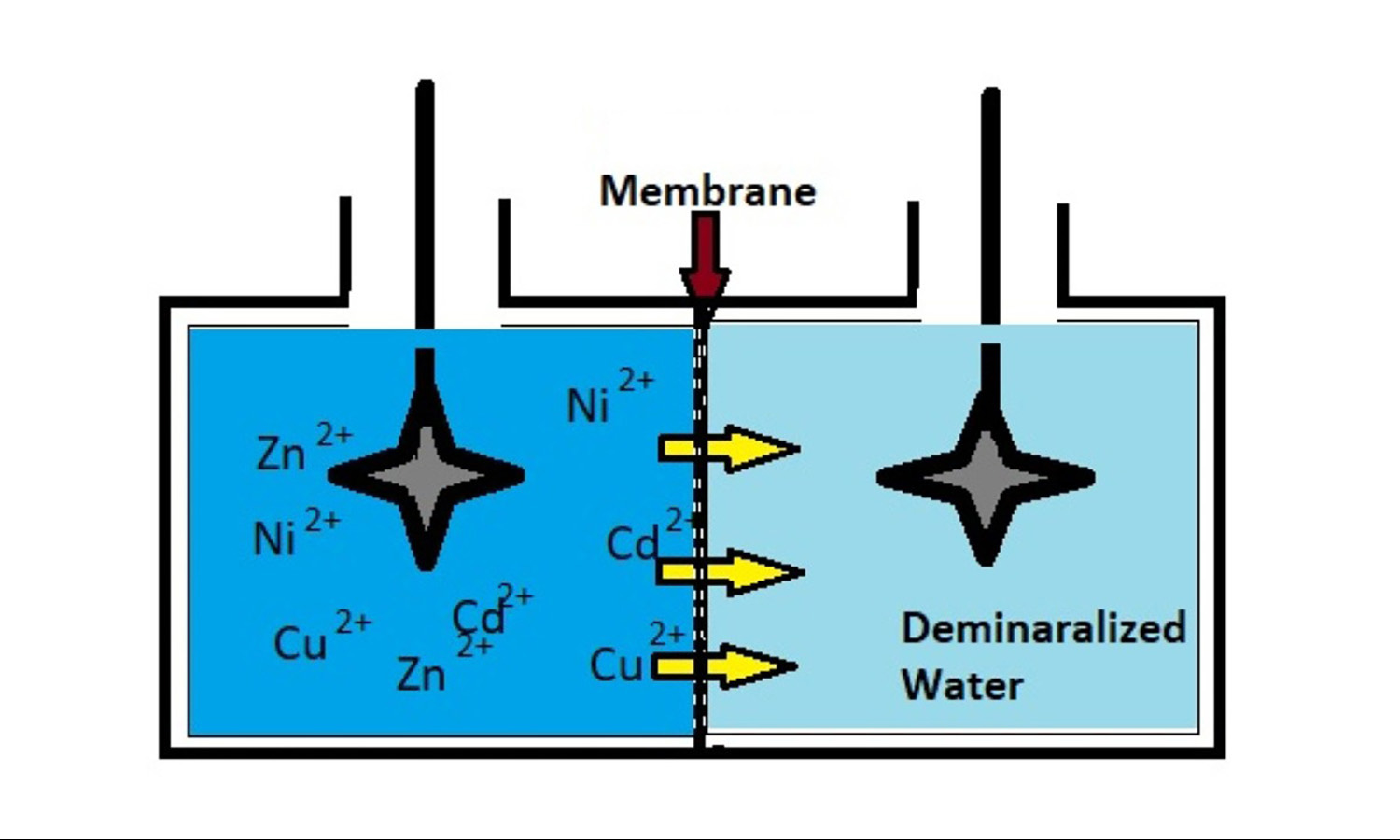
To prepare high-performance dialysis membranes, we investigated the effect of polyvinylpyrrolidone (PVP), polyethylene glycol (PEG), and also the simultaneous effect of both additives in cellulose triacetate (CTA) membranes. In this study, we investigate the transfer and fixation phenomena of Cu2+, Ni2+, Cd2+ and Zn2+ ions into dialysis membranes. We prepared three CTA-based membranes with different concentrations of the [PVP/(PVP+PEG)] ratio, and evaluated the impact of this ratio on membrane performance by dialysis with cationic solutions. All the membranes were characterized by Fouriertransform infrared spectroscopy (FTIR), thermogravimetric analyses (TGA) and scanning electron microscopy (SEM). The membrane with a higher [PVP/(PVP+PEG)] ratio exhibited superior transfer efficiency compared to the other membranes, 56.11 and 47.87% of Cd2+ and Cu2+, respectively. Significant amounts of metal ions were fixed by the membranes. Cu2+ and Zn2+ ions had fixation rates of 27.54 and 26.45%, respectively, obtained with a [PVP/(PVP+PEG)] ratio of 0.8. To explain the phenomenon of metal ion fixation by membranes, we performed a study of the behaviour of PVP in solutions in the presence of metallic ions using potentiometric methods. We found that interactions can form between PVP and metallic ions present in the solution in an order that follows the sequence: Cu2+ > Zn2+ > Ni2+ > Cd2+.