
Effect of cold-resistant plasticizer with different acid chain lengths on the cold-resistant properties of PVC: Experiments and MD simulations
Xue Xu, Rujie Li, Li Gao, Beibei Sun, Hongming Liu, Shiai Xu
Vol. 19., No.9., Pages 959-976, 2025
DOI: 10.3144/expresspolymlett.2025.72
DOI: 10.3144/expresspolymlett.2025.72
Corresponding author: Shiai Xu 
GRAPHICAL ABSTRACT
ABSTRACT
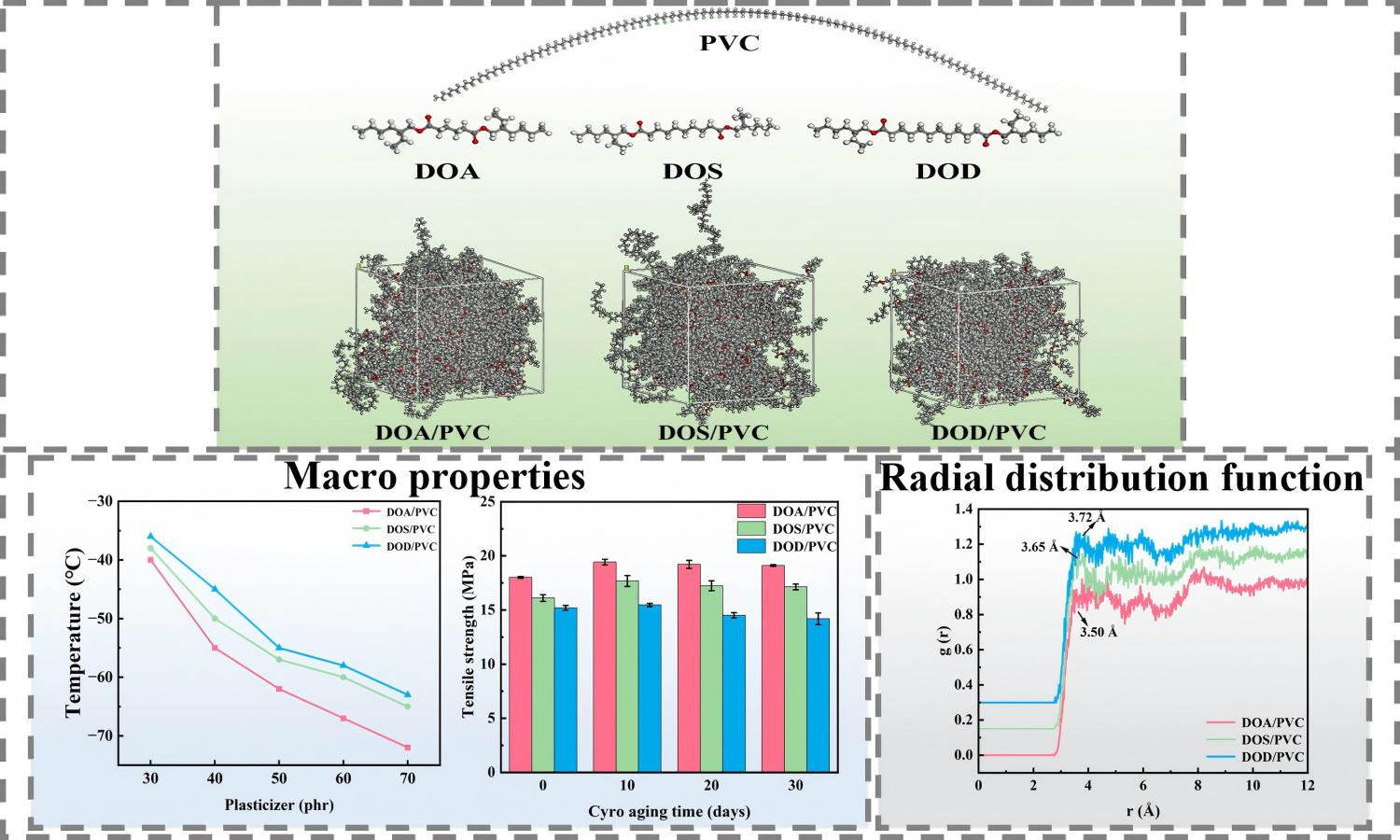
As polyvinyl chloride (PVC) films are hard and brittle in a low-temperature environment, aliphatic dibasic acid ester plasticizers with different acid chain lengths were fabricated, i.e. di(2-ethylhexyl) adipate (DOA), di(2-ethylhexyl) sebacate (DOS) and dioctyl dodecanedioate (DOD), and their effects on the cold-resistant properties of PVC were investigated using experiments and molecular dynamics (MD) simulations. The brittleness temperature and tensile properties of plasticizers/PVC are negatively related to the acid chain length of the aliphatic dibasic acid esters. The brittleness temperatures of the three systems are all below –50 °C. In-situ low-temperature tensile tests and aging tests indicate that DOA/PVC exhibits the best cold resistance and stability. MD simulations further reveal that the best compatibility between DOA and PVC is attributed to its strong binding energy and weak hydrogen bonding interactions, while van der Waals forces are dominant in DOS/PVC and DOD/PVC. This study elucidates the structure-property relationship between aliphatic dibasic acid ester plasticizers and PVC from the perspective of molecular interactions, and provides insights into the design of cold-resistant PVC plasticizers.
RELATED ARTICLES
Kaja Kupnik, Jure Dobnik, Patricija Skrivarnik, Rebeka Lorber, Irena Pulko, Janez Slapnik
Vol. 20., No.5., Pages 454-472, 2026
DOI: 10.3144/expresspolymlett.2026.35
Vol. 20., No.5., Pages 454-472, 2026
DOI: 10.3144/expresspolymlett.2026.35
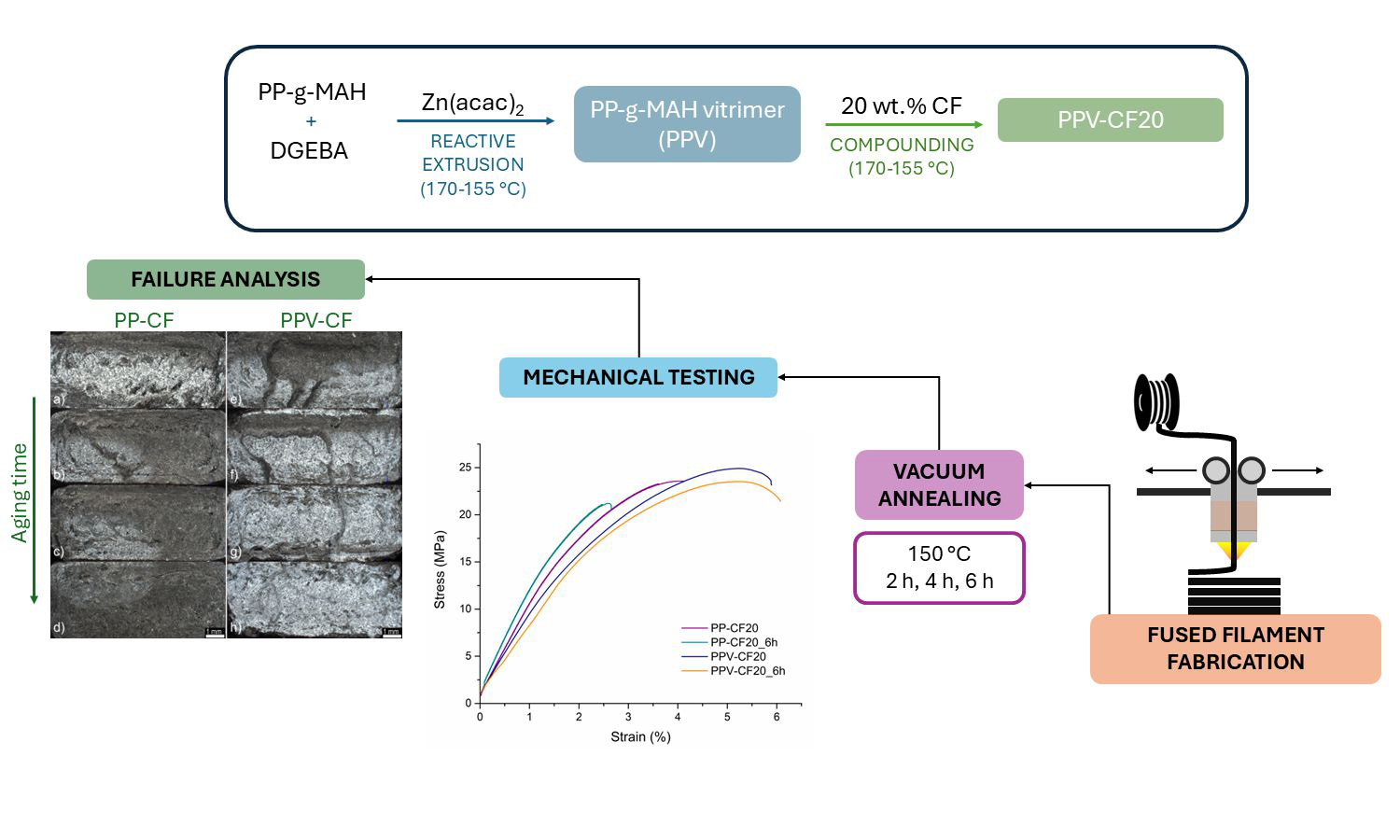
Fused filament fabrication (FFF) notoriously suffers from weak interlayer adhesion, leading to anisotropic mechanical properties in the fabricated parts. The present study addresses this challenge by developing thermoplastic-based vitrimers via reactive extrusion of maleic anhydride-grafted polypropylene (PP-g-MAH) with an epoxy crosslinker and a transesterification catalyst. The vitrimers were further compounded with carbon fibres (CF), processed into filaments, and used for FFF to fabricate specimens for testing interlayer adhesion. Spectroscopic and thermomechanical analyses revealed the formation of a crosslinked network, characterised by β-hydroxyester linkages and a pronounced rubbery plateau. Vitrimers exhibited enhanced mechanical properties, with notched Charpy impact strength increasing by up to 155%. As-printed vitrimeric FFF specimens demonstrated enhanced flexural toughness, indicating that dynamic transesterification reactions during layer deposition promote more consistent interlayer bonding. Vitrimeric specimens exhibited slightly increased flexural strength and preserved toughness upon post-printing thermal annealing at 150 °C, while non-vitrimeric specimens exhibited systematic embrittlement. The results demonstrate that vitrimerisation of thermoplastic polymers is a viable and effective strategy for improving interlayer adhesion in FFF fabricated parts.
Junxiu Xue, Kaituo Fang, Zhenchun Xu, Huiguang Bian, Yu Wang, Yongming Zhang
Vol. 20., No.5., Pages 489-500, 2026
DOI: 10.3144/expresspolymlett.2026.37
Vol. 20., No.5., Pages 489-500, 2026
DOI: 10.3144/expresspolymlett.2026.37
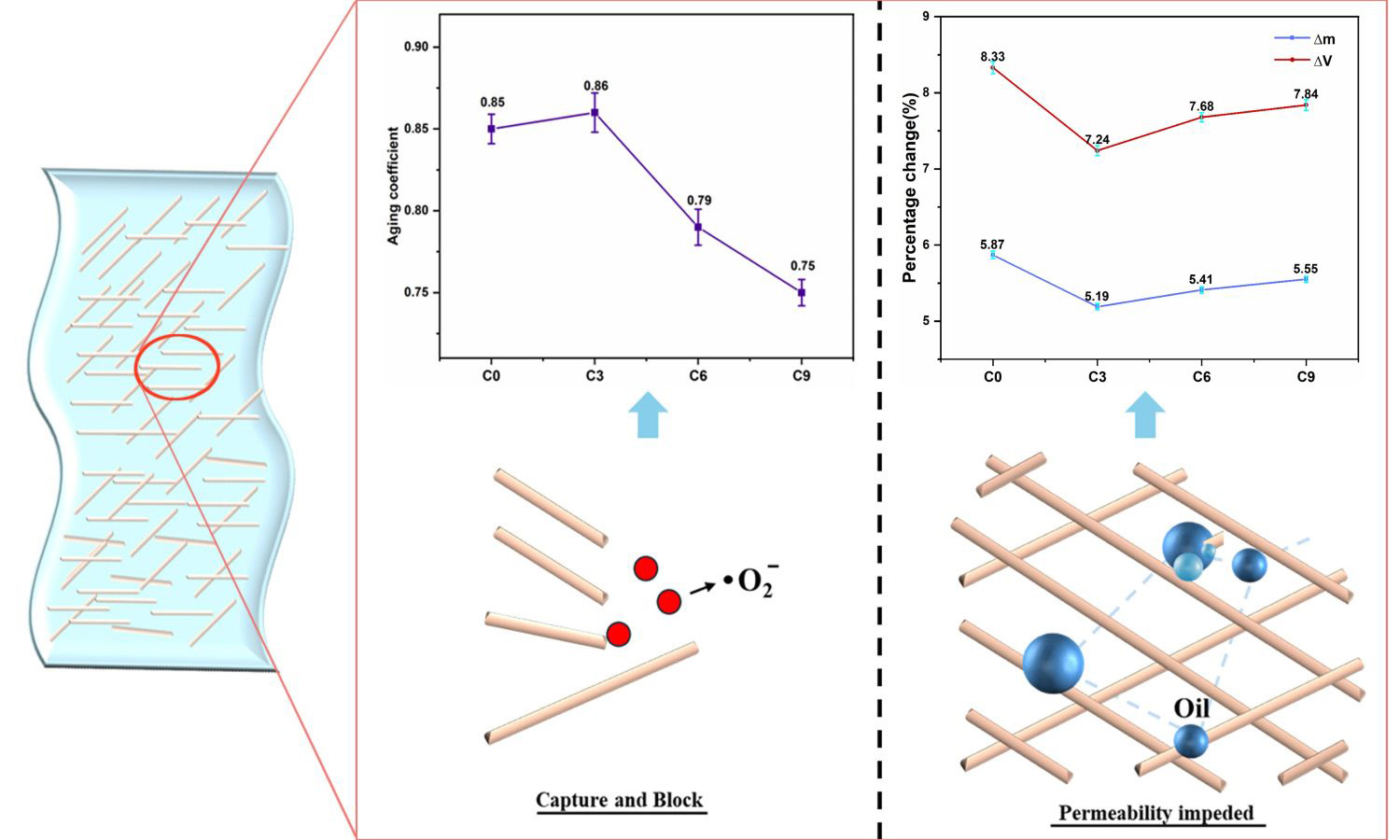
This study investigates the effects of renewable chopped cellulose fiber (CCleF) on the physical and mechanical properties, oil resistance, and thermal-oxidative aging behavior of acrylonitrile-butadiene rubber (NBR), aiming to determine the optimal filler content. CCleF/NBR composites with varying CCleF loadings were prepared and systematically characterized through analyses of vulcanization behavior, three-dimensional morphology, mechanical properties, thermal-oxidative aging, and oil resistance. The results indicate that the composite with 3 phr CCleF exhibits uniform fiber dispersion and optimal overall performance, showing enhanced processability, a reduced vulcanization time, and improved physical and mechanical properties. After thermal-oxygen aging, the composite demonstrated superior stability: the percentage change in tensile modulus, rebound resilience, and DIN abrasion decreased significantly by 13.73, 49.82, and 74.9%, respectively, while the aging coefficient reached 0.86. Notably, this composite also exhibited excellent oil resistance, with a volume expansion rate of 7.24%, which is 13.1% lower than that of unfilled NBR. Correspondingly, the tensile product’s retention rate decreased by 37.72%, while rebound resilience and abrasion resistance improved. This study demonstrates that incorporating 3 phr CCleF is a practical approach to achieving high-performance NBR, providing a material basis for its use in demanding environments such as the petrochemical industry.
Amanda Legnani, André Luis Marcomini, Philipe Augusto Pocidonio Silva, Ricardo Geraldo de Sousa, Anderson Júnior dos Santos, João Paulo Ferreira Santos
Vol. 20., No.4., Pages 326-341, 2026
DOI: 10.3144/expresspolymlett.2026.26
Vol. 20., No.4., Pages 326-341, 2026
DOI: 10.3144/expresspolymlett.2026.26
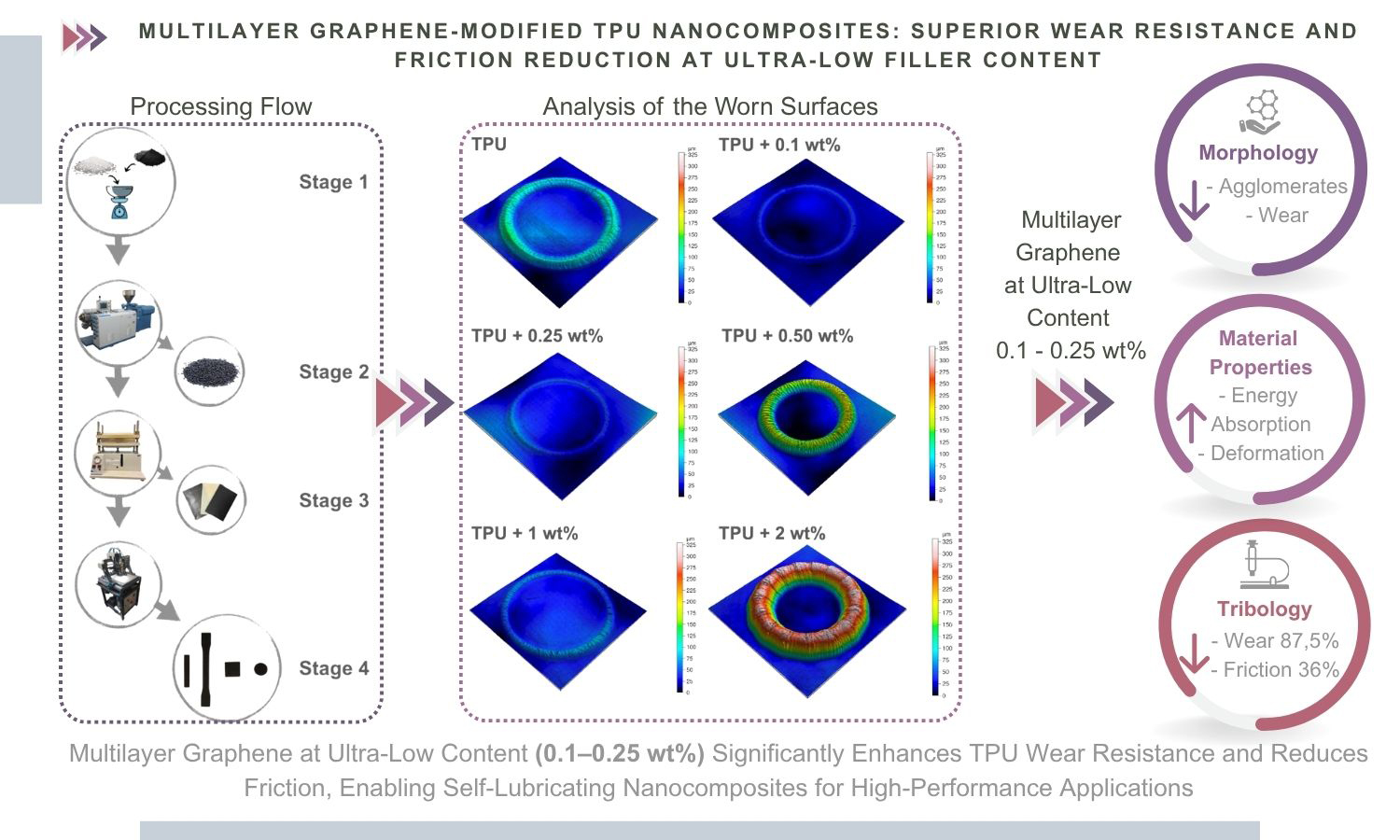
This work presents the development of high-performance thermoplastic polyurethane (TPU) nanocomposites reinforced with low contents of multilayer graphene (mG), aiming to improve their tribological behavior. Using twin-screw extrusion followed by hot pressing, nanocomposites containing 0.1, 0.25, 0.5, 1, and 2% mG weight were fabricated and systematically evaluated. Nanocomposites with only 0.1–0.25 wt% mG achieved a 36% reduction in friction coefficient and 87.5% reduction in wear volume compared to neat TPU. Results are rarely reported at such low filler loadings. Scanning electron microscopy (SEM) analysis revealed uniform dispersion at these optimal concentrations, while higher mG contents led to agglomeration and performance loss. Rheological studies indicated improved flow behavior, and dynamic-mechanical analysis confirmed increased energy dissipation and thermal response. These results suggest that the concentrations of 0.1% and 0.25% of multilayer graphene used in the study are promising for improving the performance of TPU nanocomposites in applications requiring high wear resistance for advanced applications in automotive, biomedical, and high-load engineering components, where durability and low friction are essential.
Sirithorn Kaewklum, Parisa Faibunchan, Apinya Krainoi, Banyat Cherdchim, Jutharat Intapun
Vol. 19., No.9., Pages 929-945, 2025
DOI: 10.3144/expresspolymlett.2025.70
Vol. 19., No.9., Pages 929-945, 2025
DOI: 10.3144/expresspolymlett.2025.70
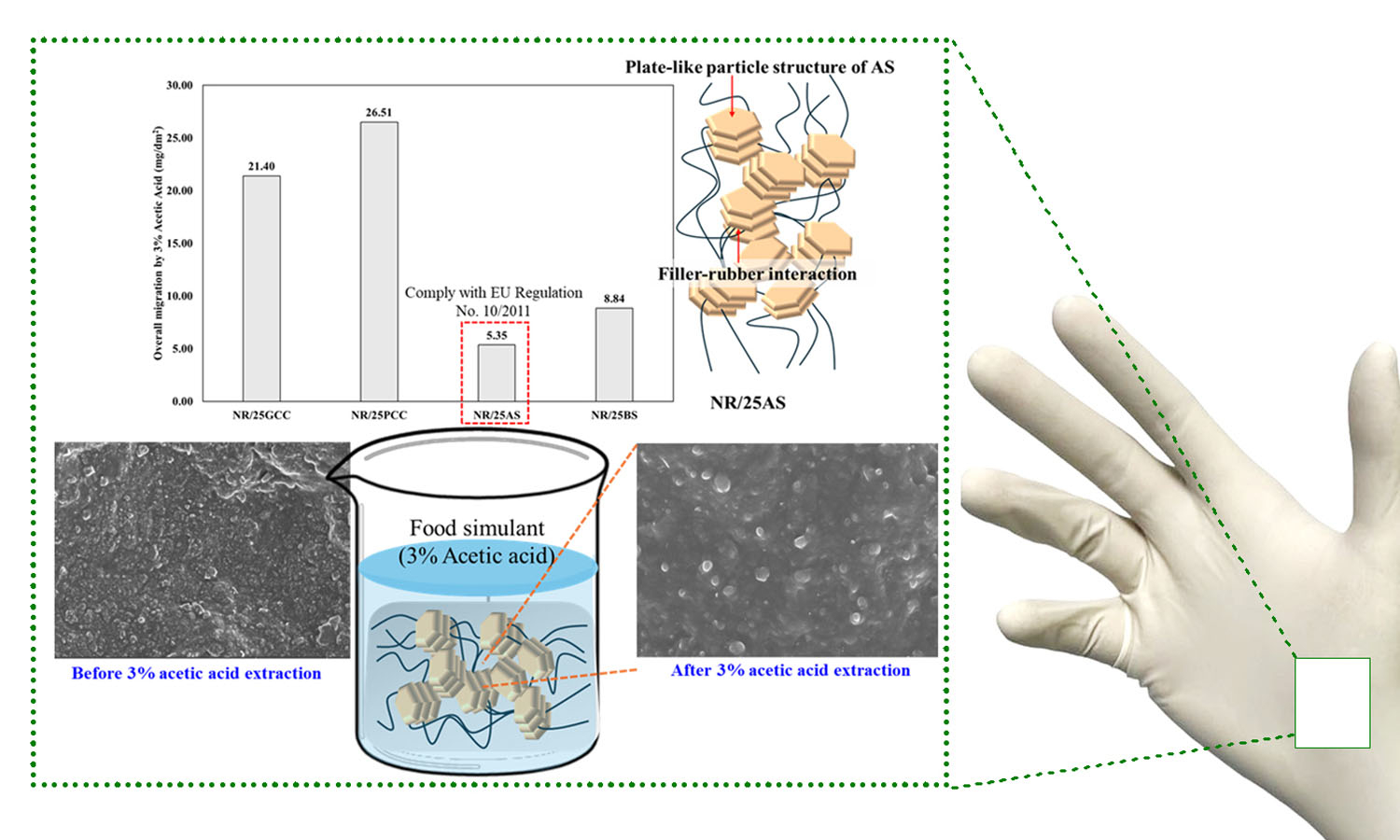
Powder-free natural rubber gloves for chemical migration resistance of food-contact grade are prepared using a variety of fillers, including ground calcium carbonate (GCC), precipitated calcium carbonate (PCC), aluminum silicate (AS), and barium sulfate (BS)-filled natural rubber (NR), respectively. The properties of NR gloves, including mechanical, dynamic mechanical, and thermal properties, were investigated. Furthermore, the overall migration test of NR gloves was conducted according to the regulations for food contact gloves (EU Regulation No. 10/2011), using 3% acetic acid as the simulant. Among the fillers studied, the plate-like particles of AS facilitated the most effective filler-rubber interactions and reinforcement in AS-filled natural rubber (NR/AS). Consequently, the highest crosslink density, force at break, and damping properties of NR gloves were achieved by applying AS in the NR matrix. Moreover, the lowest overall migration level was observed for NR/AS with a value of 5.35 mg/dm2, which complies with EU Regulation (overall migration of food simulants shall not exceed 10 mg/dm2). Therefore, NR gloves filled with AS are suitable for food-contacting NR gloves.
Magali Castres, Aboulghit El Malki Alaoui, Camille Caisso, Martin Monloubou, Michel Arrigoni
Vol. 18., No.10., Pages 1008-1022, 2024
DOI: 10.3144/expresspolymlett.2024.77
Vol. 18., No.10., Pages 1008-1022, 2024
DOI: 10.3144/expresspolymlett.2024.77
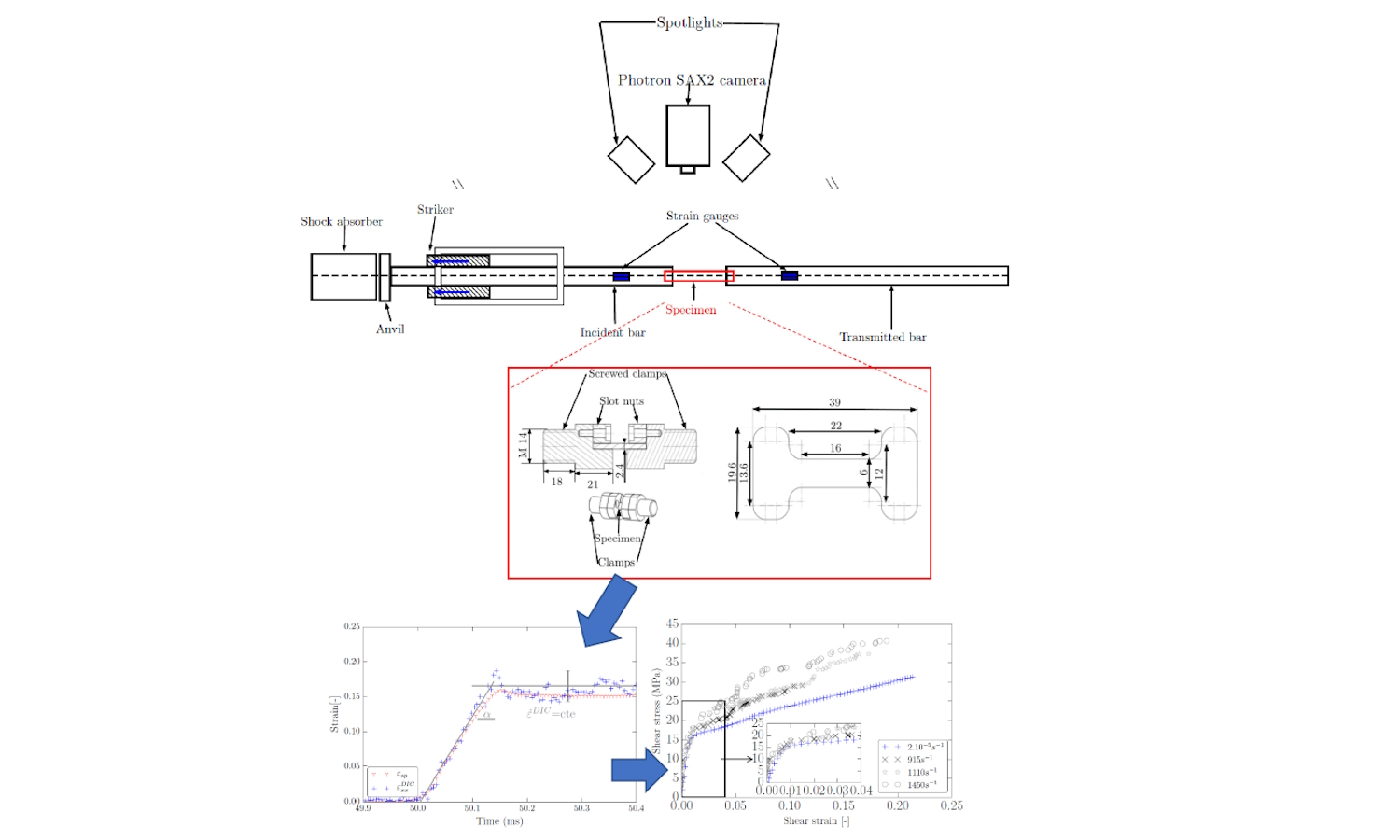
Nowadays, ultra high molecular weight polyethylene (UHMWPE), allows the combination of lightweight, high strength and is praised for the design of severely loaded structures. It has become a good option for lightweight armour solutions. It is therefore important to characterise its mechanical behaviour. Up to now, strain rate effects on mechanical behaviour have been poorly explored. In this work, this issue is tackled by studying the strain rate influence on the in-plane deformation, in shear and tension of the Tensylon® HSBD30A, a UHMWPE dedicated to ballistic and blast protection. Two laminates of Tensylon® of respective orientation [0 °/90°]20 and [±45°]20 were subjected to static and split Hopkinson tensile bar (SHTB) tests. A new mounting system was designed, and new specimen shapes were used to match the experimental setup configurations. Digital image correlation (DIC) was used to measure the in-plane strain. A significant strain-rate dependence on the material behaviour.is evidenced. Besides, results exhibit a higher strength for the [0°/90°]20 specimen than for the [±45°]20 one. Despite some limitations, the proposed setup and measurement methods allowed visualisation of strain rate effects on the stress-strain relationship for strain rates ranging from the quasi-static regime to the dynamic one (1500 s–1).