Optimization of 3D-printed wing spars via multi-material and graded infill additive manufacturing: An experimental study
Hamza Qayyum, Borhen Louhichi, Malik Hassan, Babar Ashfaq, Muhammad Sulaiman, Muhammad Bilal Khan, Nashmi H. Alrasheedi, Ghulam Hussain
Vol. 19., No.11., Pages 1173-1187, 2025
DOI: 10.3144/expresspolymlett.2025.86
DOI: 10.3144/expresspolymlett.2025.86
Corresponding author: Ghulam Hussain 
GRAPHICAL ABSTRACT
ABSTRACT
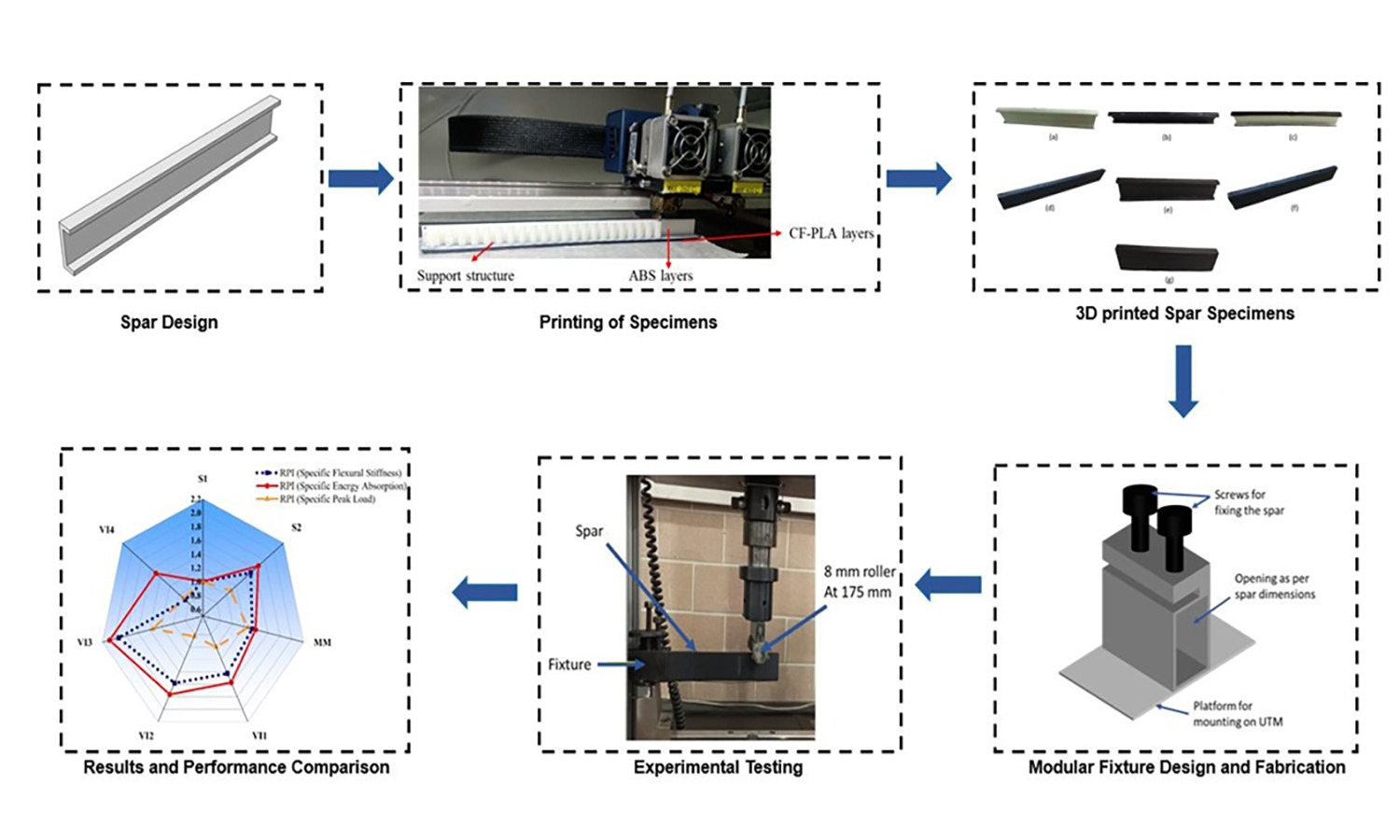
To reduce fuel consumption and extend flight time, the aerospace industry has focused on lightweight design. Achieving this without compromising structural integrity has been challenging. However, innovative additive manufacturing offers new opportunities for practical solutions. This study presents two methods: multi-material additive manufacturing (MMAM) and variable infill density additive manufacturing (VIDAM), aimed at reducing structural weight while maintaining mechanical performance. These methods were applied to a wing spar, a test geometry based on stress distribution principles from laminated beam mechanics. The structures produced with these new approaches showed improved mechanical responses compared to those made with traditional additive manufacturing techniques. A maximum increase of 91% in load-carrying capacity and a 34.8% increase in specific energy absorption were observed. scanning electron microscopy analysis revealed that layer bonding and material diffusion greatly influenced the mechanical performance. Although the study was conducted on small-scale models, the design concepts can be adapted to large-scale industrial applications that benefit from lightweight structures, such as the aerospace and automotive.
RELATED ARTICLES
Minghao Chen, Bin Wang, Sisi Wang, Xiping Li
Vol. 20., No.6., Pages 617-628, 2026
DOI: 10.3144/expresspolymlett.2026.46
Vol. 20., No.6., Pages 617-628, 2026
DOI: 10.3144/expresspolymlett.2026.46
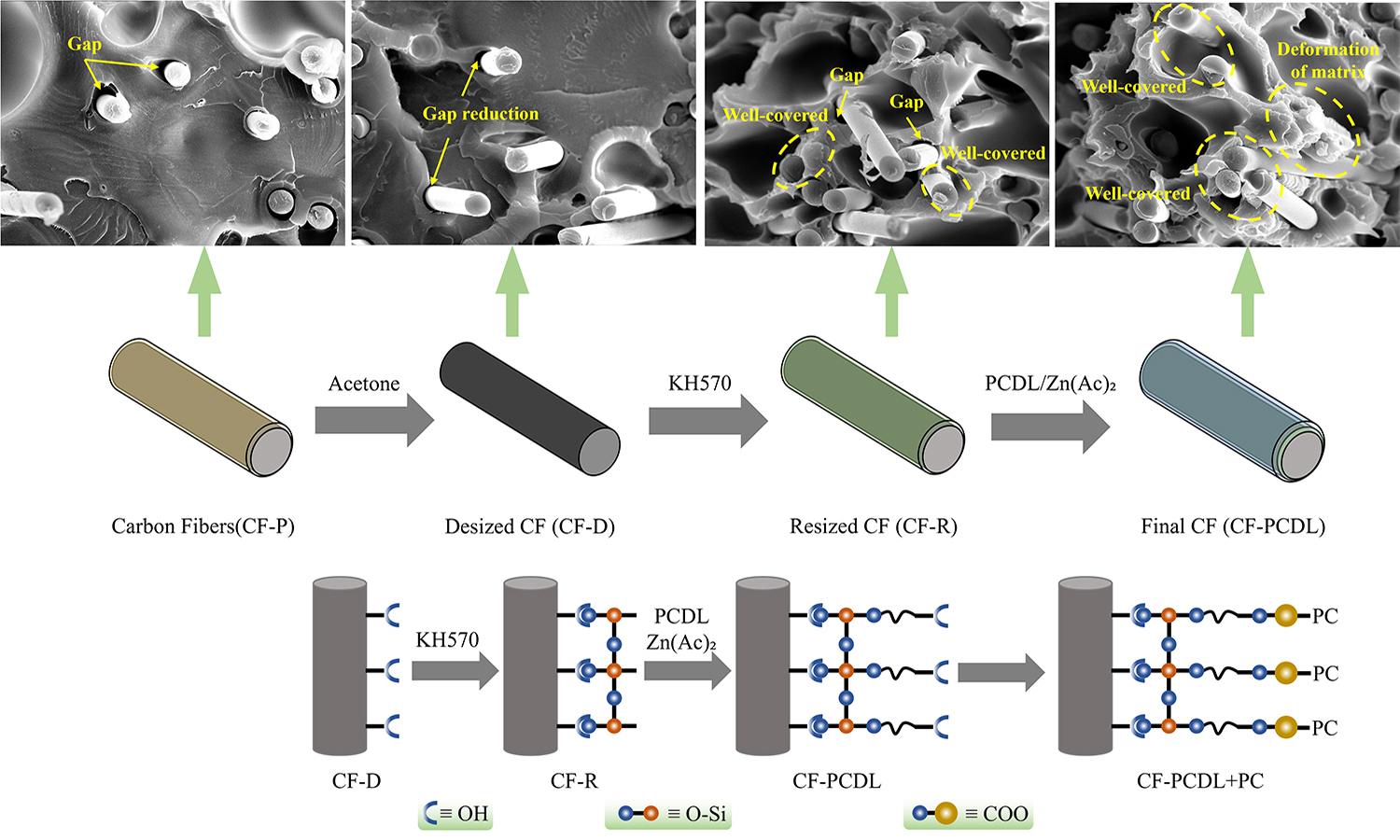
Enhancing the interfacial bonding performance between carbon fibers (CF) and thermoplastic resins is extensively researched. In this study, we propose a novel method for the synergistic surface modification of carbon fibers using a silane coupling agent and poly-carbonate diol (PCDL), which significantly improves the interfacial compatibility between CF and polycarbonate (PC). Scanning electron microscopy (SEM), Fourier-transform infrared spectroscopy (FTIR), and X-ray photoelectron spectroscopy (XPS) confirmed the successful grafting of silane onto the surface of CF and subsequent PCDL sizing. Mechanical characterization showed that the modified carbon fiber composites exhibited a 47.3% increase in interlaminar shear strength (ILSS) relative to the unmodified system. Notably, with a loading of 10 wt%, the modified fibers improved the tensile strength, flexural strength, and notched impact toughness by 36.2, 38.5, and 39.6%, respectively. The impact fracture surfaces exhibited typical characteristics of ductile fracture, with a dense and gap-free interfacial layer forming between the fiber and the matrix, indicating that the efficiency of stress transfer was effectively enhanced. The findings of this study are expected to provide a valuable technical reference for the fabrication of carbon fiber–reinforced thermoplastic composites.
Kaja Kupnik, Jure Dobnik, Patricija Skrivarnik, Rebeka Lorber, Irena Pulko, Janez Slapnik
Vol. 20., No.5., Pages 454-472, 2026
DOI: 10.3144/expresspolymlett.2026.35
Vol. 20., No.5., Pages 454-472, 2026
DOI: 10.3144/expresspolymlett.2026.35
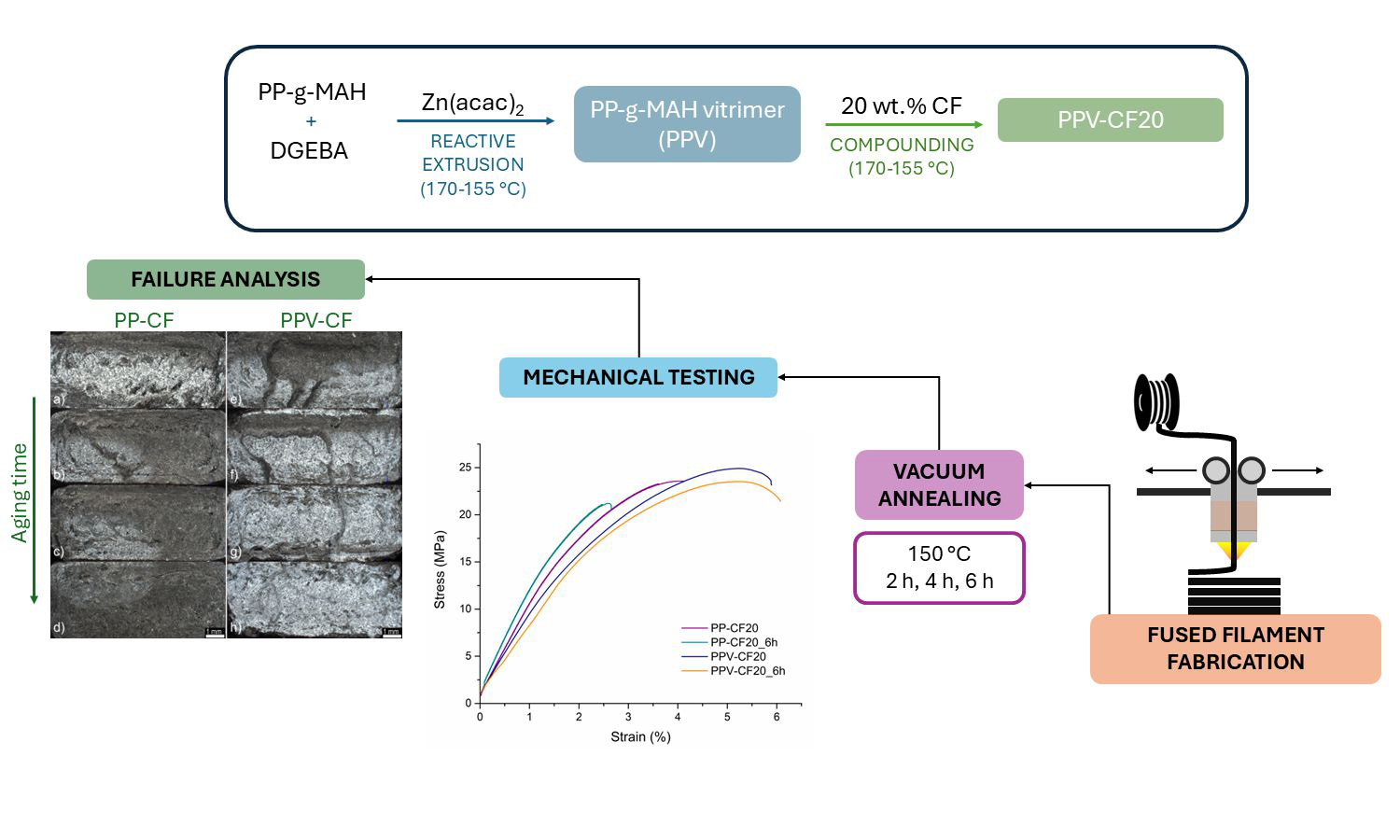
Fused filament fabrication (FFF) notoriously suffers from weak interlayer adhesion, leading to anisotropic mechanical properties in the fabricated parts. The present study addresses this challenge by developing thermoplastic-based vitrimers via reactive extrusion of maleic anhydride-grafted polypropylene (PP-g-MAH) with an epoxy crosslinker and a transesterification catalyst. The vitrimers were further compounded with carbon fibres (CF), processed into filaments, and used for FFF to fabricate specimens for testing interlayer adhesion. Spectroscopic and thermomechanical analyses revealed the formation of a crosslinked network, characterised by β-hydroxyester linkages and a pronounced rubbery plateau. Vitrimers exhibited enhanced mechanical properties, with notched Charpy impact strength increasing by up to 155%. As-printed vitrimeric FFF specimens demonstrated enhanced flexural toughness, indicating that dynamic transesterification reactions during layer deposition promote more consistent interlayer bonding. Vitrimeric specimens exhibited slightly increased flexural strength and preserved toughness upon post-printing thermal annealing at 150 °C, while non-vitrimeric specimens exhibited systematic embrittlement. The results demonstrate that vitrimerisation of thermoplastic polymers is a viable and effective strategy for improving interlayer adhesion in FFF fabricated parts.
Djamel Frihi, Mounir Gaci, Azzeddine Gharsallah, Ali Louaer, Hamid Satha, Abdelheq Layachi
Vol. 20., No.5., Pages 531-546, 2026
DOI: 10.3144/expresspolymlett.2026.40
Vol. 20., No.5., Pages 531-546, 2026
DOI: 10.3144/expresspolymlett.2026.40

This study investigates the non-isothermal crystallization behavior of isotactic polypropylene (iPP) reinforced with two types of talc fillers: micrometric talc (μ-talc) and standard talc (S-talc). Composites containing 20 wt% filler were analyzed using differential scanning calorimetry (DSC), wide-angle X-ray scattering (WAXS), and scanning electron microscopy (SEM). Non-isothermal crystallization at cooling rates β = 5–20°C/min was evaluated using the Ozawa, Kissinger, Coats-Redfern, and Criado methods. Both μ-talc and S-talc act as efficient nucleating agents compared with neat iPP, but they operate through distinct mechanisms. μ-talc, owing to its finer particle size and higher surface area, increases the number of nucleation sites, thereby reducing the half-crystallization time (t1/2) and accelerating the crystallization kinetics. By contrast, S-talc, despite its lower surface area, enhances crystallization by virtue of its lamellar morphology, which promotes selective chain orientation, raises the crystallization temperature (Tc), and stabilizes secondary crystallization. Kinetic analysis confirmed this distinction: the activation energy (Ea) increased from neat iPP (≈185 kJ/mol) to μ-talc/iPP (≈215 kJ/mol) and further to S-talc/iPP (≈274 kJ/mol). The Coats-Redfern and Criado analyses consistently identified a second-order (F2) mechanism for the S-talc composites across all cooling rates, underscoring their stabilizing role in crystallization.
Rebeka Lorber, József Gábor Kovács, Andreas Hausberger, Polona Umek, Miroslav Huskić, Aleš Hančič
Vol. 19., No.11., Pages 1133-1143, 2025
DOI: 10.3144/expresspolymlett.2025.83
Vol. 19., No.11., Pages 1133-1143, 2025
DOI: 10.3144/expresspolymlett.2025.83
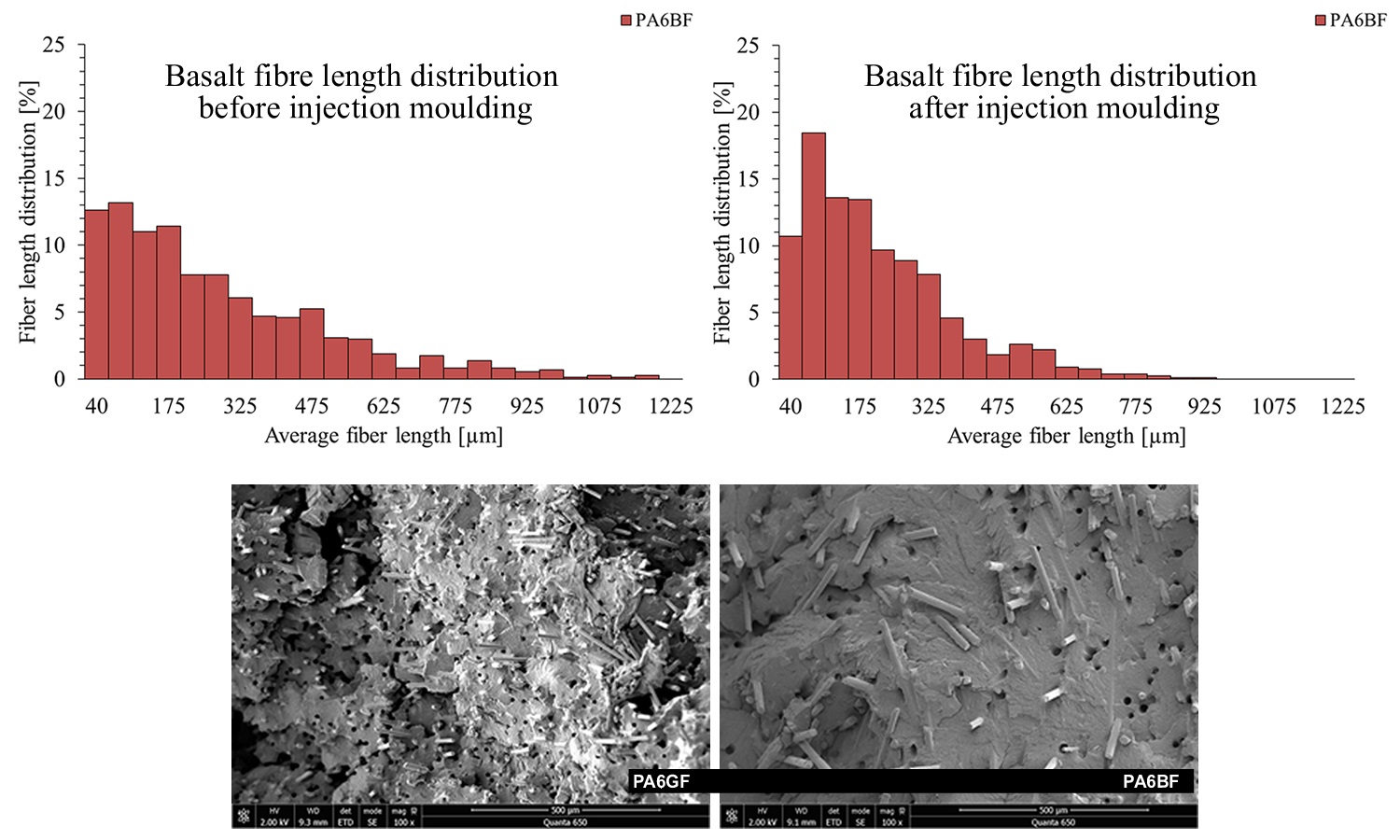
With the increasing use of e-mobility, the demand for high-quality materials to produce polymer gears is growing. Due to the tendency towards using natural materials and reducing carbon footprint, basalt fibers (BF) are tested as a substitute for glass fibers (GF). For this purpose, composites of polyamide 6 (PA6) with GF and BF, with and without compatibilizer and polytetrafluoroethylene (PTFE) are produced, tested, and properties compared. The mechanical, thermomechanical, thermal, and tribological properties of the composites, as well as the size of the fibers after the production of the composites and after injection molding, are determined. The compatibilizer improves the impact strength, while the glass fibers have a better reinforcing effect. The fibers increase crystallinity, but the effect is minimal. The thermal conductivity increases approximately the same for both fibers and is highest at composites that, in addition to 30% fibers, also contain PTFE. The tribological properties are comparable but slightly better for glass fibers. The fiber length is greatly reduced during the production of the composites and is around 200–300 μm in both cases. SEM imaging and mapping analysis show good dispersion of the fibers in the polymer and relatively poor compatibility with PA6.
Rebeka Lorber, Janez Slapnik, Borut Černe, Andreas Hausberger, Jan Sumfleth
Vol. 19., No.10., Pages 1073-1089, 2025
DOI: 10.3144/expresspolymlett.2025.80
Vol. 19., No.10., Pages 1073-1089, 2025
DOI: 10.3144/expresspolymlett.2025.80
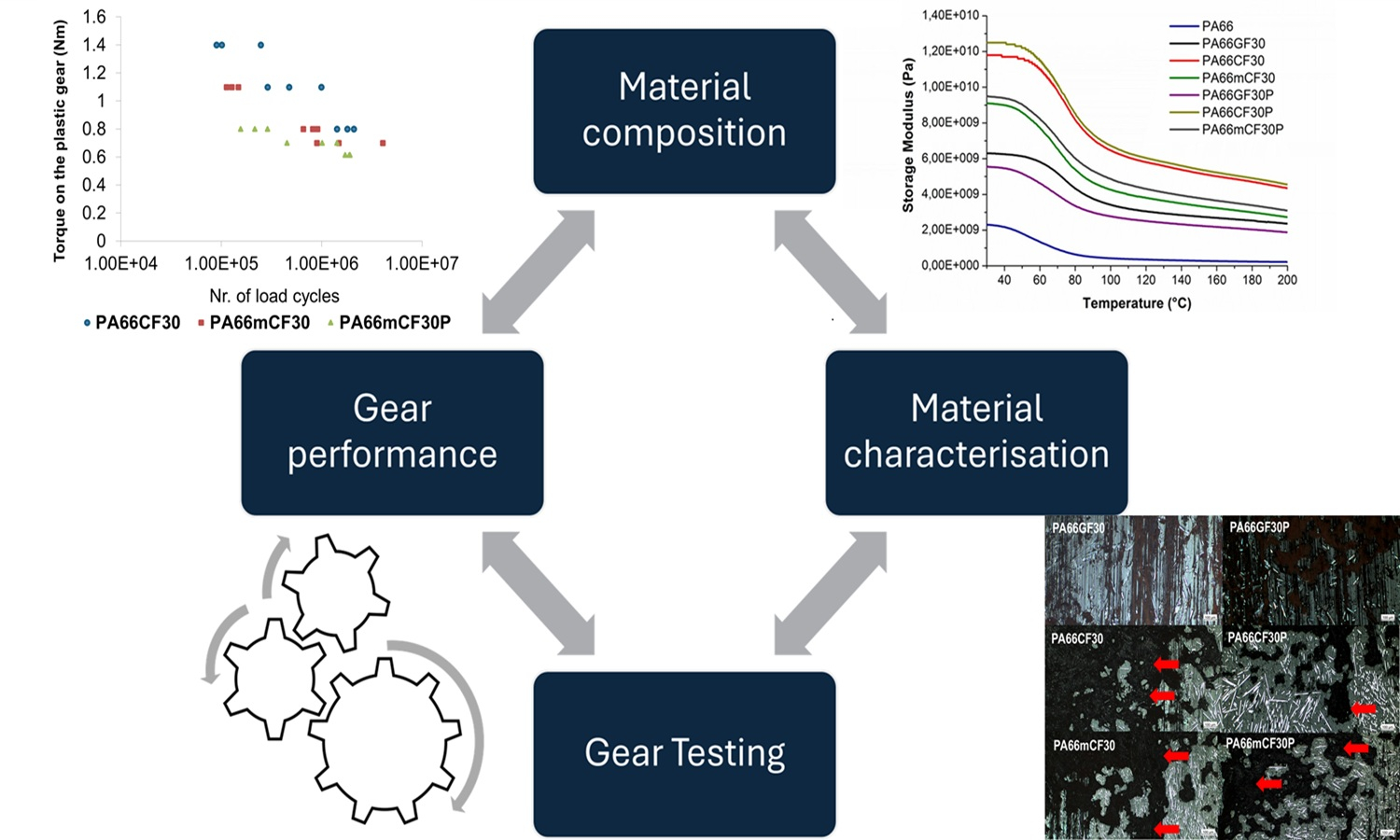
The study investigates the use of repurposed milled carbon fibre (mCF) as reinforcement for polyamide 66 (PA66) in gear applications, addressing environmental and cost concerns of virgin carbon fibres. Neat PA66 and PA66 composites reinforced with mCF, glass fibres (GF), and carbon fibres (CF), with and without polytetrafluoroethylene (PTFE), were injection moulded and evaluated for microstructure (fibre length), thermal, mechanical, surface, and tribological properties, as well as gear performance under VDI 2736 guidelines. CF reinforced composites showed the highest modulus and tensile strength, followed by mCF and GF. PTFE reduced modulus and strength in binary composites. All reinforced composites significantly lowered the coefficient of friction (COF) and wear rate compared to neat PA66, with mCF showing the most notable improvements. PTFE slightly improved tribological performance only for GF (wear) and CF (COF) composites. In gear testing, binary composites outperformed neat PA66, with CF performing best, followed by mCF and GF. Ternary composites had slightly lower performance than their binary equivalents. Correlation analysis showed that gear performance is closely linked to structural integrity. Failure analysis revealed higher crack susceptibility in mCF reinforced gears due to shorter fibre length. The findings highlight mCF reinforced PA66 as a sustainable, cost-effective material for durable polymer gears.