
Rhubarb and berry bio-additives as natural UV absorbers and stabilizers for biodegradable polylactide and polycaprolactone
Malgorzata Latos-Brozio , Aleksandra Drzazga, Anna Masek, Zdzisława Mrozińska, Marcin H. Kudzin
, Aleksandra Drzazga, Anna Masek, Zdzisława Mrozińska, Marcin H. KudzinVol. 20., No.7., Pages 742-760, 2026
DOI: 10.3144/expresspolymlett.2026.56
DOI: 10.3144/expresspolymlett.2026.56
Corresponding author: Malgorzata Latos-Brozio 
GRAPHICAL ABSTRACT
ABSTRACT
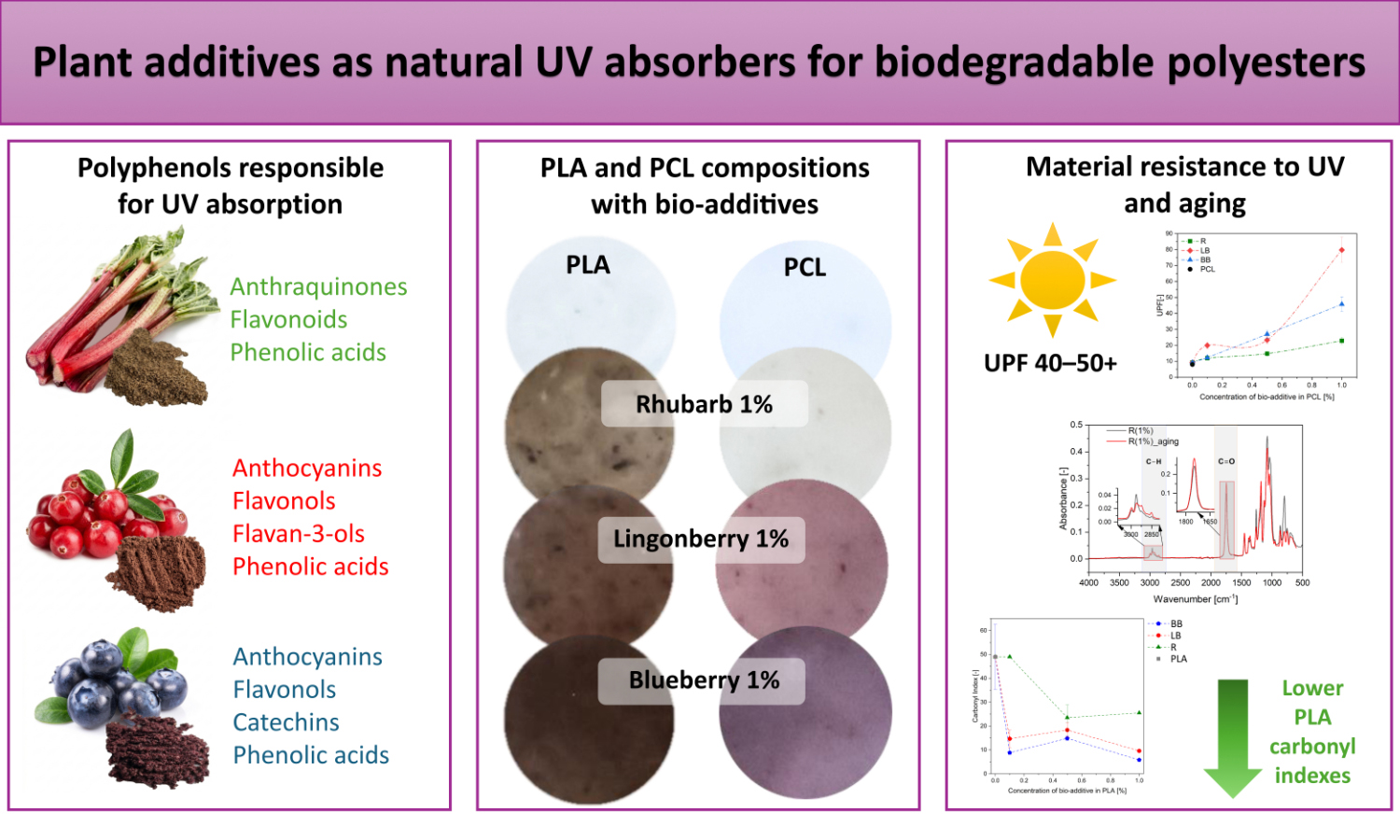
We investigated the effectiveness of plant-based bio-additives – rhubarb, lingonberry, and blueberry (0.1–1%) – as natural UV absorbers in biodegradable polymers polylactide (PLA) and polycaprolactone (PCL). A novelty of this work is the direct use of plant-based raw materials as UV absorbers in polymers. We performed Fourier transformed infrared spectroscopy (FT-IR) and UV-Vis analysis of the bio-additives, determined the ultraviolet protection factor (UPF) for the polymer samples, and evaluated their physicochemical properties (structural changes, colour, hardness, surface energy) after weathering (PLA) and thermo-oxidative (PCL) aging. Spectroscopic tests confirmed the presence of UV-A/UV-B-absorbing chromophores in the additives. Samples with 1% berries had excellent UV protection (UPF 40–50+), while PLA and PCL containing 1% rhubarb had lower UPF values (around 22), indicating good UV blocking properties. After aging, PLA-containing berries showed a significantly lower carbonyl index (CI), indicating reduced photodegradation. For PCL with lingonberry, this additive gave the greatest reduction in thermo-oxidative degradation (lowest CI). All plant additives increased material hardness by acting as nucleating agents; they increased the crystallinity of polyester, and aging further strengthened this effect. Bio-additives, especially berries, can increase the hardness and UV resistance of polymers and limit material aging. These polymer compositions are suitable for packaging materials.
RELATED ARTICLES
Anthony Allen Parker, Joseph John Marcinko
Vol. 20., No.9., Pages 885-904, 2026
DOI: 10.3144/expresspolymlett.2026.66
Vol. 20., No.9., Pages 885-904, 2026
DOI: 10.3144/expresspolymlett.2026.66
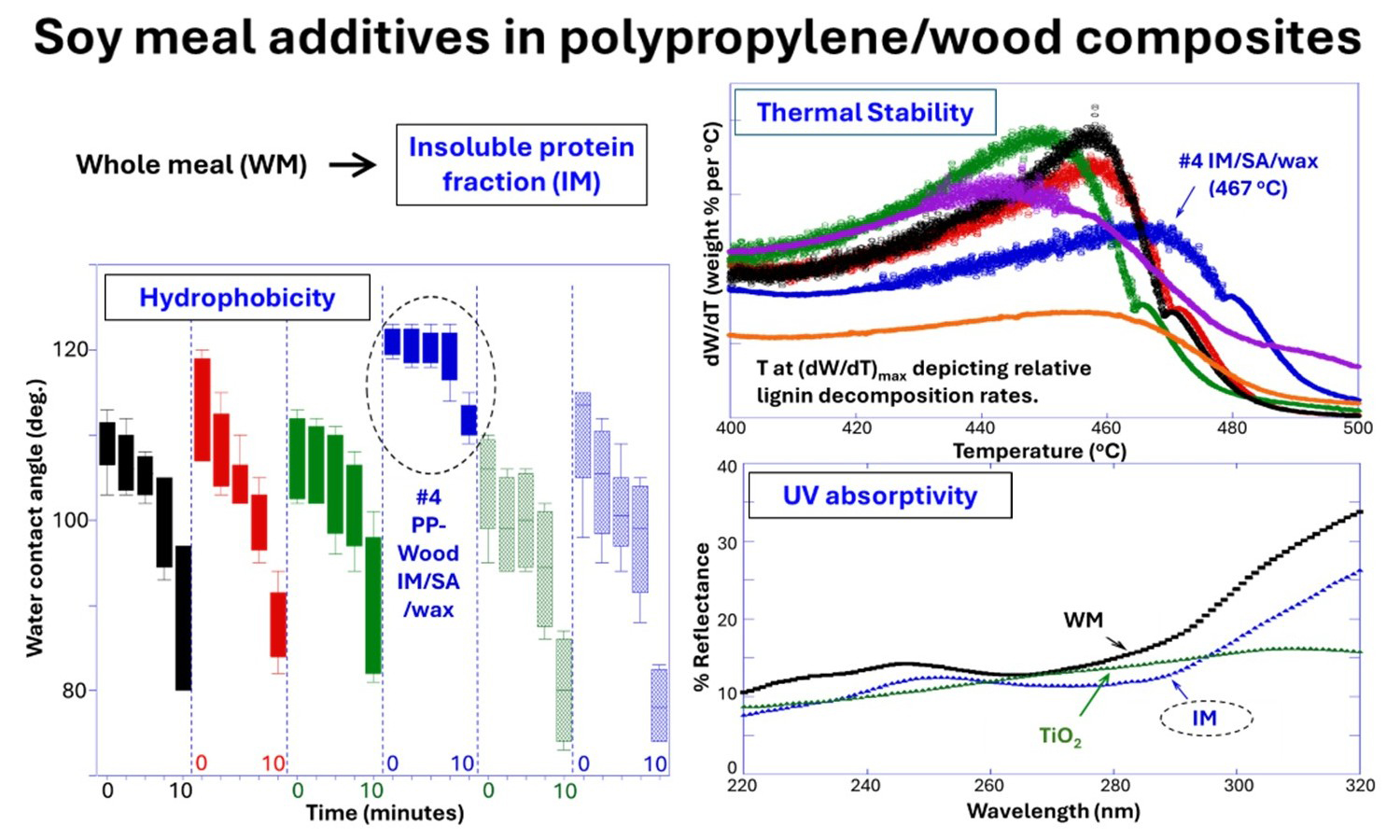
We have discovered that water-insoluble proteins (IM) isolated from whole soy meal (WM) have the capacity to improve the thermal stability of polypropylene (PP) wood composites without negatively impacting mechanical properties. We compared an undiluted composite to composites diluted with 5% by weight of a 3/1 w/w mixture of stearic acid and paraffin wax (SA/wax), 5% by weight IM, 5% by weight WM, 5% by weight of a 50/50 w/w mixture of IM in combination with SA/wax, and 5% by weight WM in combination with SA/wax. Water contact angle (CA) measurements and Fourier transform infrared spectroscopy (FTIR) revealed a synergy between IM and SA/wax, resulting in enhanced surface hydro - phobicity. Thermogravimetric analysis (TGA) showed lower weight loss in composites made with IM up to the onset of the degradation of PP, and reduced rates of lignin degradation, independently of the presence of SA/wax. Dynamic mechanical analysis (DMA) revealed higher modulus and lower viscoelastic loss resulting from the removal of water-soluble soy components from WM. Total reflectance ultraviolet spectroscopy (UV) showed that IM absorbs UV radiation strongly in the UV-B and UV-C regions. Collectively, these findings suggest that IM has the potential to become a multi-purpose additive for use in PP wood composites.
Anna Morawska-Chochół, João Gabriel Antoniazzi, Murilo Daniel de Mello Innocentini
Vol. 20., No.6., Pages 579-593, 2026
DOI: 10.3144/expresspolymlett.2026.44
Vol. 20., No.6., Pages 579-593, 2026
DOI: 10.3144/expresspolymlett.2026.44
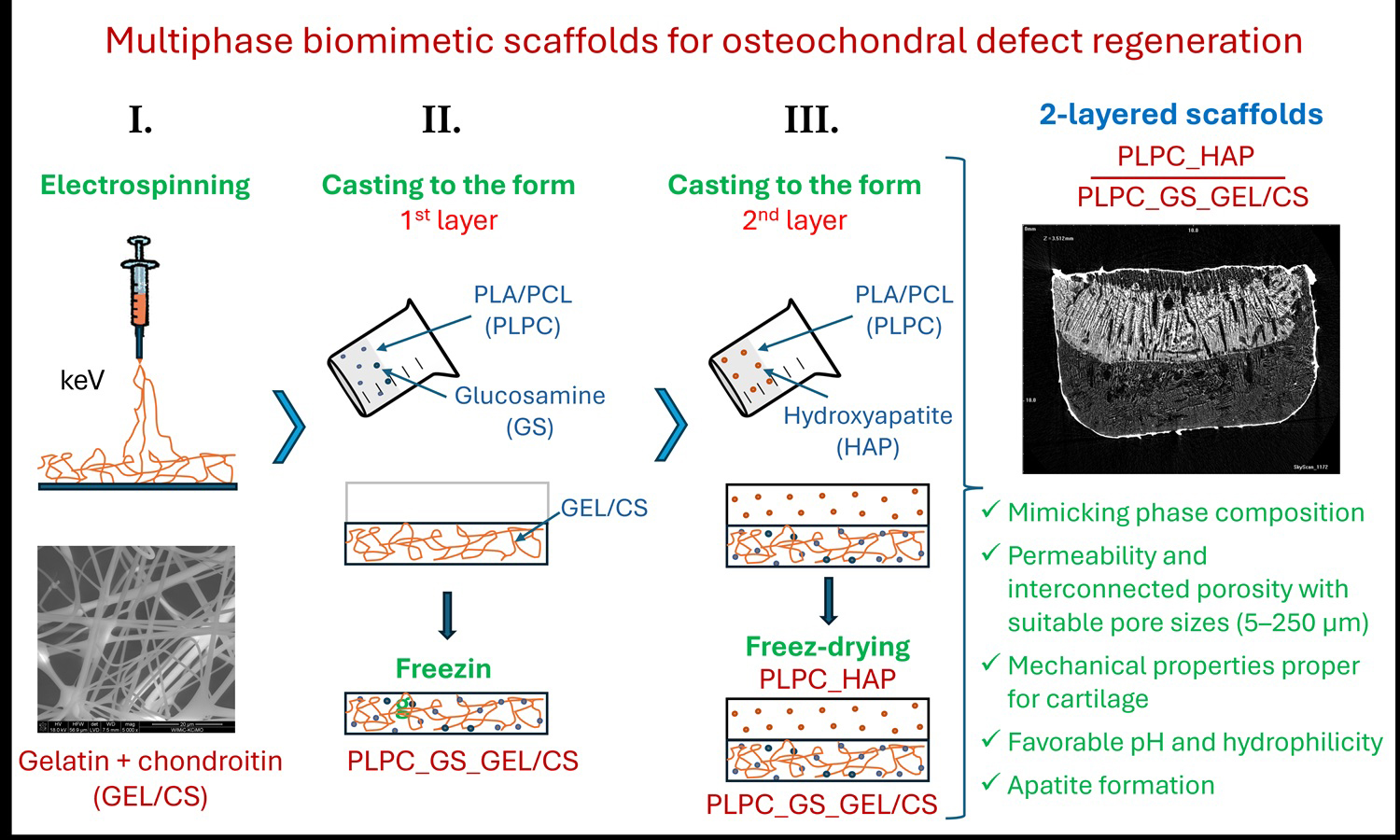
This study reports the fabrication and evaluation of layered scaffolds based on polylactide/polycaprolactone (PLPC) matrices for osteochondral-inspired designs. Bilayer architectures comprised a bone-facing layer with mineral phase (PLPC containing hydroxyapatite, HAP) and a cartilage-facing layer (PLPC containing only glucosamine sulfate (GS) or with simultaneous use of GS and an integrated electrospun gelatin/chondroitin sulfate (GEL/CS) fabric). The scaffolds exhibited interconnected porosity (55–60%) with a pore-size gradient (5–250 μm). Mechanical testing showed compressive strength up to 1 MPa and a layer-dependent compressive modulus, remaining within ranges reported for osteochondral tissues after six weeks of incubation. The layered configuration provided controlled GS release and reduced incubation-induced acidification; FTIR/XRD confirmed apatite precipitation in phosphate-buffered saline (PBS), enhanced when the GEL/CS fabric was present. After incubation, surface wettability shifted toward increased hydrophilicity, and permeability was modulated by scaffold composition, indicating tunable fluid-transport behavior. Overall, spatial separation of additives combined with a fibrous GEL/CS modifier enables control over mechanical response, release/medium evolution during incubation, and in vitro apatite-forming ability in PBS in a bilayer PLPC scaffold system.
Paulina Bednarczyk, Kamil Rożniakowski
Vol. 20., No.3., Pages 233-245, 2026
DOI: 10.3144/expresspolymlett.2026.19
Vol. 20., No.3., Pages 233-245, 2026
DOI: 10.3144/expresspolymlett.2026.19
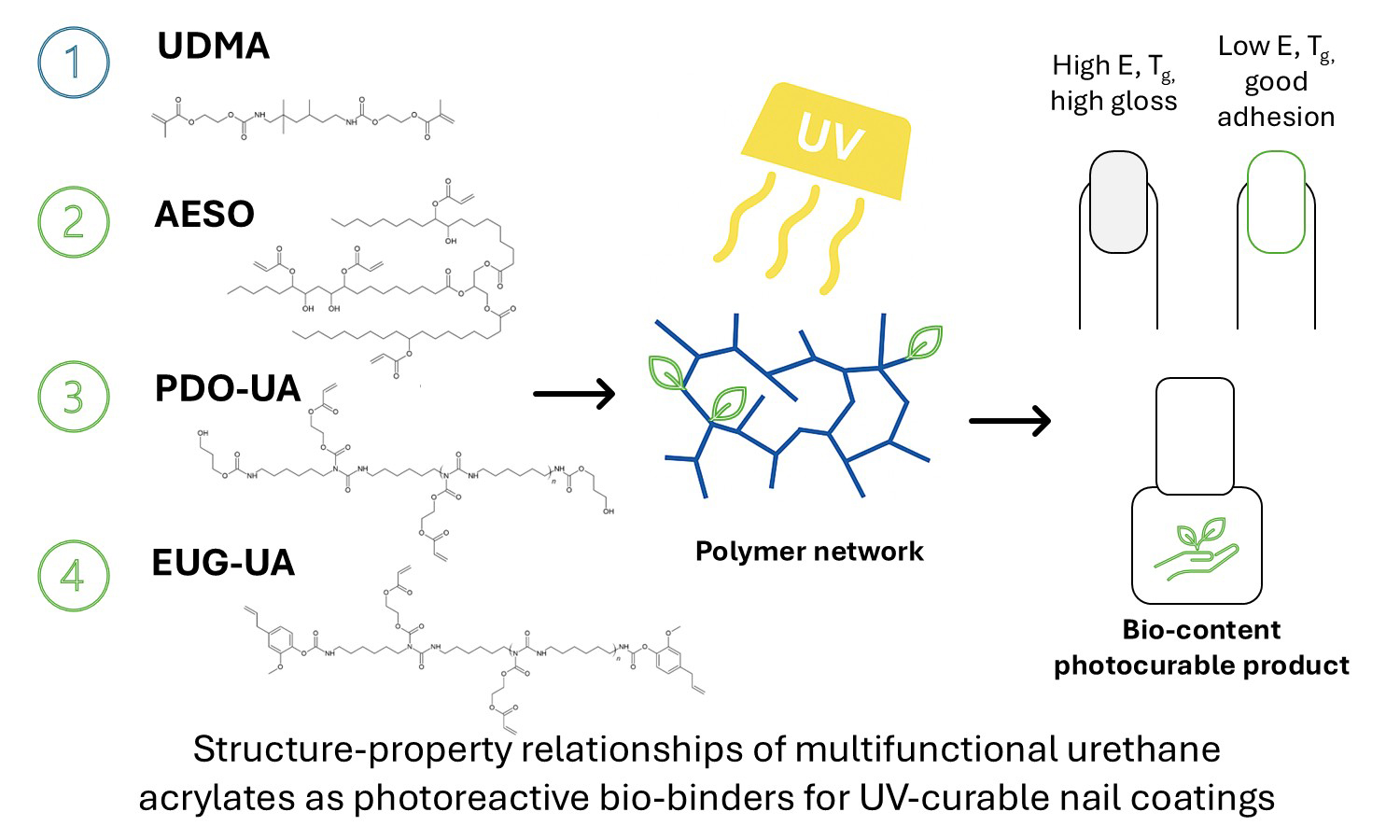
This study investigates the structure–property relationships of multi-functional urethane acrylate resins designed as photoreactive binders for UV-curable nail coatings. Four systems were examined: a commercial resin urethane dimethacrylate (UDMA), a bio-based acrylated epoxidized soybean oil (AESO), and two newly synthesized bio-based urethane acrylates derived from 1,3-propanediol (PDO–UA) and eugenol (EUG–UA). Photopolymerization kinetics were analyzed by realtime FTIR, while the properties of the cured coatings were also determined. The mechanical and thermal behavior of selfsupporting polymer films was evaluated by tensile testing and DSC analysis. The UDMA network exhibited the highest crosslink density, reflected in its high modulus (≈0.5 GPa), tensile strength (≈15 MPa), and Tg (≈60°C), making it suitable for use as a top coat. AESO showed moderate stiffness and flexibility, whereas PDO–UA and EUG–UA formed soft, low-Tg (–12 and –17°C) and highly deformable networks typical of elastomeric materials. The combined mechanical and thermal results confirmed that crosslink density strongly governs coating performance and applicability. This study demonstrates that blending UDMA with bio-based oligomers enables the design of sustainable, UV-curable nail lacquers with an optimal balance of hardness, flexibility, and adhesion to the natural nail plate.
Effect of natural cinnamon extract on the stabilizing properties of biodegradable packaging polymers
Anna Kosmalska-Olańska, Anna Masek
Vol. 20., No.1., Pages 52-71, 2026
DOI: 10.3144/expresspolymlett.2026.5
Vol. 20., No.1., Pages 52-71, 2026
DOI: 10.3144/expresspolymlett.2026.5
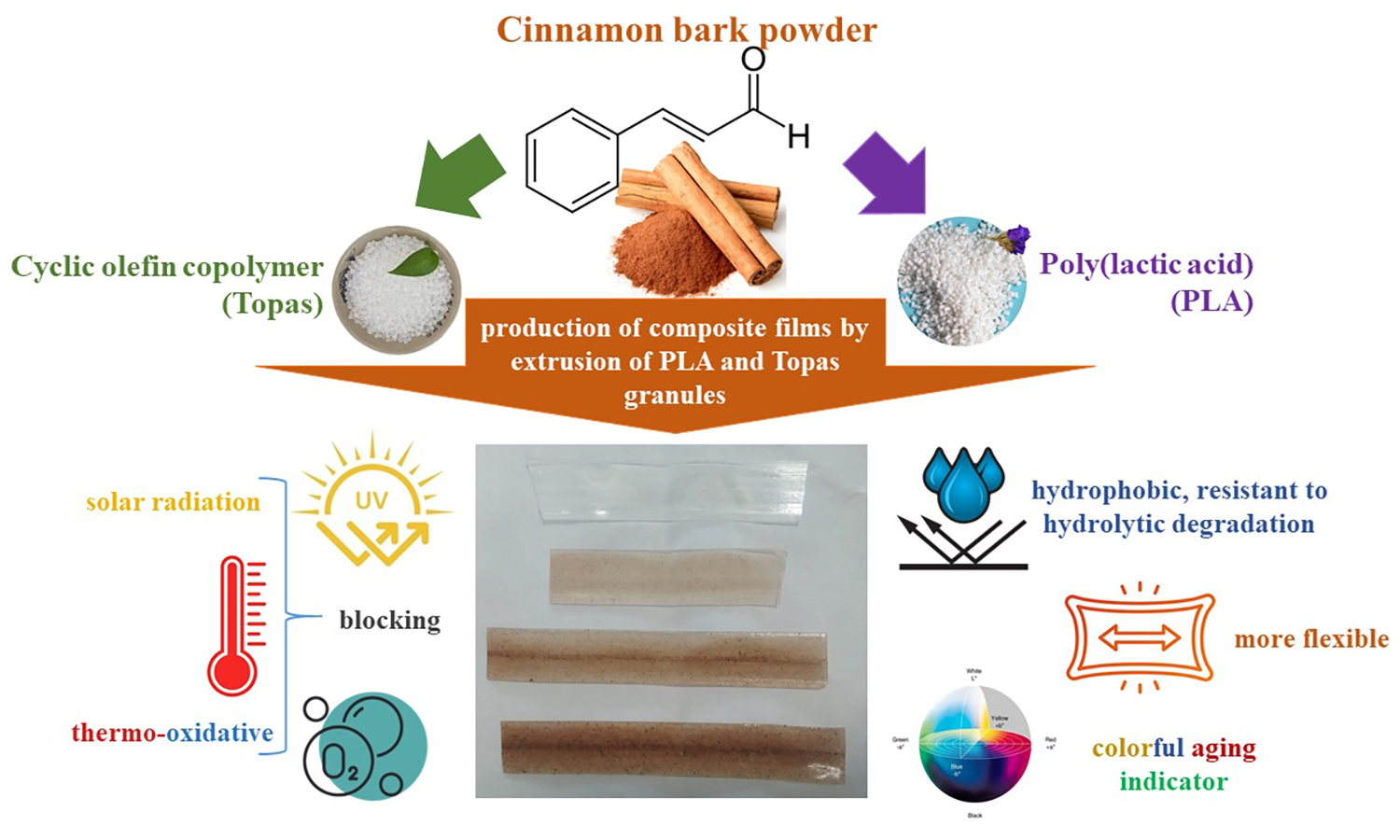
The growing focus on sustainability, eco-friendly technologies, decarbonization, and reducing carbon footprints shapes current industry challenges. This article reviews the potential of cinnamon as a bio-additive for polymer stabilization in packaging. Samples were prepared from ethylene-norbornene copolymer (Topas), a cyclic olefin copolymer known for purity, transparency, and low gas permeability, and poly(lactic acid) (PLA), a bio-based alternative to petroleum plastics. Cinnamon powder was added in 0.5, 1.0, and 1.5 wt%. After solar and thermo-oxidative aging, hydrophobicity, chemical composition, mechanical, and color properties were analyzed. Results showed higher hydrophobicity and resistance to hydrolytic degradation due to reduced water penetration. PLA, normally brittle, became more flexible, with 0.5 wt% cinnamon showing optimal performance after 100 h of solar aging, similar to Topas composites. Overall, PLA and cyclic olefin copolymer (COC) films with cinnamon improved durability, extended food shelf life, and acted as natural color indicators of material aging.
Yashpal Singh, Raj Kumar, Nikhil Chauhan, Tejas Pramod Naik, Inderdeep Singh
Vol. 20., No.1., Pages 97-111, 2026
DOI: 10.3144/expresspolymlett.2026.8
Vol. 20., No.1., Pages 97-111, 2026
DOI: 10.3144/expresspolymlett.2026.8
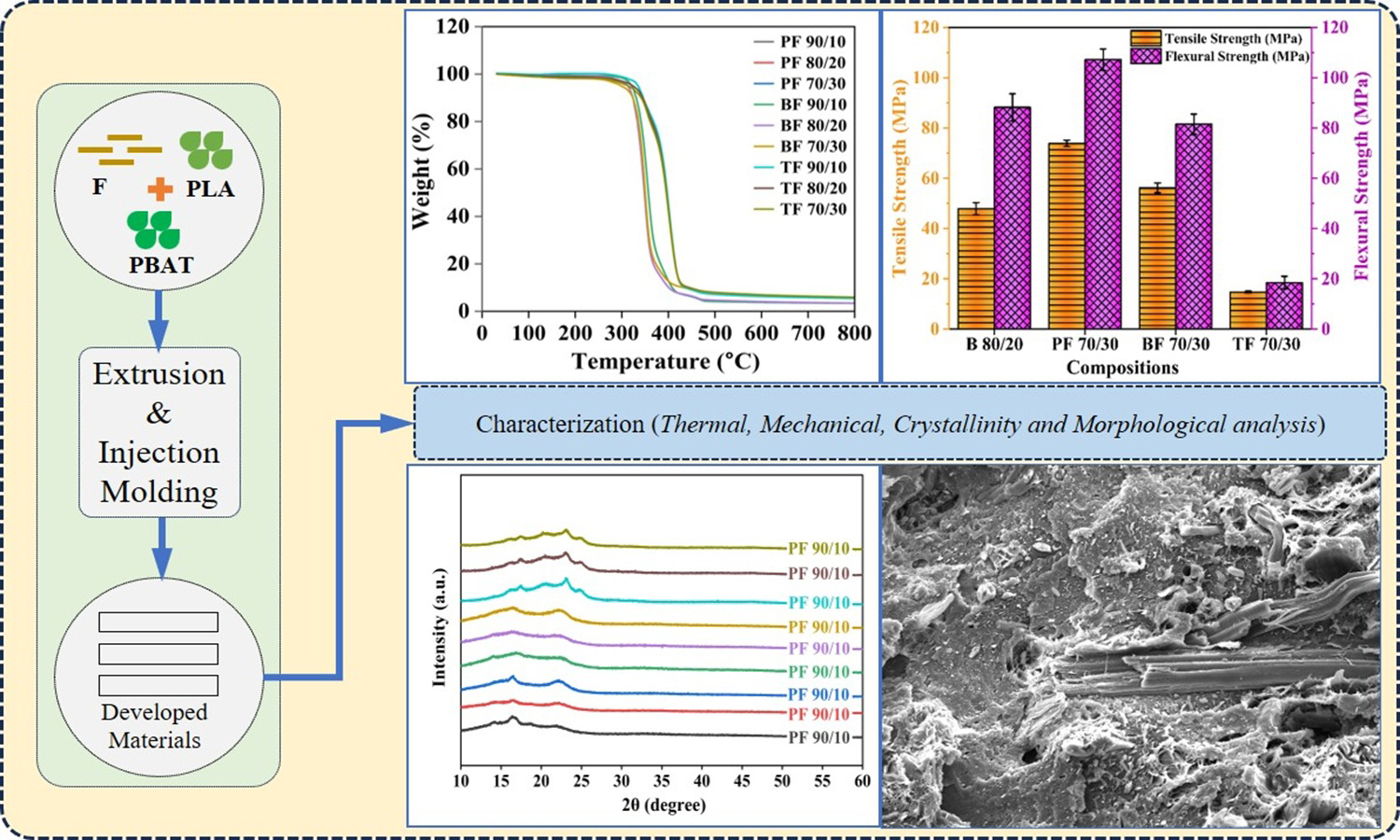
The current experimental investigation presents a comparative evaluation of selected biodegradable polymer blends and their composites, focusing on their material properties. Two biopolymers, polylactic acid (PLA) and polybutylene adipate-co-terephthalate (PBAT), along with pineapple fibers (F), as bio-reinforcement were taken for the analysis, which was conducted in two stages: During first stage, PBAT was melt-blended with PLA in varying weight fractions (10, 20, 30, 40, and 50 wt%) to produce PLA/PBAT blend (B) and in second stage, PLA, PBAT, B 80/20 blend were reinforced with pineapple fiber (10, 20, and 30 wt%). The samples were fabricated using extrusion-injection molding. The samples were characterized for density, thermal degradation, crystallinity, and mechanical behaviour. Among the blends, the optimal B 80/20 combination exhibited tensile strength, flexural strength, and elongation at break of 47.9±2.4, 88.2±5.4 MPa, and 330.6±10.47%, respectively. Results indicate that the PLA-based composites (PF) exhibit significantly better density, tensile strength, and flexural strength as compared to neat polymers, blends, blend-based composites (BF), and PBAT-based composites (TF). Among the PF composites, the PF 70/30 composite demonstrated superior performance, with maximum tensile and flexural strength values of 73.9±1.3 and 107.1±4.3 MPa, respectively.