Synthesis and characteristics of α-carboxylic, ω-hydroxyl natural rubber toughened poly(lactic acid)
Abdulhakim Masa, Varaporn Tanrattanakul, Ruedee Jaratrotkamjorn
Vol. 17., No.11., Pages 1121-1134, 2023
DOI: 10.3144/expresspolymlett.2023.85
DOI: 10.3144/expresspolymlett.2023.85
Corresponding author: Ruedee Jaratrotkamjorn 
GRAPHICAL ABSTRACT
ABSTRACT
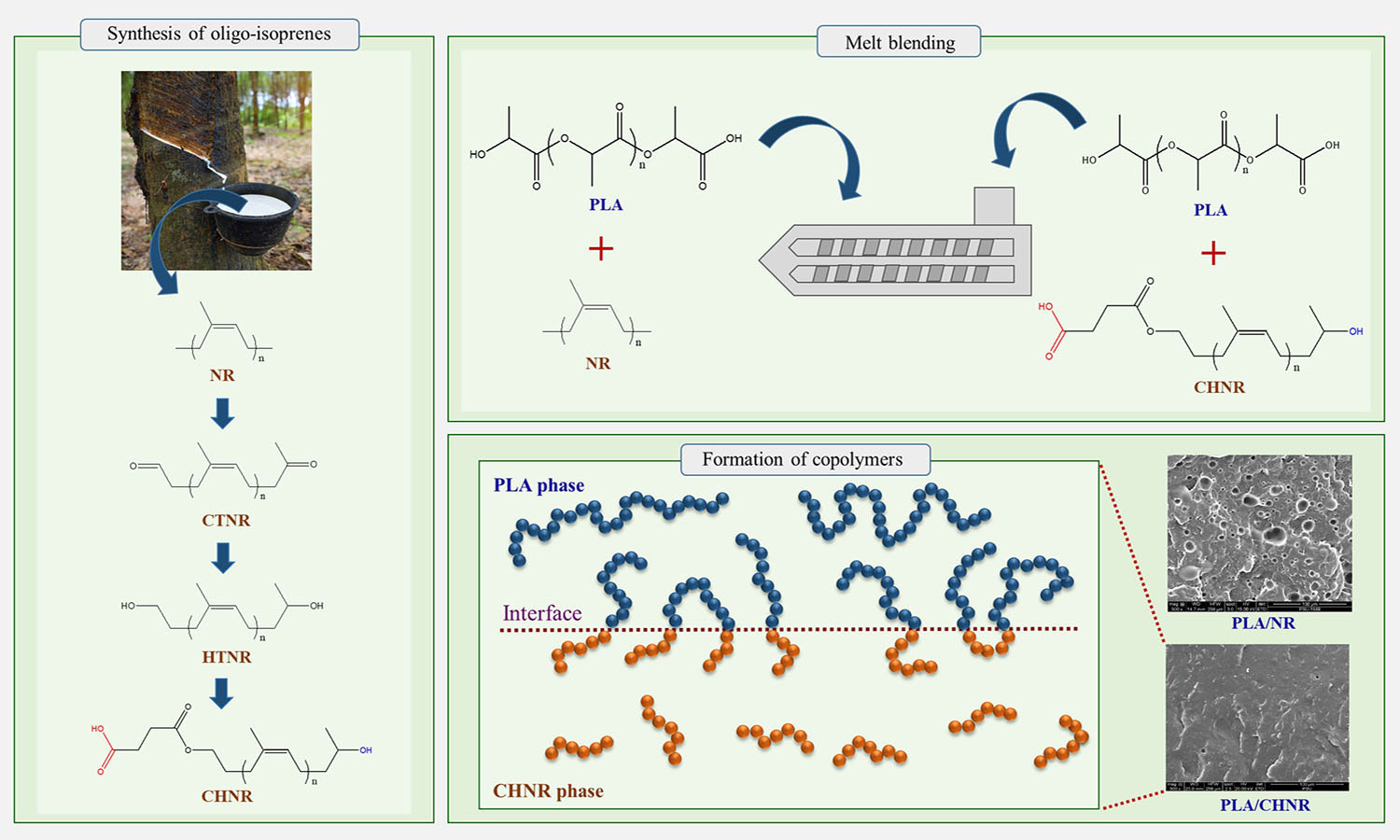
This work presented the synthesis of α-carboxyl, ω-hydroxyl natural rubber (CHNR) for use as an alternative toughening agent for poly(lactic acid) (PLA). The proton nuclear magnetic resonance spectroscopy (1H-NMR) and Fourier transform infrared spectroscopy (FTIR) analyses verified the chemical structure of CHNR consisting of the hydroxyl and carboxyl end groups. The molecular weights of CHNR were set from 5000 to 15 000 g·mol–1 which were determined by gel permeation chromatography (GPC) and 1H-NMR. The PLA and CHNR were prepared by reactive blending using a twinscrew extruder. It was found that the reaction between PLA and CHNR proceeded through transesterification without a catalyst. The formation of copolymer (PLA-co-CHNR) at the interface of PLA and CHNR increased the interfacial adhesion between the two phases. Differential scanning calorimetry (DSC) analysis revealed that CHNR was more compatible with PLA than natural rubber (NR). The compatibilization affected the blend morphology by reducing the interfacial tension. It resulted in a reduction of rubber particle size. The CHNR with a molecular weight of 5000 g·mol–1 showed the greatest improvement in the toughness and ductility of PLA.
RELATED ARTICLES
Zhen Chen, Liang Xu, Yu Bai, Wei Wang , Junfeng Qian, Xiaoliang Yin, Jizhou Du, Jing Zhang
Vol. 20., No.7., Pages 724-741, 2026
DOI: 10.3144/expresspolymlett.2026.55
Vol. 20., No.7., Pages 724-741, 2026
DOI: 10.3144/expresspolymlett.2026.55
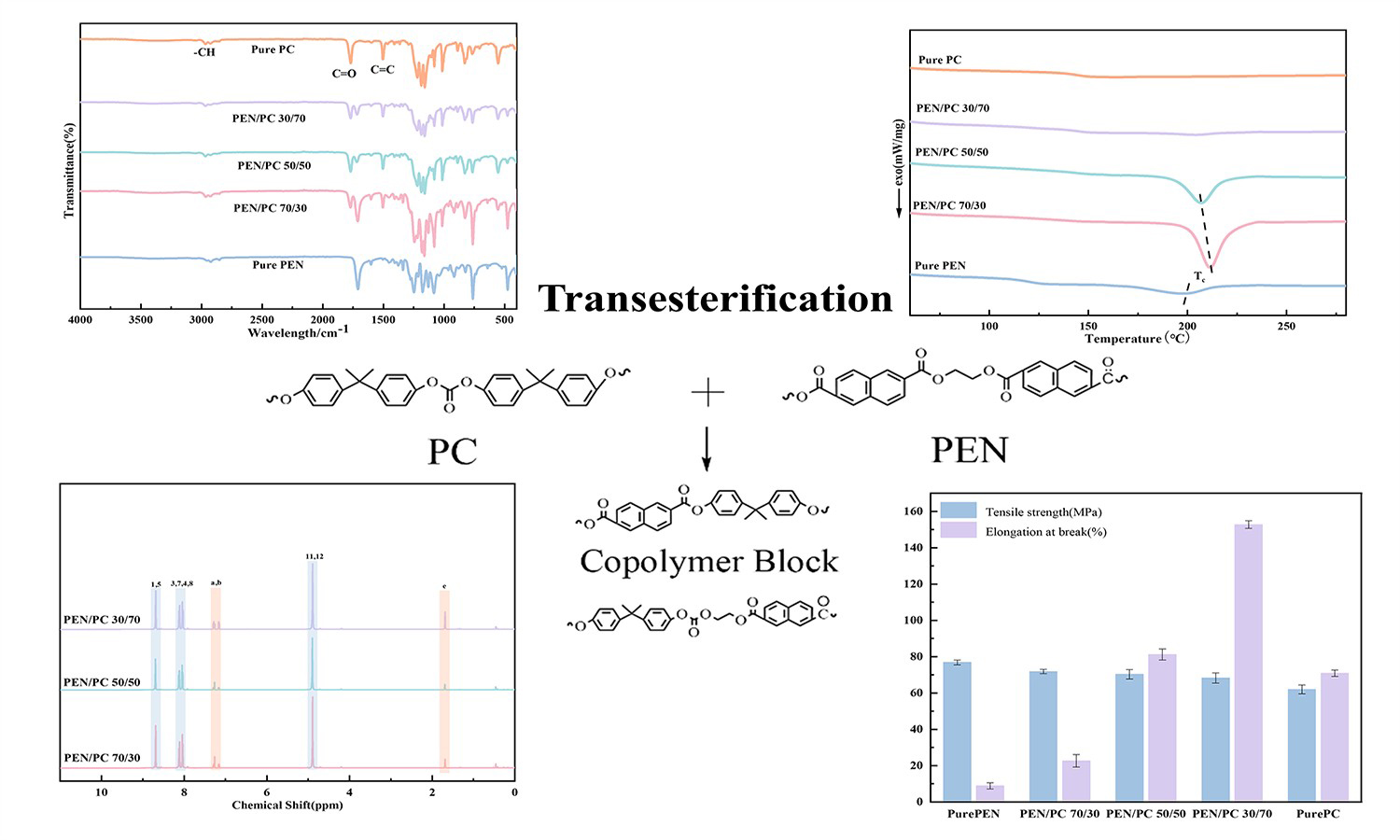
Conventional poly(ethylene terephthalate) (PET) and polycarbonate (PC) blends exhibit insufficient heat resistance, restricting their use in demanding applications such as new energy vehicles and portable consumer electronics. Poly(ethylene 2,6-naphthalate) (PEN) offers superior thermal stability, strength and chemical resistance, making PEN/PC blends promising alternatives. In this study, we investigated the relationships between the composition, structure and properties of PEN/PC blends through non-catalyzed melt blending. Fourier transform infrared spectroscopy (FTIR) and proton nuclear magnetic resonance spectra (1H NMR) confirm transesterification between PEN and PC, with the extent of exchange (X) increasing with PC content. Non-isothermal differential scanning calorimetry (DSC) and X-ray diffraction (XRD) show that moderate PC content promotes crystallization, while high PC content suppresses it. Thermogravimetric analysis (TGA) shows enhanced thermal stability in PEN-rich blends. Compared to PET/PC, PEN/PC blends maintain similar tensile strength but exhibit 53% higher elongation and 1–2.5% lower density. This study demonstrates the potential of PEN/PC blends for high-performance, thin-walled applications in the new energy vehicle and electronics industries.
Malgorzata Latos-Brozio, Aleksandra Drzazga, Anna Masek, Zdzisława Mrozińska, Marcin H. Kudzin
Vol. 20., No.7., Pages 742-760, 2026
DOI: 10.3144/expresspolymlett.2026.56
Vol. 20., No.7., Pages 742-760, 2026
DOI: 10.3144/expresspolymlett.2026.56
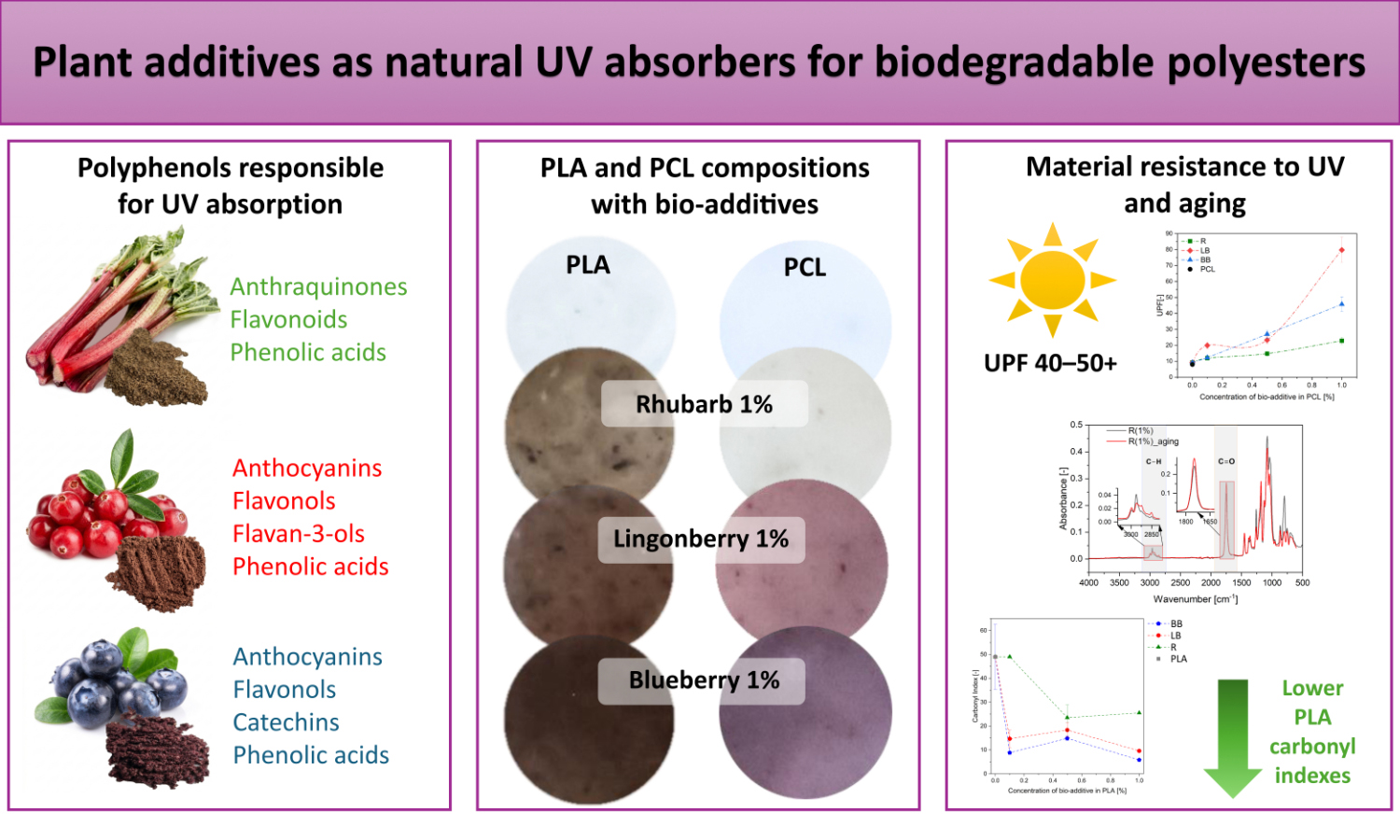
We investigated the effectiveness of plant-based bio-additives – rhubarb, lingonberry, and blueberry (0.1–1%) – as natural UV absorbers in biodegradable polymers polylactide (PLA) and polycaprolactone (PCL). A novelty of this work is the direct use of plant-based raw materials as UV absorbers in polymers. We performed Fourier transformed infrared spectroscopy (FT-IR) and UV-Vis analysis of the bio-additives, determined the ultraviolet protection factor (UPF) for the polymer samples, and evaluated their physicochemical properties (structural changes, colour, hardness, surface energy) after weathering (PLA) and thermo-oxidative (PCL) aging. Spectroscopic tests confirmed the presence of UV-A/UV-B-absorbing chromophores in the additives. Samples with 1% berries had excellent UV protection (UPF 40–50+), while PLA and PCL containing 1% rhubarb had lower UPF values (around 22), indicating good UV blocking properties. After aging, PLA-containing berries showed a significantly lower carbonyl index (CI), indicating reduced photodegradation. For PCL with lingonberry, this additive gave the greatest reduction in thermo-oxidative degradation (lowest CI). All plant additives increased material hardness by acting as nucleating agents; they increased the crystallinity of polyester, and aging further strengthened this effect. Bio-additives, especially berries, can increase the hardness and UV resistance of polymers and limit material aging. These polymer compositions are suitable for packaging materials.
Anna Morawska-Chochół, João Gabriel Antoniazzi, Murilo Daniel de Mello Innocentini
Vol. 20., No.6., Pages 579-593, 2026
DOI: 10.3144/expresspolymlett.2026.44
Vol. 20., No.6., Pages 579-593, 2026
DOI: 10.3144/expresspolymlett.2026.44
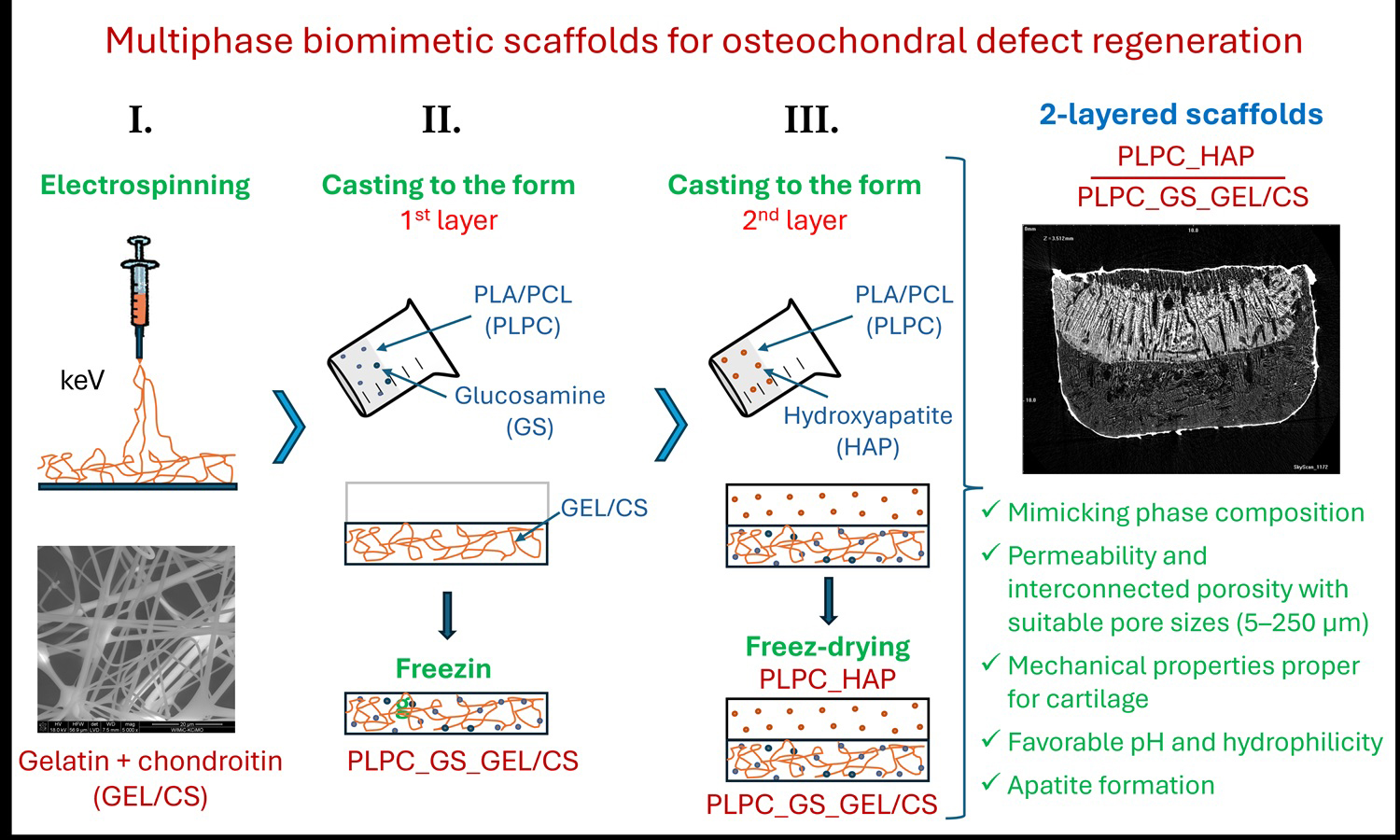
This study reports the fabrication and evaluation of layered scaffolds based on polylactide/polycaprolactone (PLPC) matrices for osteochondral-inspired designs. Bilayer architectures comprised a bone-facing layer with mineral phase (PLPC containing hydroxyapatite, HAP) and a cartilage-facing layer (PLPC containing only glucosamine sulfate (GS) or with simultaneous use of GS and an integrated electrospun gelatin/chondroitin sulfate (GEL/CS) fabric). The scaffolds exhibited interconnected porosity (55–60%) with a pore-size gradient (5–250 μm). Mechanical testing showed compressive strength up to 1 MPa and a layer-dependent compressive modulus, remaining within ranges reported for osteochondral tissues after six weeks of incubation. The layered configuration provided controlled GS release and reduced incubation-induced acidification; FTIR/XRD confirmed apatite precipitation in phosphate-buffered saline (PBS), enhanced when the GEL/CS fabric was present. After incubation, surface wettability shifted toward increased hydrophilicity, and permeability was modulated by scaffold composition, indicating tunable fluid-transport behavior. Overall, spatial separation of additives combined with a fibrous GEL/CS modifier enables control over mechanical response, release/medium evolution during incubation, and in vitro apatite-forming ability in PBS in a bilayer PLPC scaffold system.
Xuecheng Lu, Ke Feng, Zhiqiang Zhang, Xuyan Lü, Yujie Xiao, Haijun Wang
Vol. 20., No.4., Pages 371-382, 2026
DOI: 10.3144/expresspolymlett.2026.29
Vol. 20., No.4., Pages 371-382, 2026
DOI: 10.3144/expresspolymlett.2026.29
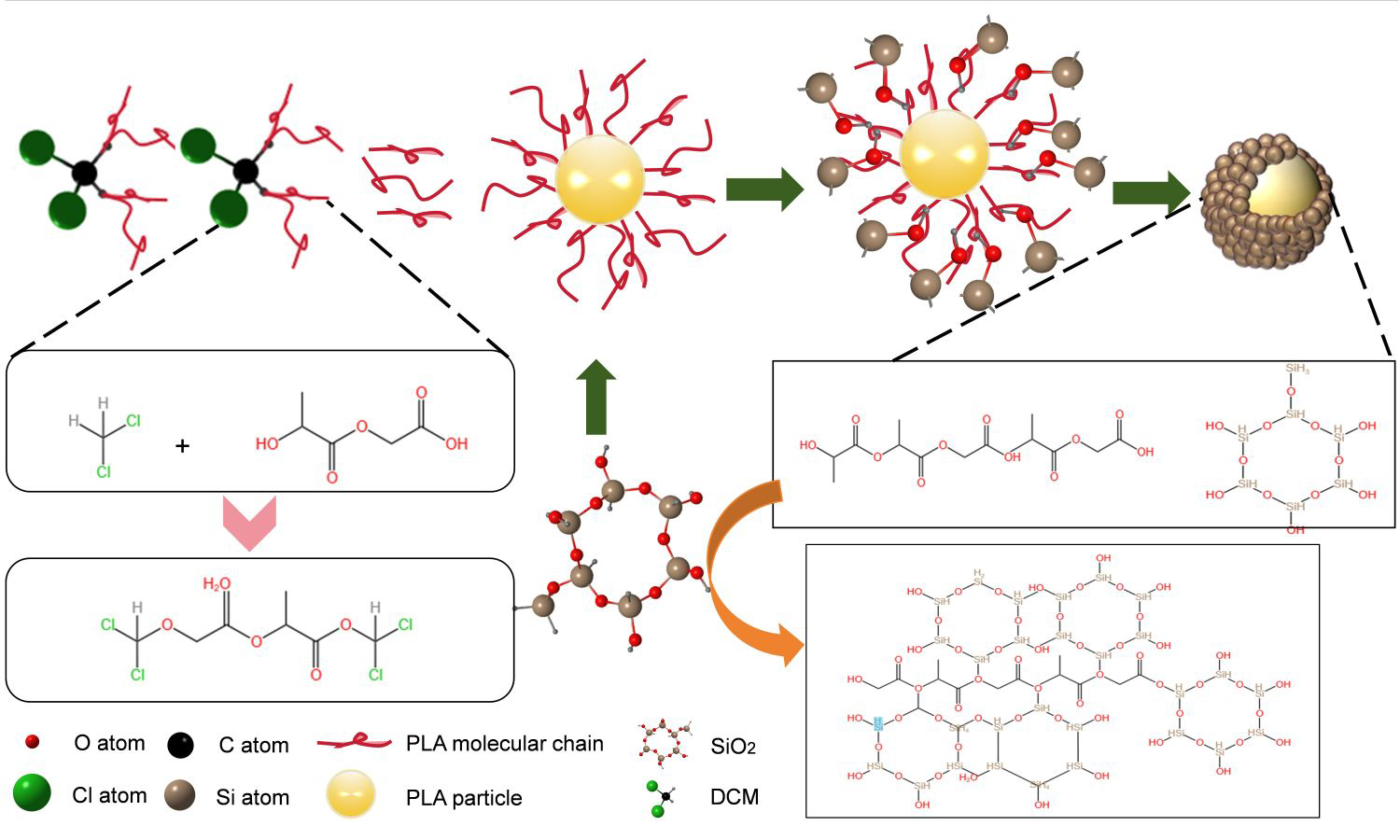
To improve the toughness, thermal stability, and melt processability of polylactic acid (PLA), this study introduced chlorinated polyethylene-polyethylene glycol (CPE-PEG, 10 wt%) into the PLA matrix and investigated the effect of the content of nano-SiO2 surface-modified with the silane coupling agent KH570 (K-SiO2) on the composite properties. Composite filaments were prepared via single-screw extrusion, and standard specimens were printed using fused deposition modeling (FDM) technology. Comprehensive characterization indicated that the composite achieved optimal mechanical properties at a K-SiO2 content of 1.5 wt%; simultaneously, the material’s thermal stability and crystallization behavior were optimized. Rheological behavior demonstrated that K-SiO2 could regulate the melt viscoelasticity, broadening the FDM processing window. This study provides an effective strategy for developing high-performance PLA composites for FDM printing.
Abdulhakim Masa, Ruedee Jaratrotkamjorn
Vol. 20., No.2., Pages 186-196, 2026
DOI: 10.3144/expresspolymlett.2026.15
Vol. 20., No.2., Pages 186-196, 2026
DOI: 10.3144/expresspolymlett.2026.15
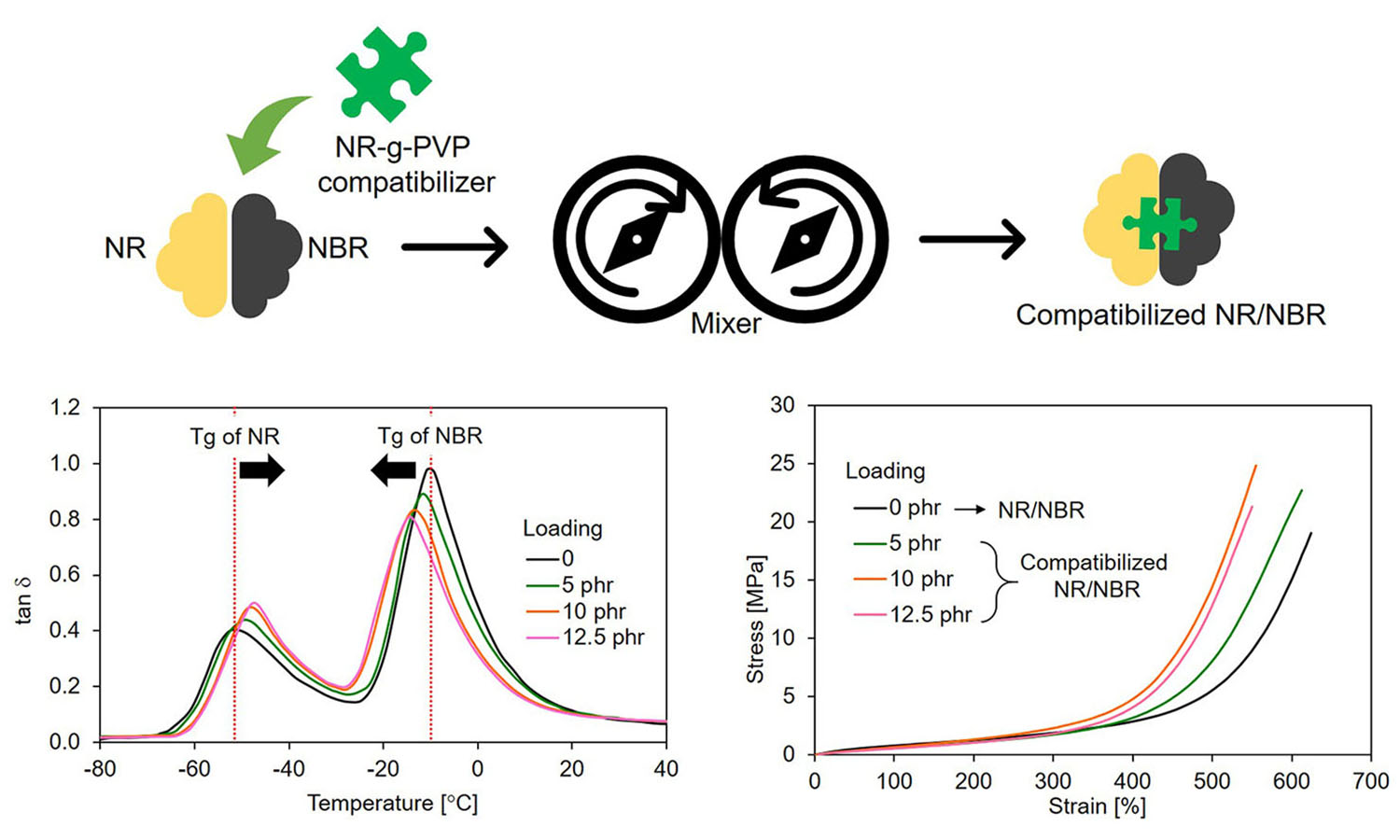
Natural rubber (NR) and acrylonitrile butadiene rubber (NBR) are typically incompatible due to differences in their polarity, which causes poor mechanical properties. In this study, a new type of compatibilizer, namely G10 or poly(vinyl propionate)-grafted natural rubber (NR-g-PVP) containing 10 wt% PVP, is employed to improve the compatibility in 50/50 blends of NR and NBR. The results show that G10 promotes the compatibility and shifts the glass transition temperatures (Tg) of NR and NBR towards each other. This indicates that G10 interacts with both NR and NBR phases. The improved compatibility resulted in a more homogeneous blend with smooth surface morphology. The mechanical properties of the blend, including 300 and 500% moduli, tensile strength, and tear resistance, increased with G10 content up to 7.5 phr. The highest tensile strength of the NR/NBR blend was achieved with 7.5 phr of G10 compatibilizer, showing an improvement of approximately 40.7% over the control sample. The results clearly revealed that NR-g-PVP can be utilized as an effective compatibilizer in NR/NBR blends.