Deterioration behavior of aged magnetorheological elastomer under harsh marine environment
Nursyafiqah Zaini , Saiful Amri Mazlan, Siti Aishah Abdul Aziz, Mohd Aidy Faizal Johari, Ubaidillah Ubaidillah, Nur Azmah Nordin, Muntaz Hana Ahmad Khairi, Megat Ahmad Kamal Megat Hanafiah
, Saiful Amri Mazlan, Siti Aishah Abdul Aziz, Mohd Aidy Faizal Johari, Ubaidillah Ubaidillah, Nur Azmah Nordin, Muntaz Hana Ahmad Khairi, Megat Ahmad Kamal Megat HanafiahVol. 18., No.7., Pages 728-741, 2024
DOI: 10.3144/expresspolymlett.2024.54
DOI: 10.3144/expresspolymlett.2024.54
Corresponding author: Nursyafiqah Zaini 
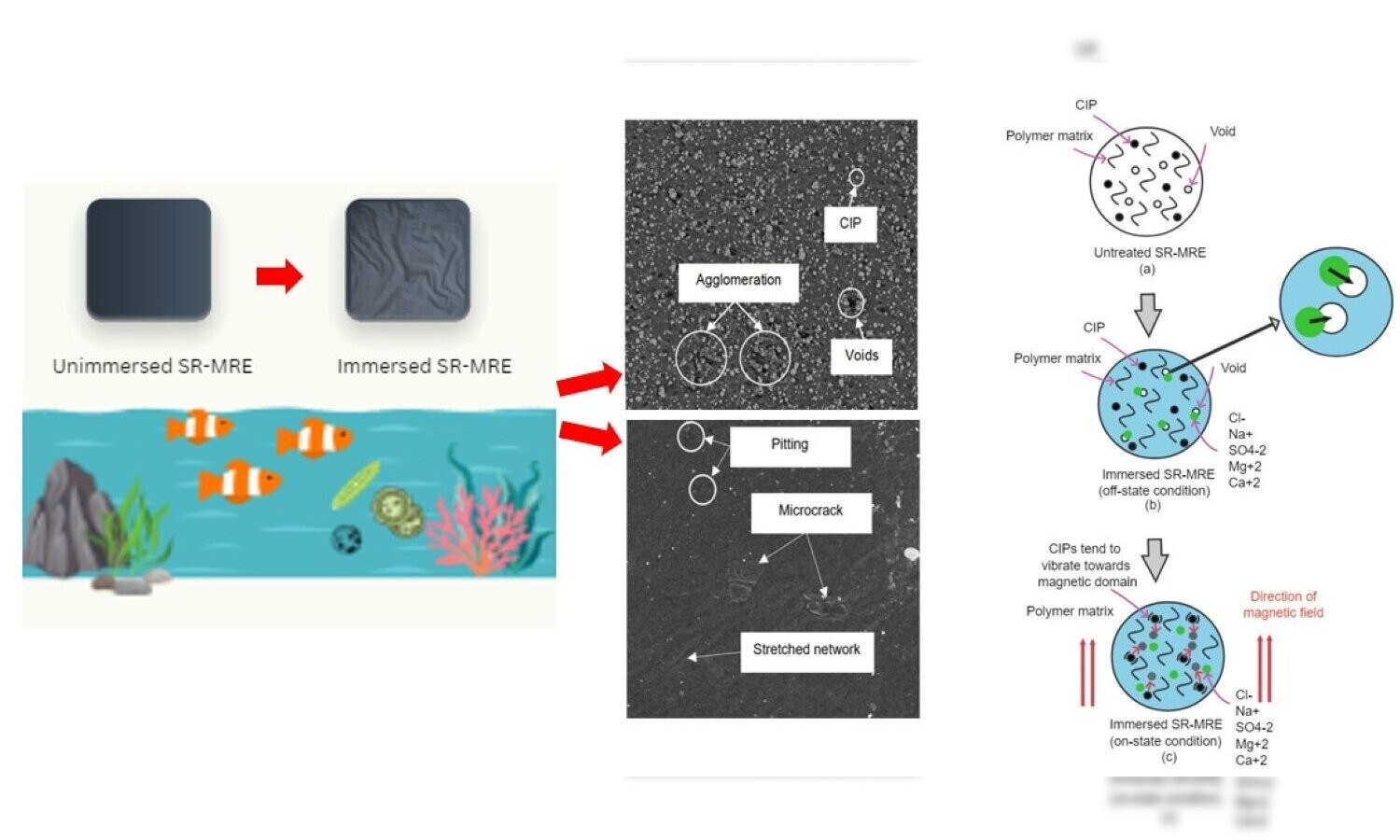
GRAPHICAL ABSTRACT
ABSTRACT
Silicone rubber magnetorheological elastomers (SR-MREs) are increasingly recognized for their resilience in marine conditions, offering prolonged service life and durability. This study evaluates the one-month durability of silicone rubber magnetorheological elastomers (SR-MREs) under seawater conditions. Results revealed a 6% reduction in hardness and an 8% decrease in Young’s modulus compared to unimmersed samples. Morphological and attenuated total reflectance-Fourier transform infrared spectroscopy (ATR-FTIR) analyses supported these findings, revealing surface defects and chemical bonding changes. The immersed SR-MRE displayed a notable 250% increase in elongation at break, highlighting enhanced elasticity. Rheological properties revealed complex mechanical behavior, with an initial increase in storage modulus from 0.25 to 0.38 MPa in the presence of a magnetic field, followed by a gradual decrease to 0.15 MPa at 0 A and 0.52 Mpa at 5 A with strain. Additionally, this study proposes an illustrative mechanism to elucidate the relationship between seawater elements and SR-MRE behavior, enhancing our understanding of its mechanical properties and degradation in marine environments, thus highlighting SR-MRE’s potential as a durable material compared to traditional rubber composites.
RELATED ARTICLES
Song Wu, Jiaye Li, Shipeng Wen
Vol. 20., No.10., Pages 971-973, 2026
DOI: 10.3144/expresspolymlett.2026.71
Vol. 20., No.10., Pages 971-973, 2026
DOI: 10.3144/expresspolymlett.2026.71
This is an editorial article. It has no abstract.
Péter Tamás-Bényei, Andrea Kohári, Ákos Görbe, Lóránt Kiss, Katalin Litauszki, Ferenc Szabó, László Mészáros, Károly Renner, Tamás Bárány
Vol. 20., No.6., Pages 547-550, 2026
DOI: 10.3144/expresspolymlett.2026.41
Vol. 20., No.6., Pages 547-550, 2026
DOI: 10.3144/expresspolymlett.2026.41
This is an editorial article. It has no abstract.
Wu Qin, Rui Zhang, Long Zheng, Danling Wang, Sheng Chen, Huiming Ren, Shui Hu, Shipeng Wen
Vol. 20., No.6., Pages 551-562, 2026
DOI: 10.3144/expresspolymlett.2026.42
Vol. 20., No.6., Pages 551-562, 2026
DOI: 10.3144/expresspolymlett.2026.42
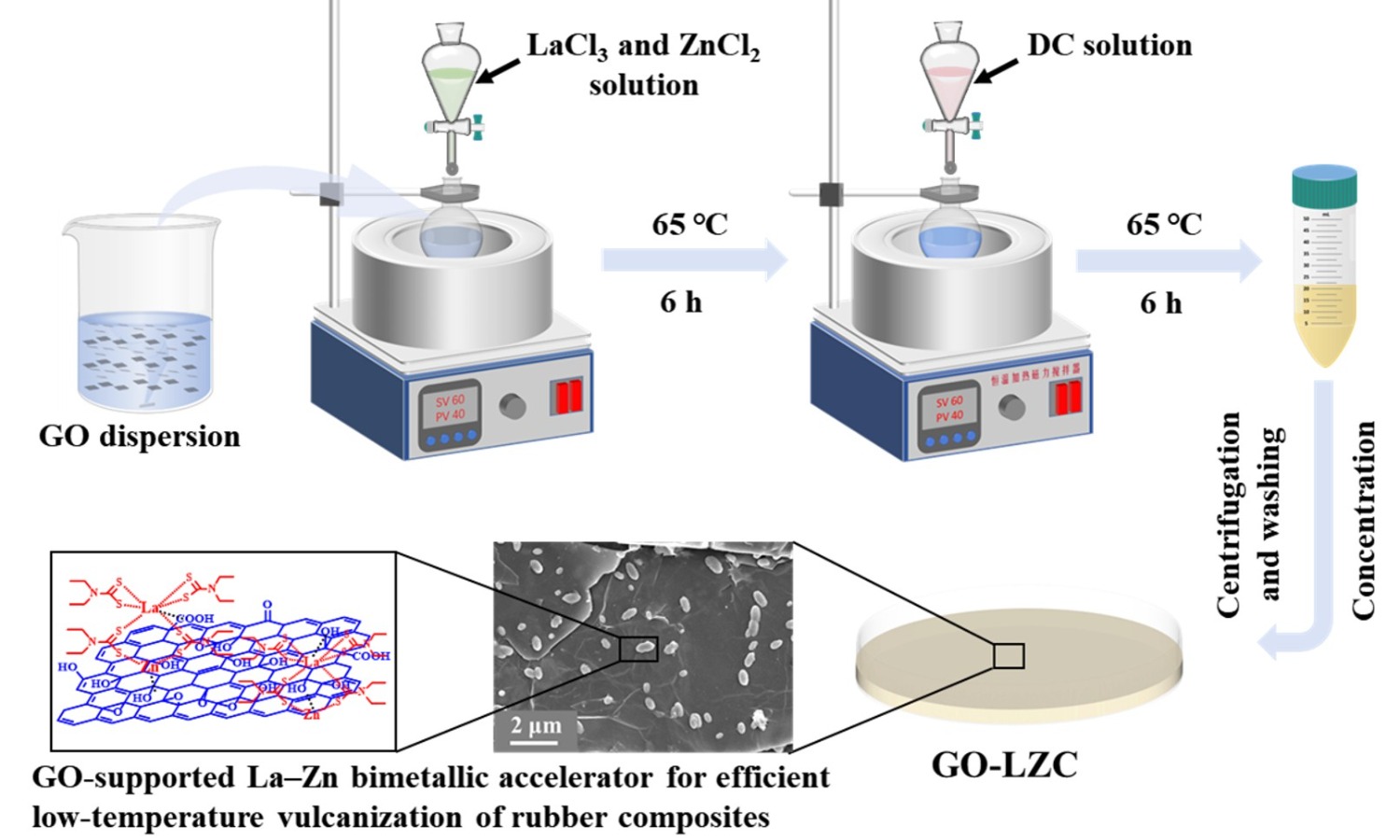
Conventional sulfur vulcanization in rubber manufacturing depends on elevated curing temperatures and zinc oxide activators, resulting in high energy consumption and increasing environmental concerns associated with zinc release. To overcome these limitations, a novel graphene oxide (GO)-supported rare-earth-containing accelerator (GO–LZC) was designed by coordinating lanthanum(III) and zinc(II) ions with sodium diethyldithiocarbamate (DC). At the same time, the oxygen-containing groups on GO further participated in ligand coordination. The resulting GO-immobilized complex exhibits a well-defined chelating structure and uniform nanoscale dispersion, which together enhance the accessibility and reactivity of active sulfurating species during curing. When incorporated into solution-polymerized styrene–butadiene rubber (SSBR), GO–LZC markedly promotes crosslink formation at reduced thermal input. Kinetic analysis reveals a substantial decrease in the apparent activation energy, and curing and mechanical tests confirm that efficient vulcanization can be achieved at 130 °C, representing a 20–40 °C reduction relative to typical industrial curing conditions. This work demonstrates a viable strategy for developing low-zinc, energy-efficient, and high-performance vulcanization systems. It highlights the potential of rare-earth/GO hybrid catalysts for sustainable rubber processing.
Using dual-cure architectures in HNBR: A detailed insight into their structure-property relationship
Sharmistha Dhar, Arshad Rahman Parathodika, Dibyendu Dey, Kinsuk Naskar
Vol. 20., No.5., Pages 514-530, 2026
DOI: 10.3144/expresspolymlett.2026.39
Vol. 20., No.5., Pages 514-530, 2026
DOI: 10.3144/expresspolymlett.2026.39
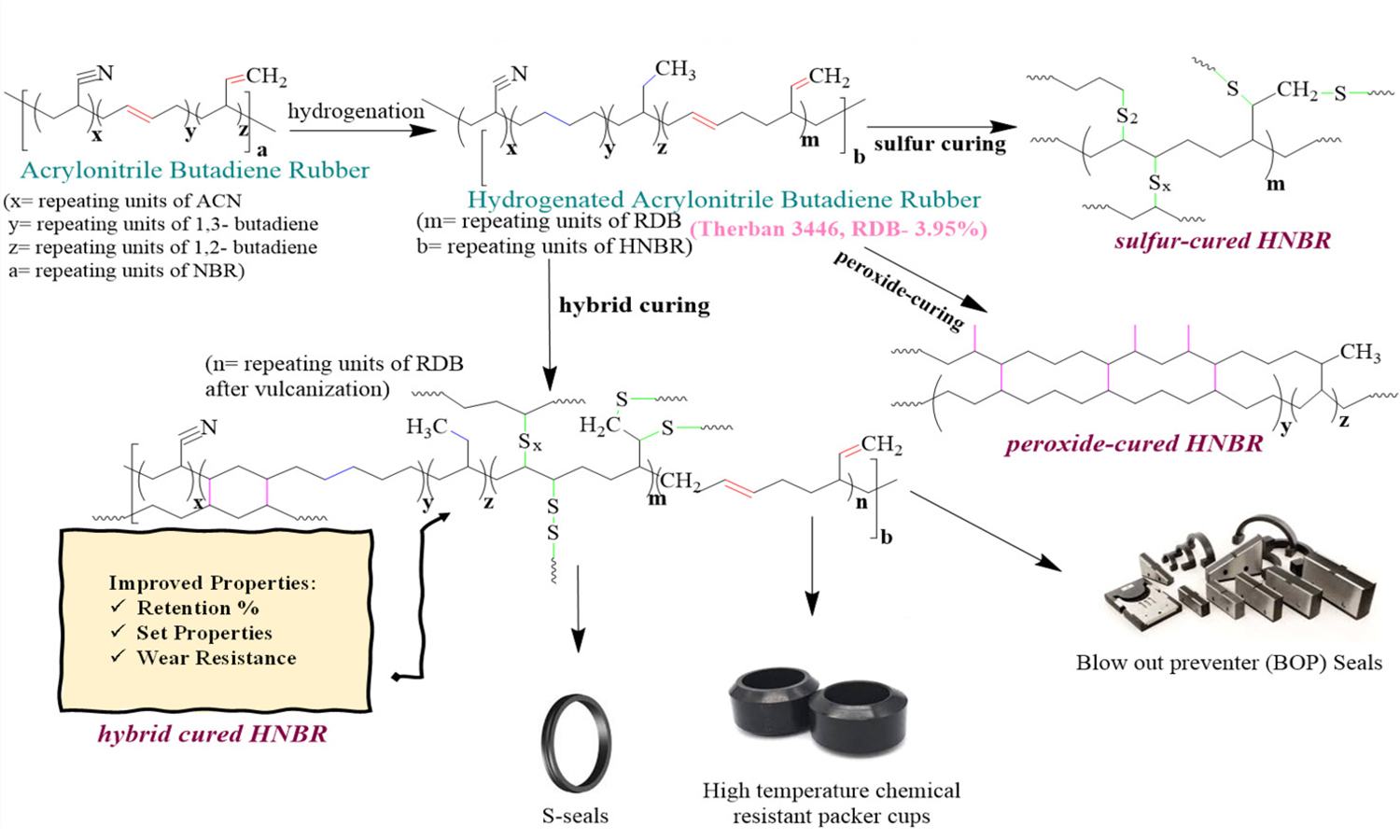
Hydrogenated acrylonitrile–butadiene rubber (HNBR) is widely used in automotive and sealing applications due to its oil resistance and mechanical durability; however, its long-term performance is significantly influenced by the curing chemistry. Sulfur vulcanization offers superior elasticity but restricted thermal stability, while peroxide curing improves heat resistance at the expense of flexibility. In this study, we investigate hybrid sulfur–peroxide curing to integrate these benefits. The hybrid pathway encompasses competitive and sequential processes, such as partial radical quenching and accelerator oxidation, resulting in a dual crosslink network. Dynamic mechanical, thermal, and temperature scanning stress relaxation (TSSR) evaluations demonstrate that hybrid systems provide precise modulation of the operational temperature–frequency range, broaden the glass-transition relaxation, and control stress dissipation. The coexistence of sulfur and C–C crosslinks results in a heterogeneous structure characterized by diverse crosslink densities and bond energies, leading to numerous relaxation modes and an optimal blend of elasticity, strength, and thermal stability. Microscopy confirms the absence of phase separation, indicating that hybrid vulcanization is a viable approach for producing robust, high-performance HNBR elastomers.
Junxiu Xue, Kaituo Fang, Zhenchun Xu, Huiguang Bian, Yu Wang, Yongming Zhang
Vol. 20., No.5., Pages 489-500, 2026
DOI: 10.3144/expresspolymlett.2026.37
Vol. 20., No.5., Pages 489-500, 2026
DOI: 10.3144/expresspolymlett.2026.37
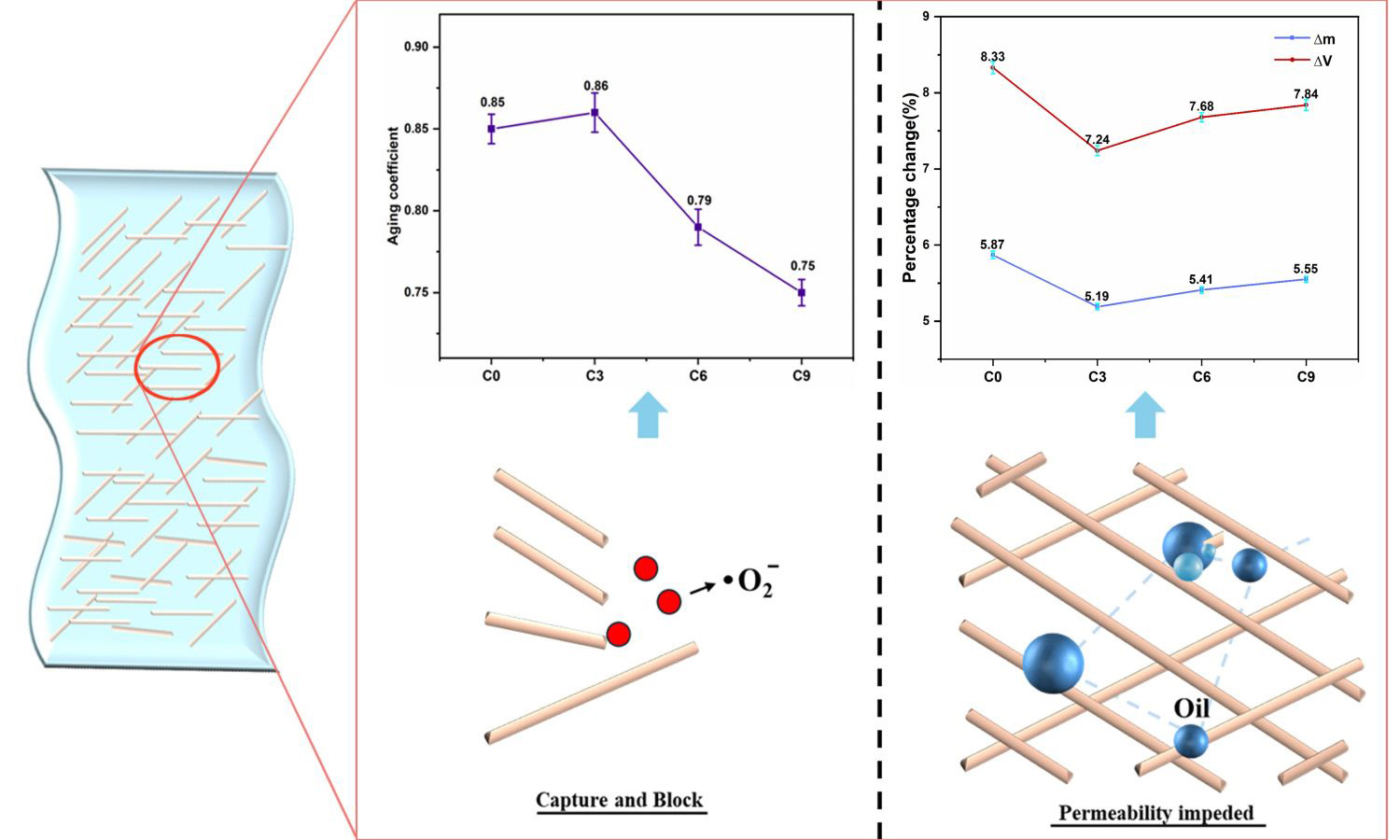
This study investigates the effects of renewable chopped cellulose fiber (CCleF) on the physical and mechanical properties, oil resistance, and thermal-oxidative aging behavior of acrylonitrile-butadiene rubber (NBR), aiming to determine the optimal filler content. CCleF/NBR composites with varying CCleF loadings were prepared and systematically characterized through analyses of vulcanization behavior, three-dimensional morphology, mechanical properties, thermal-oxidative aging, and oil resistance. The results indicate that the composite with 3 phr CCleF exhibits uniform fiber dispersion and optimal overall performance, showing enhanced processability, a reduced vulcanization time, and improved physical and mechanical properties. After thermal-oxygen aging, the composite demonstrated superior stability: the percentage change in tensile modulus, rebound resilience, and DIN abrasion decreased significantly by 13.73, 49.82, and 74.9%, respectively, while the aging coefficient reached 0.86. Notably, this composite also exhibited excellent oil resistance, with a volume expansion rate of 7.24%, which is 13.1% lower than that of unfilled NBR. Correspondingly, the tensile product’s retention rate decreased by 37.72%, while rebound resilience and abrasion resistance improved. This study demonstrates that incorporating 3 phr CCleF is a practical approach to achieving high-performance NBR, providing a material basis for its use in demanding environments such as the petrochemical industry.