
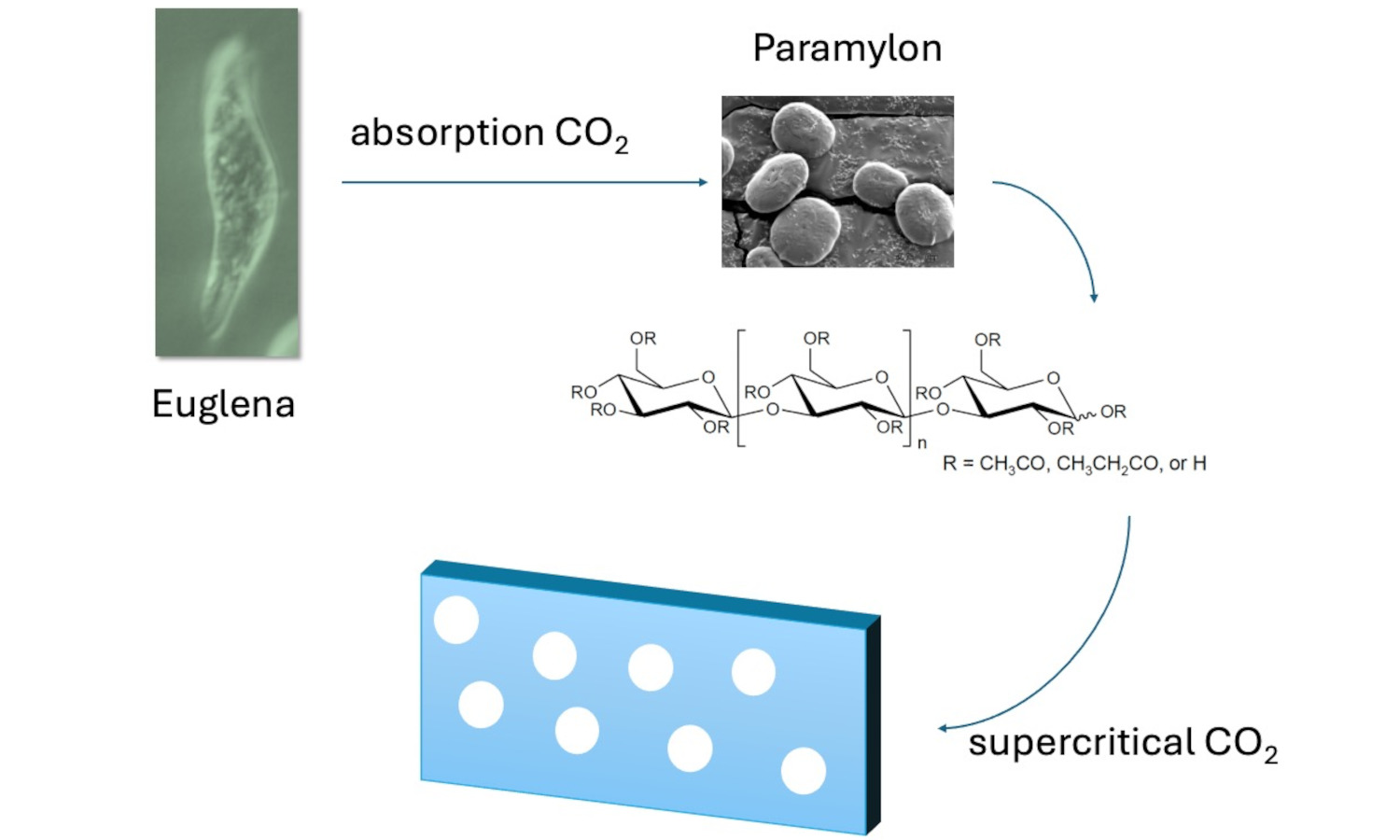
Formation of porous structure in paramylon esters via supercritical CO₂
Seisuke Ata , Takumi Ono, Motonari Shibakami
, Takumi Ono, Motonari ShibakamiVol. 19., No.6., Pages 628-635, 2025
DOI: 10.3144/expresspolymlett.2025.47
DOI: 10.3144/expresspolymlett.2025.47
Corresponding author: Seisuke Ata 
GRAPHICAL ABSTRACT
ABSTRACT
This study demonstrated, for the first time, the successful formation of porous paramylon esters, which were made from euglenoid polysaccharide known as paramylon and short-chain fatty acids, through supercritical CO2 processing. By maintaining a constant ester functional group attached to the paramylon and varying its proportion, distinct porous structures were selectively produced. Solubility parameter estimations indicated that changes in esterification had no significant effect on the solubility of the paramylon esters used in the experiment. Thus, these structural differences are likely attributed to variations in the viscoelastic properties of paramylon esters under supercritical CO2 conditions. Furthermore, thermal conductivity measurements revealed reductions of up to 20%. Intriguingly, substantial decreases in thermal conductivity were observed even at low foaming ratios, achieved through precise control of the porous structure.
RELATED ARTICLES
Praveenkumara Jagadeesh, Gokul Kannan, Mat Jusoh Suriani, Madhu Puttegowda, Sanjay Mavinkere Rangappa, Suchart Siengchin
Vol. 20., No.8., Pages 799-839, 2026
DOI: 10.3144/expresspolymlett.2026.61
Vol. 20., No.8., Pages 799-839, 2026
DOI: 10.3144/expresspolymlett.2026.61
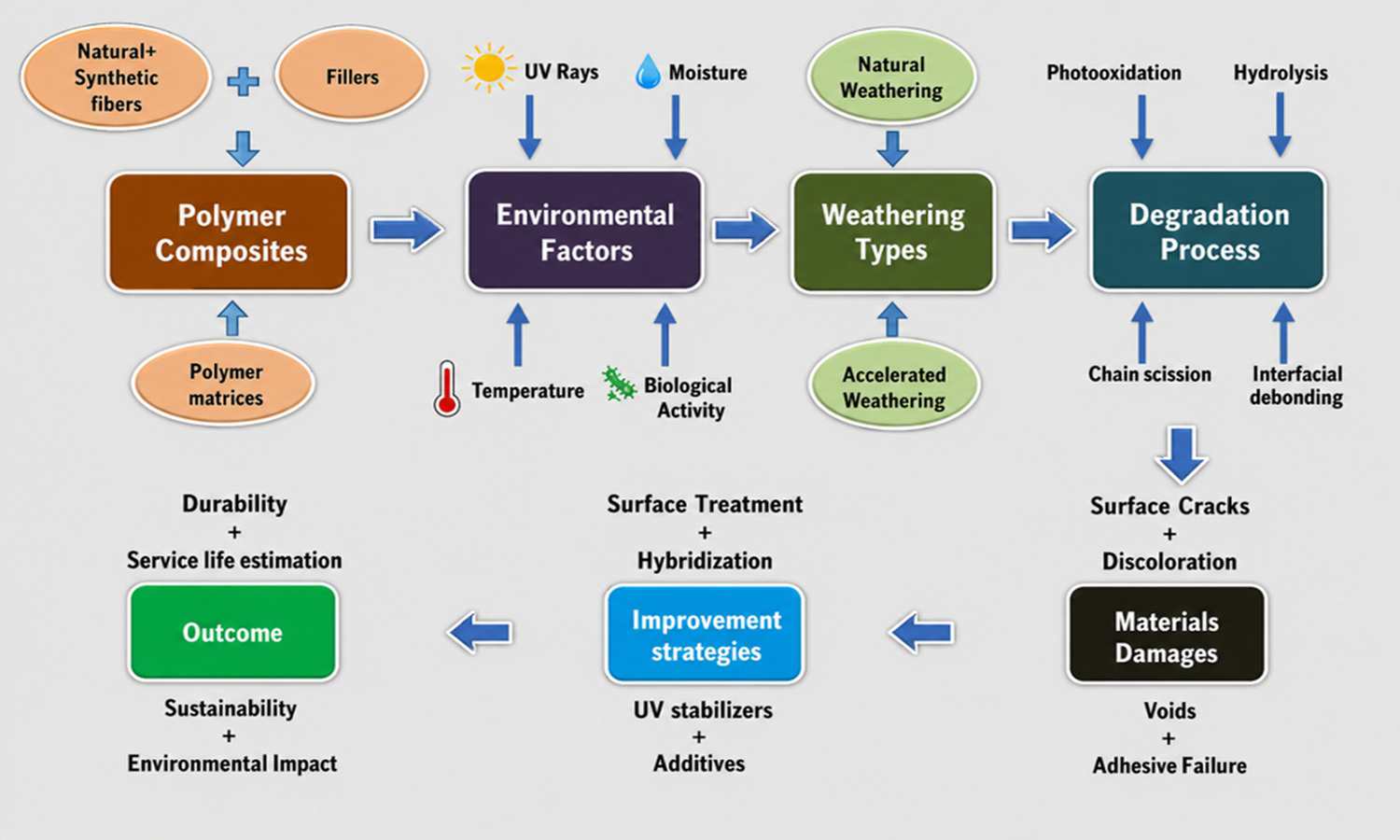
Polymer composites are widely used in indoor and outdoor applications owing to their high strength-to-weight ratio, corrosion resistance, and design flexibility. However, exposure to environmental factors such as ultraviolet (UV) radiation, humidity, temperature fluctuations, and biological agents significantly affect their long-term durability and performance. In this review, we comprehensively examine the degradation mechanisms of polymer composites under both natural and accelerated weathering, with particular emphasis on degradation mechanisms, characterization techniques, and durability assessment. We critically discuss the fundamental degradation mechanisms, including photo-oxidation, hydrolysis, polymer chain scission, crosslinking and interfacial debonding. We also evaluated accelerated weathering techniques, conducted under standardized testing conditions, for their ability to simulate long-term outdoor exposure within significantly shorter timeframes, by controlling key environmental parameters such as UV radiation, humidity, and temperature. We also examine the influence of reinforcements, including natural fibres, synthetic fibres, and nanofillers, on the weathering resistance of polymer composites. Attention is given to natural fibre–reinforced composites because their inherent hydrophilicity promotes moisture absorption, accelerating degradation and weakening the fibre–matrix interface. Furthermore, we critically evaluate the effects of weathering on the mechanical properties, crystalline structure and barrier performance of polymer composite films, and discuss recent advances in enhancing weather resistance through hybridization, surface modification, and the incorporation of stabilizing additives. Finally, the review highlights the key challenges and future research directions for the development of durable, high-performance, and sustainable polymer composite systems for long-term outdoor applications.
Wen Shyang Chow
Vol. 20., No.4., Pages 324-325, 2026
DOI: 10.3144/expresspolymlett.2026.25
Vol. 20., No.4., Pages 324-325, 2026
DOI: 10.3144/expresspolymlett.2026.25
This is an editorial article. It has no abstract.
Paulina Bednarczyk, Kamil Rożniakowski
Vol. 20., No.3., Pages 233-245, 2026
DOI: 10.3144/expresspolymlett.2026.19
Vol. 20., No.3., Pages 233-245, 2026
DOI: 10.3144/expresspolymlett.2026.19
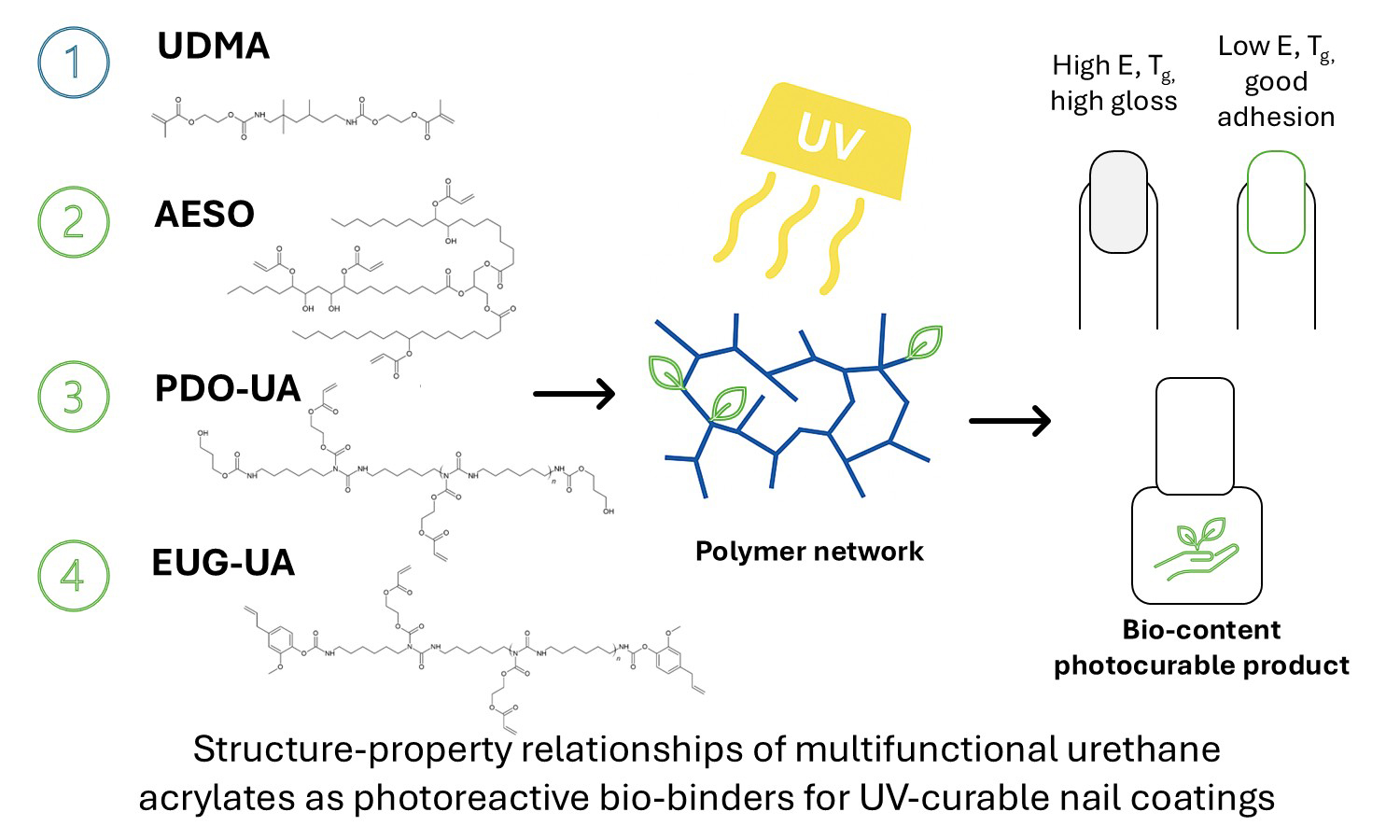
This study investigates the structure–property relationships of multi-functional urethane acrylate resins designed as photoreactive binders for UV-curable nail coatings. Four systems were examined: a commercial resin urethane dimethacrylate (UDMA), a bio-based acrylated epoxidized soybean oil (AESO), and two newly synthesized bio-based urethane acrylates derived from 1,3-propanediol (PDO–UA) and eugenol (EUG–UA). Photopolymerization kinetics were analyzed by realtime FTIR, while the properties of the cured coatings were also determined. The mechanical and thermal behavior of selfsupporting polymer films was evaluated by tensile testing and DSC analysis. The UDMA network exhibited the highest crosslink density, reflected in its high modulus (≈0.5 GPa), tensile strength (≈15 MPa), and Tg (≈60°C), making it suitable for use as a top coat. AESO showed moderate stiffness and flexibility, whereas PDO–UA and EUG–UA formed soft, low-Tg (–12 and –17°C) and highly deformable networks typical of elastomeric materials. The combined mechanical and thermal results confirmed that crosslink density strongly governs coating performance and applicability. This study demonstrates that blending UDMA with bio-based oligomers enables the design of sustainable, UV-curable nail lacquers with an optimal balance of hardness, flexibility, and adhesion to the natural nail plate.
Cláudia Andréa Batista dos Santos, Bartłomiej Kryszak, Rafał Malinowski, Aleksandra Ujćič, Konrad Szustakiewicz
Vol. 20., No.3., Pages 264-278, 2026
DOI: 10.3144/expresspolymlett.2026.21
Vol. 20., No.3., Pages 264-278, 2026
DOI: 10.3144/expresspolymlett.2026.21
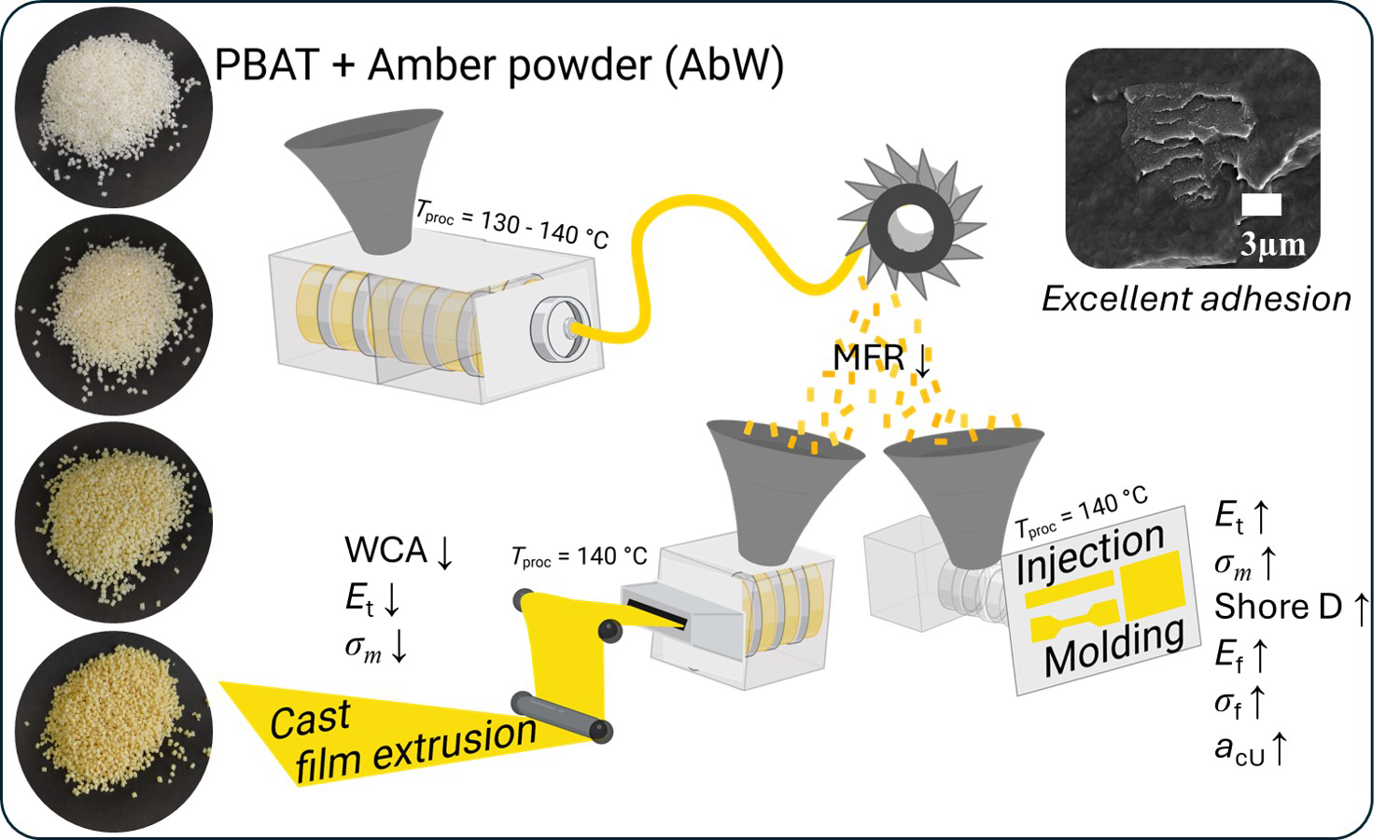
This study investigates the interaction between poly(butylene adipate-co-terephthalate) (PBAT) and amber powdered waste (AbW) from jewelry at different filler concentrations (0, 1, 2.5, and 5 wt%) obtained via melt mixing in a corotating twin screw extruder. The resulting materials were pelletized and processed using two techniques: 1) cast film extrusion and 2) injection molding. The shaped specimens exhibited excellent interfacial adhesion. Thermal behavior, as assessed by Vicat softening temperature (VST), differential scanning calorimetry (DSC), and thermogravimetric analysis (TGA), showed minimal variation among the composites. Despite similar melt flow rate (MFR) values among the samples, the incorporation of AbW affected the behavior of the polymer during cast film extrusion. Consequently, the composite films exhibited lower tensile mechanical parameters (tensile strength, Young’s modulus, stress and strain at break) compared to the neat PBAT film. In turn, the injection molded composites showed improved tensile, flexural, and impact parameters compared to their neat counterpart. Additionally, a slight decrease in water contact angle (WCA) suggested increased surface hydrophilicity of the extruded films. These findings demonstrate the potential of AbW as an additive for biopolymer composites with enhanced mechanical performance. The increased surface hydrophilicity is particularly relevant for applications targeting biocompatibility and biodegradability.
Evangelia Balla, Panagiotis Klonos, Apostolos Kyritsis, Dimitrios Bikiaris
Vol. 20., No.2., Pages 154-167, 2026
DOI: 10.3144/expresspolymlett.2026.13
Vol. 20., No.2., Pages 154-167, 2026
DOI: 10.3144/expresspolymlett.2026.13
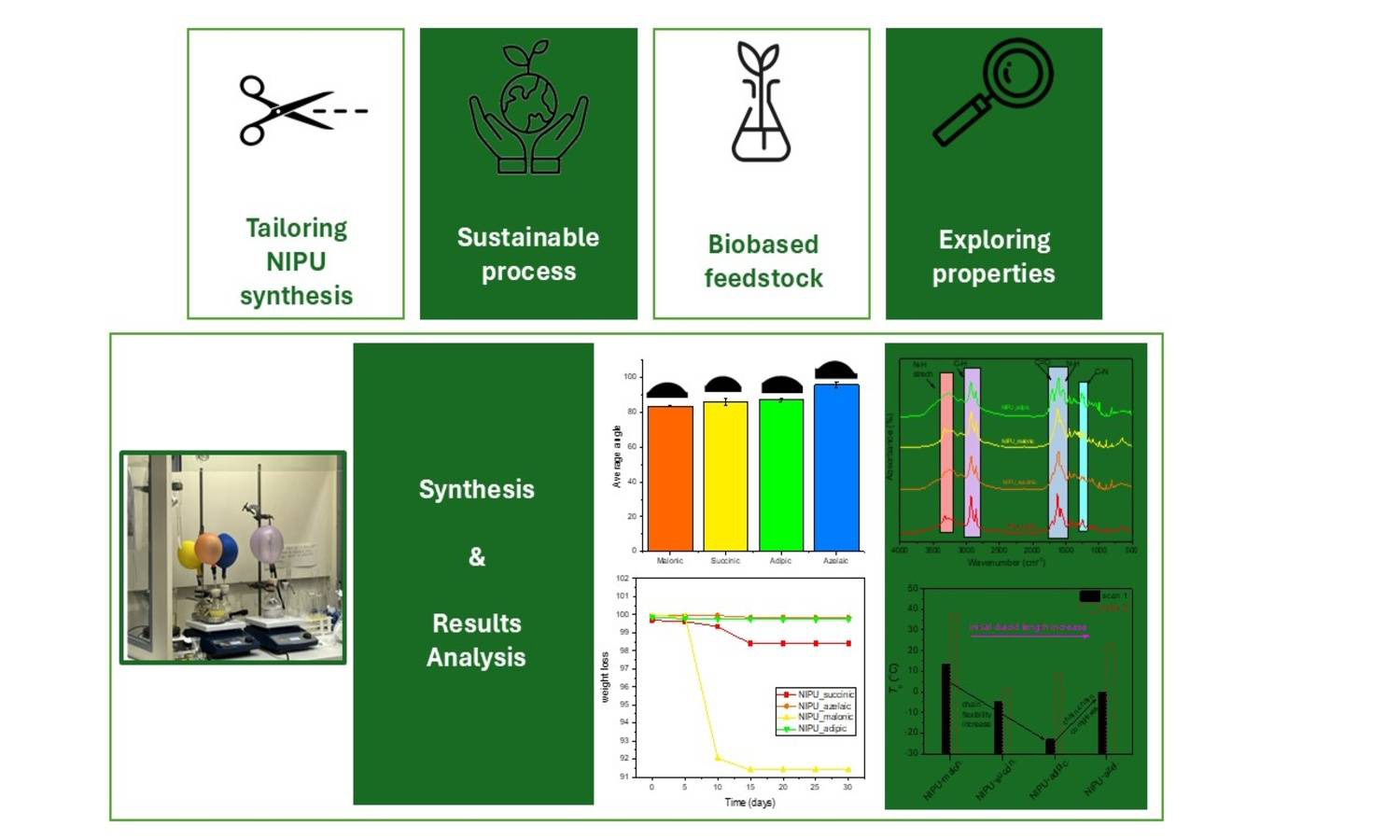
In recent decades, numerous efforts have been dedicated to the investigation of eco-friendly non-isocyanate polyurethanes (NIPUs) as alternatives to conventional polyurethanes (PUs). Since isocyanates are classified by the EU as hazardous and toxic compounds, NIPUs offer a promising route to mitigate isocyanate-related health risks as well as other environmental concerns associated with traditional PU synthesis. In the present study, we report the synthesis as well as the detailed structural and thermal characterization of a new series of fully biobased non-isocyanate polyurethanes (NIPUs) based on aliphatic dicarboxylic acids of different chain lengths. The NIPUs were prepared via a two-step polyaddition reaction involving glycerol carbonate and diamine. Their synthesis enables a sustainable pathway to tailor NIPUs’ physicochemical properties via diacid structure control. Studies of their structure, thermal behavior and trends, morphological, and hydrolytic findings confirmed strong diacid chain length dependence on glass transition temperature (Tg ~13, 0, ‒5 and –23 °C), molecular weight, surface wettability, and enzymatic degradability. Short-chain diacids yielded NIPUs with rapid hydrolytic degradation, while their longer-chain analogs were hydrophobic and thermally stable. Contact angle measurements (~75–85°) also confirm these trends. The tunable properties position these materials among strong candidates for biomedical applications.