
Dynamic mechanical and spectroscopic studies of soy flour adhesives
Anthony Allen Parker, Joseph John Marcinko
Vol. 20., No.6., Pages 594-616, 2026
DOI: 10.3144/expresspolymlett.2026.45
DOI: 10.3144/expresspolymlett.2026.45
Corresponding author: Anthony Allen Parker 
GRAPHICAL ABSTRACT
ABSTRACT
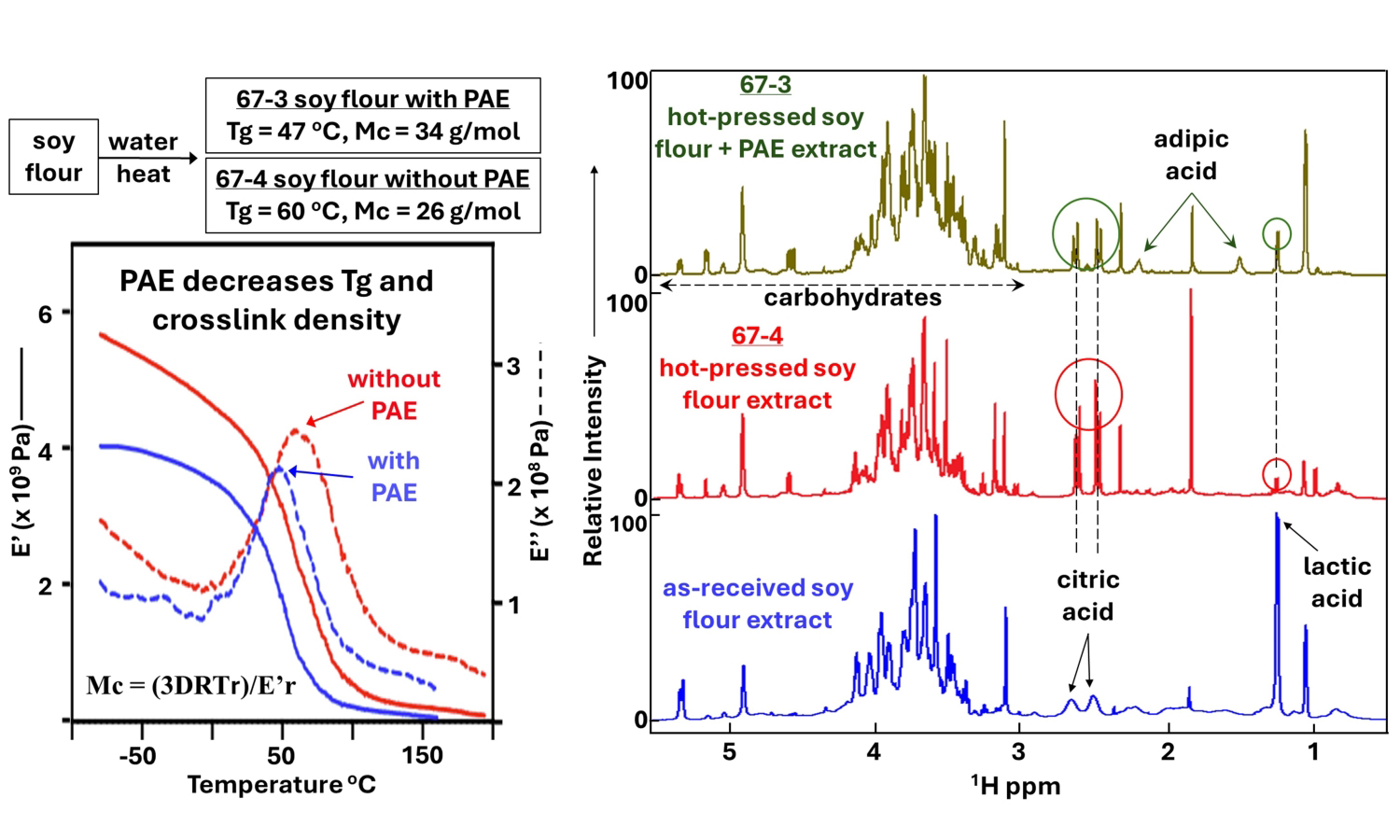
We used dynamic mechanical analysis (DMA) to evaluate soy flour adhesives made with and without a conventional crosslinking agent, polyamideamine-epichlorohydrin (PAE). Fixed-frequency and constant strain rate studies revealed that PAE contributes to a decrease in glass transition temperature (Tg), an increase in toughness, and a decrease in both the rubbery plateau modulus and onset temperature, consistent with plasticization. Fourier transform infrared spectroscopy (FTIR) and nuclear magnetic resonance (NMR) studies of water-soluble extracts from pre-cured soy flour revealed the presence of polypeptides with exchangeable protons, carbohydrates, citric acid and lactic acid. Deuterium exchange studies showed that the protonated peptides were no longer water-soluble after cure. Instead, post-cure extracts contained heat-modified carbohydrates and carboxylic acids, together with adipic acid when PAE was employed. These results are consistent with a mechanism whereby PAE not only undergoes hydrolysis and chain scission, but also competitively co-reacts with peptides and carboxylic acids to yield a plasticized chain-extended network with decreased crosslink density, counter to its anticipated function. The implications of these findings as they pertain to moisture resistance and wood adhesion will be discussed.
RELATED ARTICLES
Anthony Allen Parker, Joseph John Marcinko
Vol. 20., No.9., Pages 885-904, 2026
DOI: 10.3144/expresspolymlett.2026.66
Vol. 20., No.9., Pages 885-904, 2026
DOI: 10.3144/expresspolymlett.2026.66
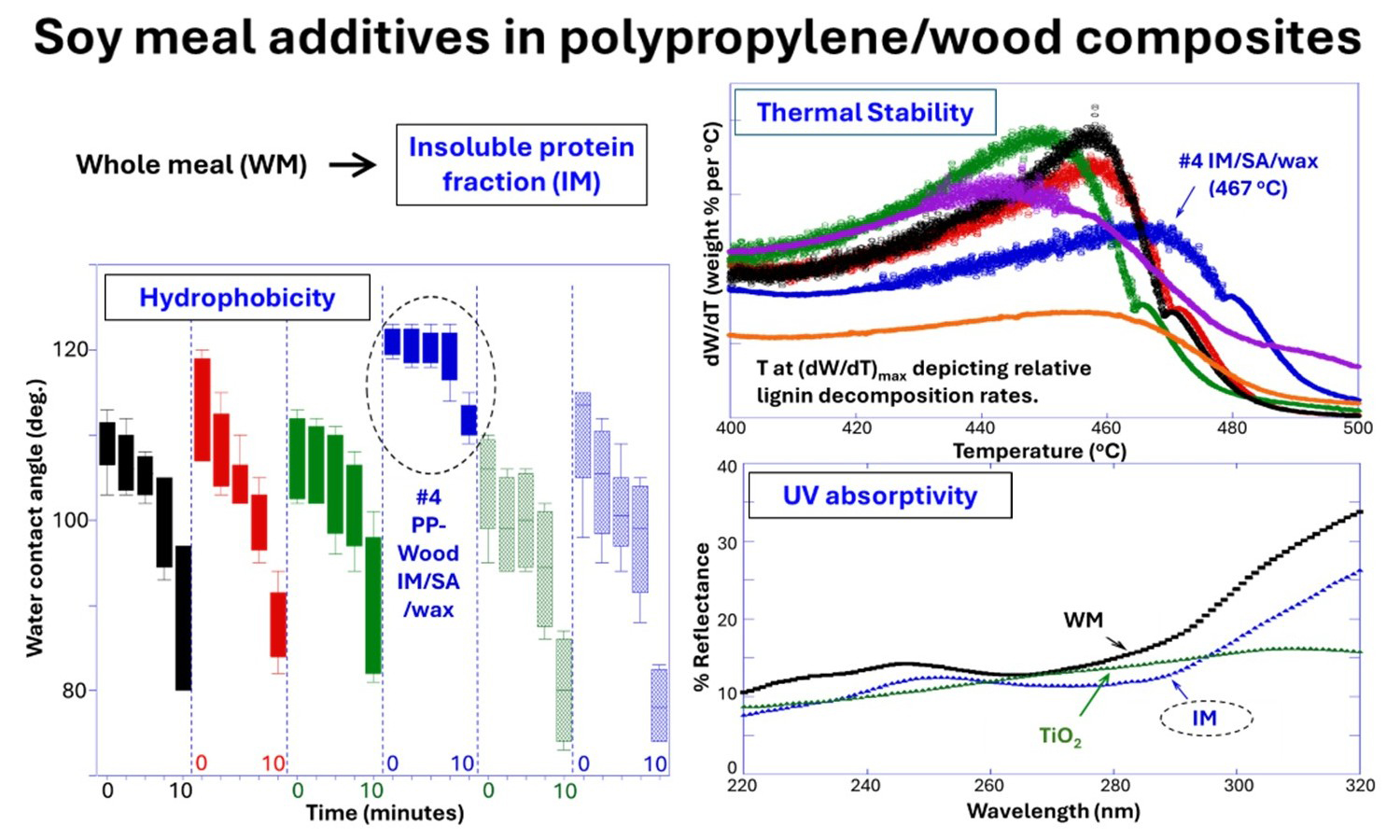
We have discovered that water-insoluble proteins (IM) isolated from whole soy meal (WM) have the capacity to improve the thermal stability of polypropylene (PP) wood composites without negatively impacting mechanical properties. We compared an undiluted composite to composites diluted with 5% by weight of a 3/1 w/w mixture of stearic acid and paraffin wax (SA/wax), 5% by weight IM, 5% by weight WM, 5% by weight of a 50/50 w/w mixture of IM in combination with SA/wax, and 5% by weight WM in combination with SA/wax. Water contact angle (CA) measurements and Fourier transform infrared spectroscopy (FTIR) revealed a synergy between IM and SA/wax, resulting in enhanced surface hydro - phobicity. Thermogravimetric analysis (TGA) showed lower weight loss in composites made with IM up to the onset of the degradation of PP, and reduced rates of lignin degradation, independently of the presence of SA/wax. Dynamic mechanical analysis (DMA) revealed higher modulus and lower viscoelastic loss resulting from the removal of water-soluble soy components from WM. Total reflectance ultraviolet spectroscopy (UV) showed that IM absorbs UV radiation strongly in the UV-B and UV-C regions. Collectively, these findings suggest that IM has the potential to become a multi-purpose additive for use in PP wood composites.
Tiantian Han, Jingen Li, Chang Li
Vol. 20., No.7., Pages 708-723, 2026
DOI: 10.3144/expresspolymlett.2026.54
Vol. 20., No.7., Pages 708-723, 2026
DOI: 10.3144/expresspolymlett.2026.54
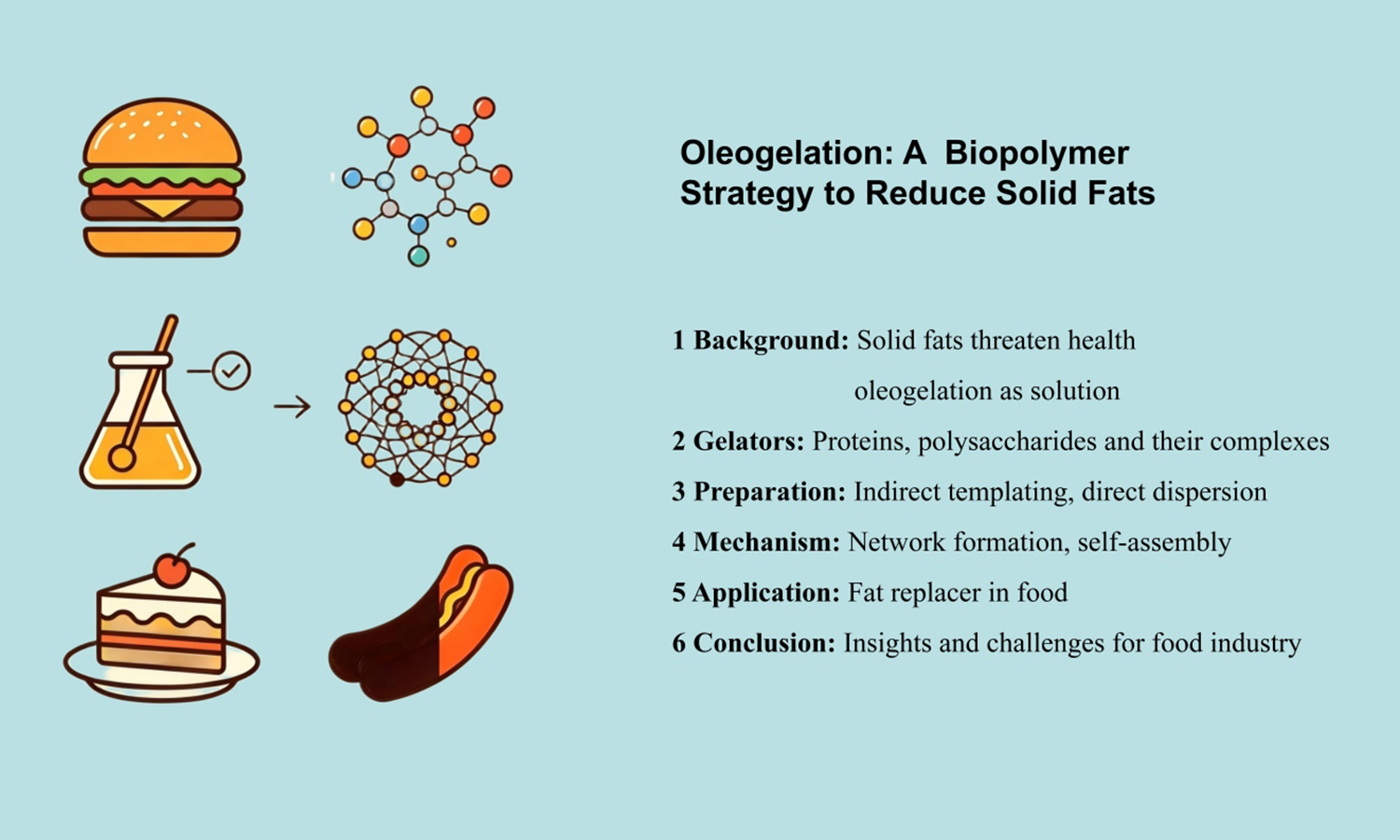
An excessive intake of high-fat foods may pose a threat to human health. Oleogelation provides a promising strategy to reduce trans and saturated fatty acids in solid fats. Compared with small-molecule gelators, macromolecular gelators, particularly proteins, polysaccharides and their complexes are more suitable for this purpose. In this review, we systematically discuss the development potential of biopolymer-based oleogels. First, we elaborate the application of proteins, polysaccharides and their complexes as gelling agents. Second, despite the inherent hydrophilicity of these biopolymers, significant progress has been made in developing various preparation approaches, ranging from indirect templating strategies to direct dispersion methods. Third, we briefly discuss the underlying structuring mechanisms of these oleogels. Subsequently, we review their applications as fat replacers in specific food products. Finally, we present the conclusions and remaining challenges in this field. We aim to provide valuable insights into the utilization of biopolymer-based oleogels in the food industry.
Ha Ngoc Giang, Thanh Thai Nguyen, Thu Thi Trang Luu, Anh Thi Ngoc Pham, Tuan Nguyen Anh Huynh
Vol. 19., No.5., Pages 519-530, 2025
DOI: 10.3144/expresspolymlett.2025.38
Vol. 19., No.5., Pages 519-530, 2025
DOI: 10.3144/expresspolymlett.2025.38
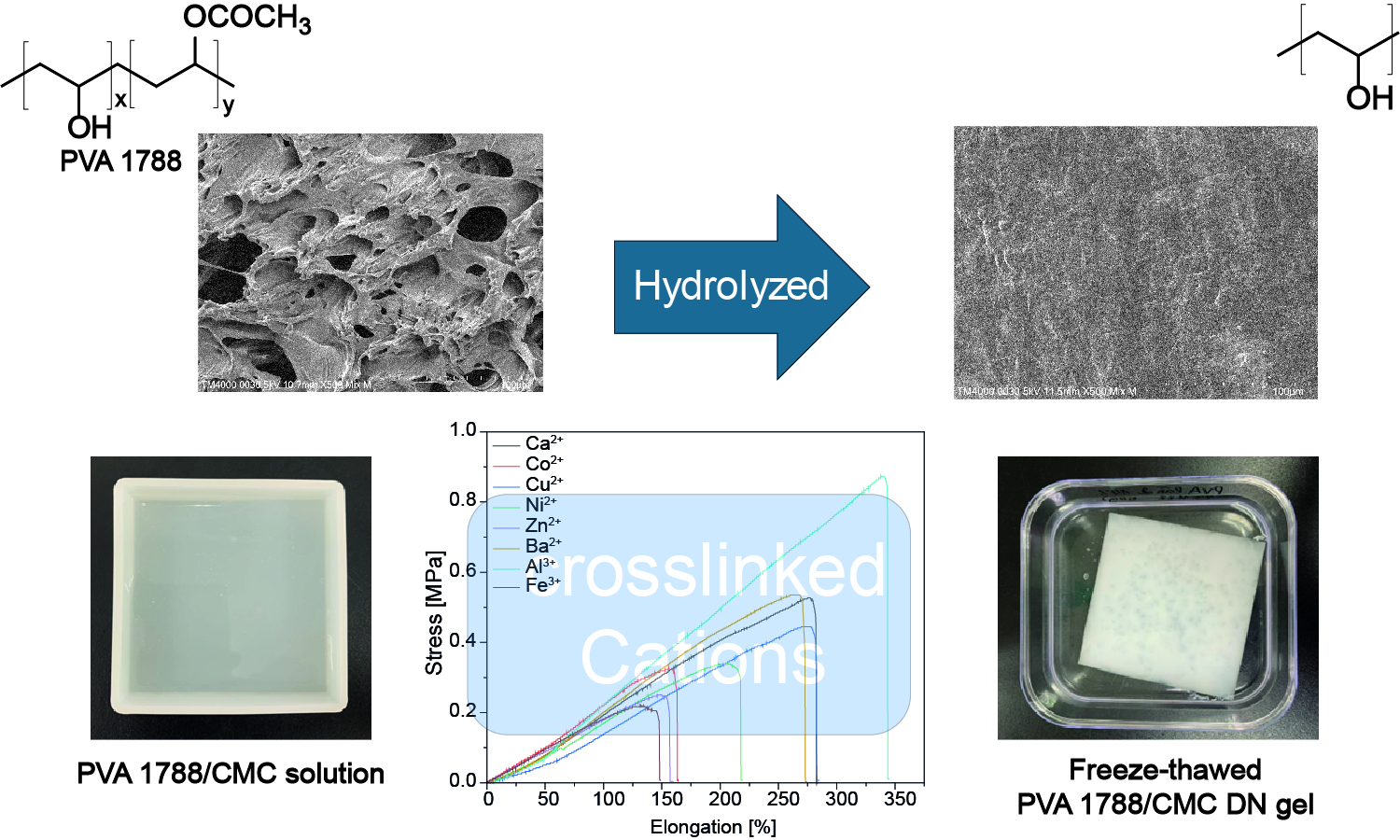
Freeze-thaw (F-T) poly(vinyl alcohol) (PVA) as a soft network and ionic-crosslinked sodium carboxymethyl cellulose (CMC) as a hard network were applied to fabricate a double network (DN) gel using a one-step process. Mechanical properties of the DN gel using a high degree of hydrolysis PVA (PVA-CMC of 60-1) were significantly improved compared to that of a single network gel of PVA. The tensile strength of ~0.55 MPa and elongation at break of 179% could be achieved. The mechanical properties of PVA-poly(acrylic acid) DN gel were lower than that of PVA-CMC samples. Fourier-transformed infrared (FTIR) spectroscopy results showed less compatibility between polyacrylic acid (PAA) and PVA compared to that of CMC. The solution made from the lower hydrolysis degree PVA (PVA1788) could form a strong gel after being treated with NaOH 1 M. The FTIR result showed the disappearance of acetate groups. A large melting peak in differential scanning calorimetry (DSC) results showed high crystallinity of the hydrolyzed-PVA1788. The effect of various multivalent cations on the mechanical properties of PVA1788-CMC DN gel was performed. The properties of the samples followed the order: Fe3+<Co2+<Ni2+<Cu2+<Zn2+<Ca2+~Ba2+<Al3+. The tensile strength of DN gel fabricated using AlCl3 solution could reach 0.87 MPa, and the elongation at break was 330%.
Karol Tutek, Anna Masek
Vol. 19., No.1., Pages 107-121, 2025
DOI: 10.3144/expresspolymlett.2025.8
Vol. 19., No.1., Pages 107-121, 2025
DOI: 10.3144/expresspolymlett.2025.8
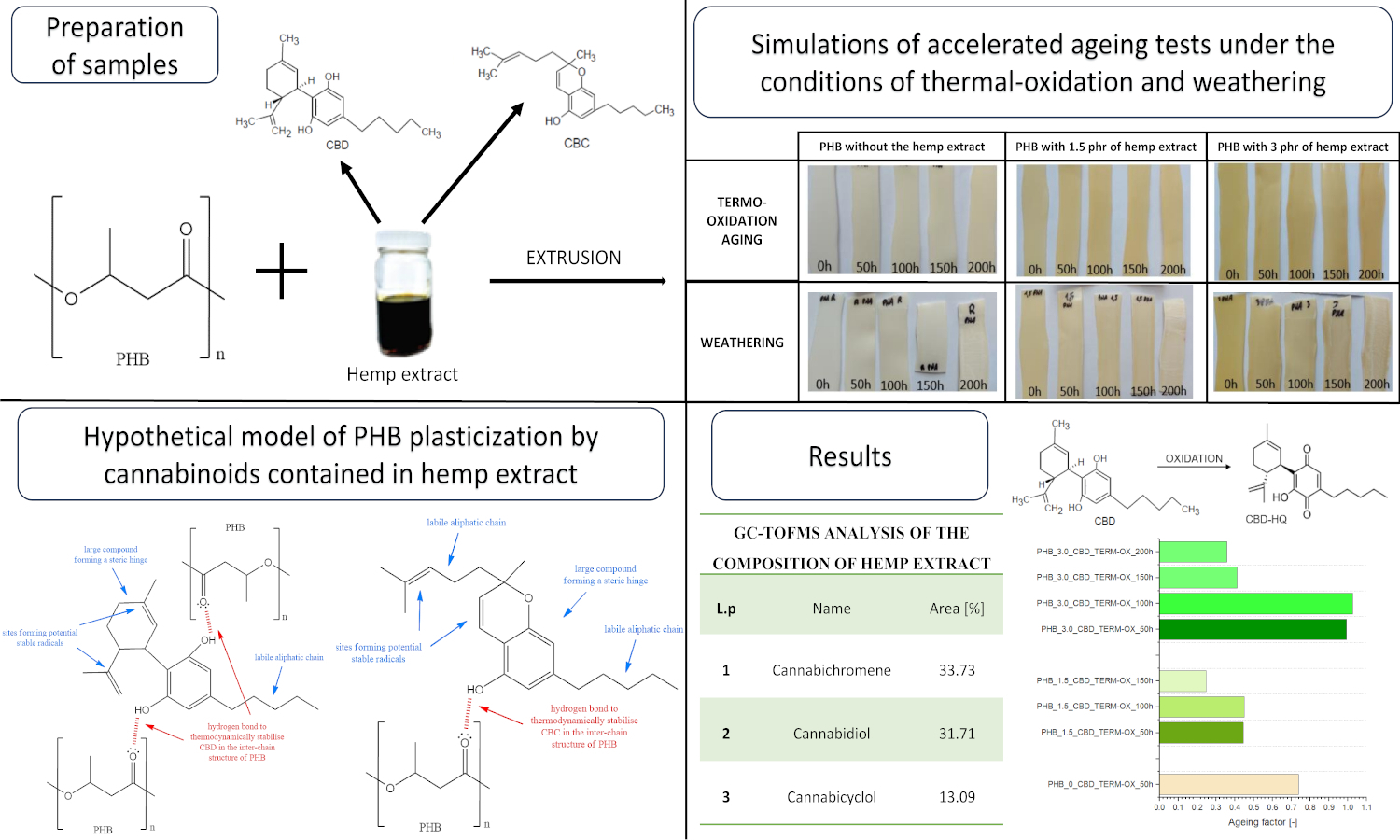
Biodegradable biopolymers like polyhydroxybutyrate (PHB) hold promise for sustainable packaging, but their inherent degradability reduces material stability. Synthetic stabilizers, though effective, raise environmental and potential toxicity concerns. This study explores a multifunctional natural anti-aging agent: a hemp extract rich in cannabidiol (CBD) and cannabichromene (CBC). PHB composites with varying hemp extract concentrations were prepared and subjected to thermooxidative and weathering aging. Characterization employed FTIR-ATR, carbonyl index, and spectrophotometry. Static mechanical properties, DSC, and surface free energy (SFE) were also assessed. Notably, the hemp extract exhibited stability under ambient conditions but showed migration with time and aging. The results suggest a plasticizing effect on PHB and highlight the contrasting roles of the extract: inhibiting thermooxidative aging while potentially accelerating aging under atmospheric conditions. This opens avenues for tailoring material durability, further evaluated by life cycle analysis (LCA). This work represents one of the first investigations into hemp extract as an anti-aging agent for eco-friendly polymers, expanding the knowledge base of natural multifunctional additives.
Rayan Y. Mushtaq, Azfaralariff Ahmad, Abdul Khalil H.P.S., Rana Baker Bakhaidar, Waleed Y. Rizg, Shazlina Abd Hamid, Abdulmohsin J. Alamoudi, Che Ku Abdullah, Tata Alfatah
Vol. 18., No.7., Pages 760-777, 2024
DOI: 10.3144/expresspolymlett.2024.56
Vol. 18., No.7., Pages 760-777, 2024
DOI: 10.3144/expresspolymlett.2024.56
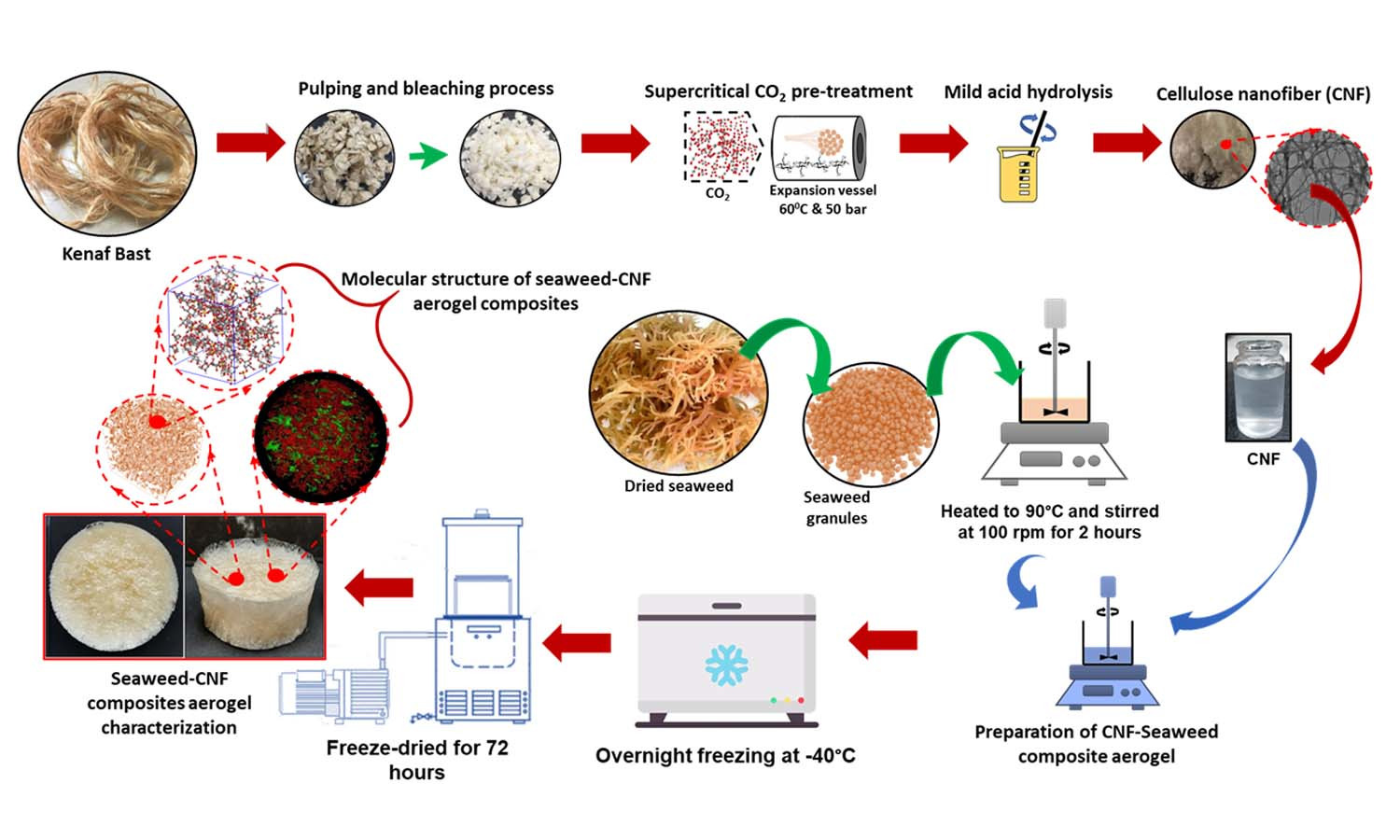
Seaweed
from macroalgae and cellulose from nonwood materials have gained attention in
various fields. This study explores how seaweed and cellulose nanofibers (CNF)
interact to form 3D networks in composite bioaerogels. The ratio of CNF and
seaweed was varied to see how it affects the aerogel’s inside and its
properties. The observations show that the biocomposite aerogel is more rigid
and shrinks less than using a single biopolymer. The CNF aerogel has a fine,
thin network structure, and the seaweed aerogel has a thin sheet structure. The
biocomposite aerogel combines both a fine network and a thin sheet structure.
The composite aerogel’s mechanical properties are significantly influenced by
seaweed composition. The introduction of CNF increases elasticity, while
seaweed enhances firmness. Generated computer modelling revealed that the
abundant hydroxyl groups in CNF facilitated the formation of intermolecular
bonds with seaweed. The bonding led to increased adhesion and entanglement
between biopolymers, consequently enhancing elasticity and establishing a
stable intermolecular interaction. The 3D X-ray imaging model shows that the
skeletal framework primarily consists of seaweed biopolymer, with CNF serving
to reinforce this structure thus enhancing the mechanical properties and
robustness of the composite bioaerogels.