
Fully physical double network gel based on low hydrolysis degree poly(vinyl alcohol)
Ha Ngoc Giang , Thanh Thai Nguyen, Thu Thi Trang Luu, Anh Thi Ngoc Pham, Tuan Nguyen Anh Huynh
, Thanh Thai Nguyen, Thu Thi Trang Luu, Anh Thi Ngoc Pham, Tuan Nguyen Anh HuynhVol. 19., No.5., Pages 519-530, 2025
DOI: 10.3144/expresspolymlett.2025.38
DOI: 10.3144/expresspolymlett.2025.38
Corresponding author: Ha Ngoc Giang 
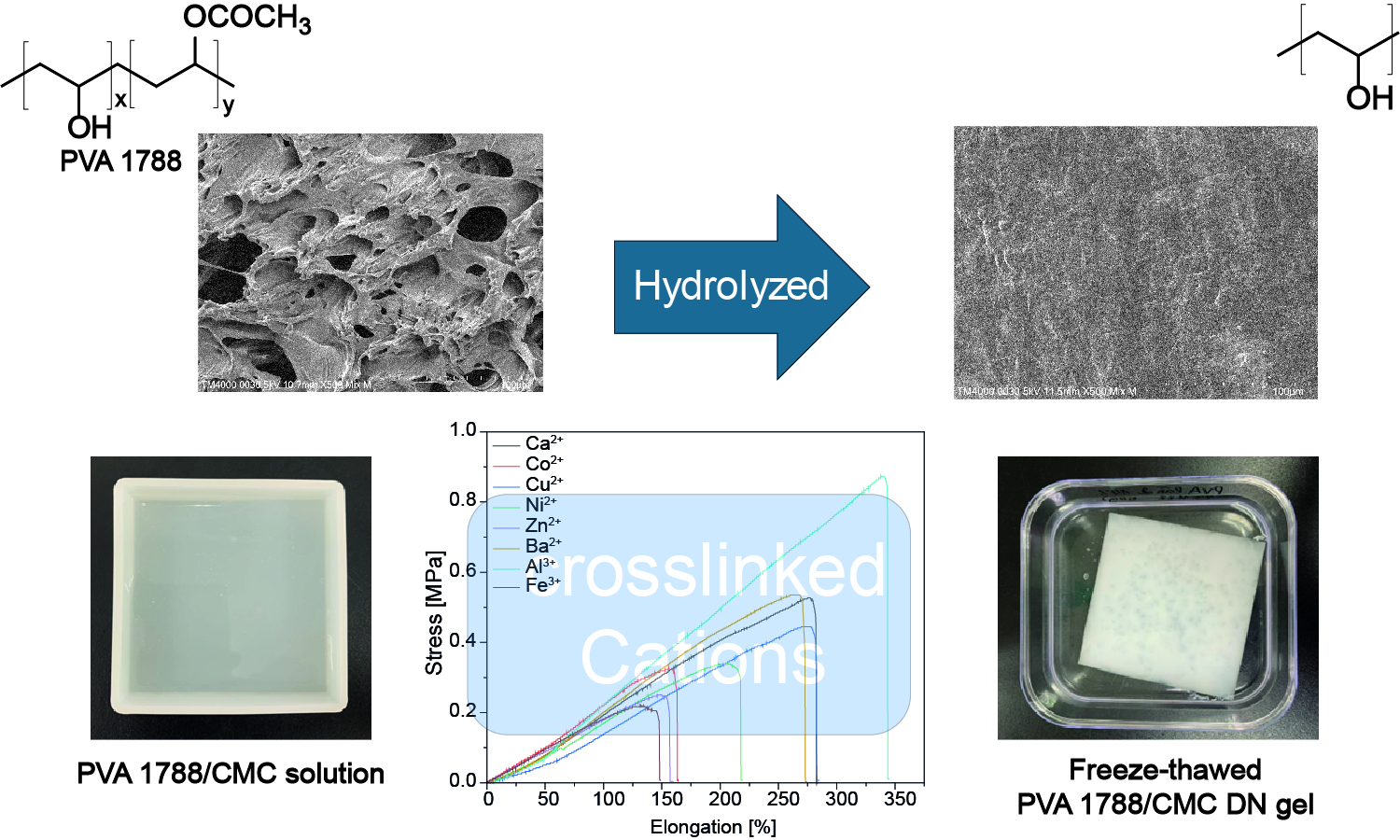
GRAPHICAL ABSTRACT
ABSTRACT
Freeze-thaw (F-T) poly(vinyl alcohol) (PVA) as a soft network and ionic-crosslinked sodium carboxymethyl cellulose (CMC) as a hard network were applied to fabricate a double network (DN) gel using a one-step process. Mechanical properties of the DN gel using a high degree of hydrolysis PVA (PVA-CMC of 60-1) were significantly improved compared to that of a single network gel of PVA. The tensile strength of ~0.55 MPa and elongation at break of 179% could be achieved. The mechanical properties of PVA-poly(acrylic acid) DN gel were lower than that of PVA-CMC samples. Fourier-transformed infrared (FTIR) spectroscopy results showed less compatibility between polyacrylic acid (PAA) and PVA compared to that of CMC. The solution made from the lower hydrolysis degree PVA (PVA1788) could form a strong gel after being treated with NaOH 1 M. The FTIR result showed the disappearance of acetate groups. A large melting peak in differential scanning calorimetry (DSC) results showed high crystallinity of the hydrolyzed-PVA1788. The effect of various multivalent cations on the mechanical properties of PVA1788-CMC DN gel was performed. The properties of the samples followed the order: Fe3+<Co2+<Ni2+<Cu2+<Zn2+<Ca2+~Ba2+<Al3+. The tensile strength of DN gel fabricated using AlCl3 solution could reach 0.87 MPa, and the elongation at break was 330%.
RELATED ARTICLES
Alexandra V. Pozdniakova, Nikita D. Donskoy, Anton A. Miroshnichenko, Alexander V. Shabanov, Anas S. Hussein, Anna A. Sukhanova
Vol. 20., No.8., Pages 840-853, 2026
DOI: 10.3144/expresspolymlett.2026.62
Vol. 20., No.8., Pages 840-853, 2026
DOI: 10.3144/expresspolymlett.2026.62
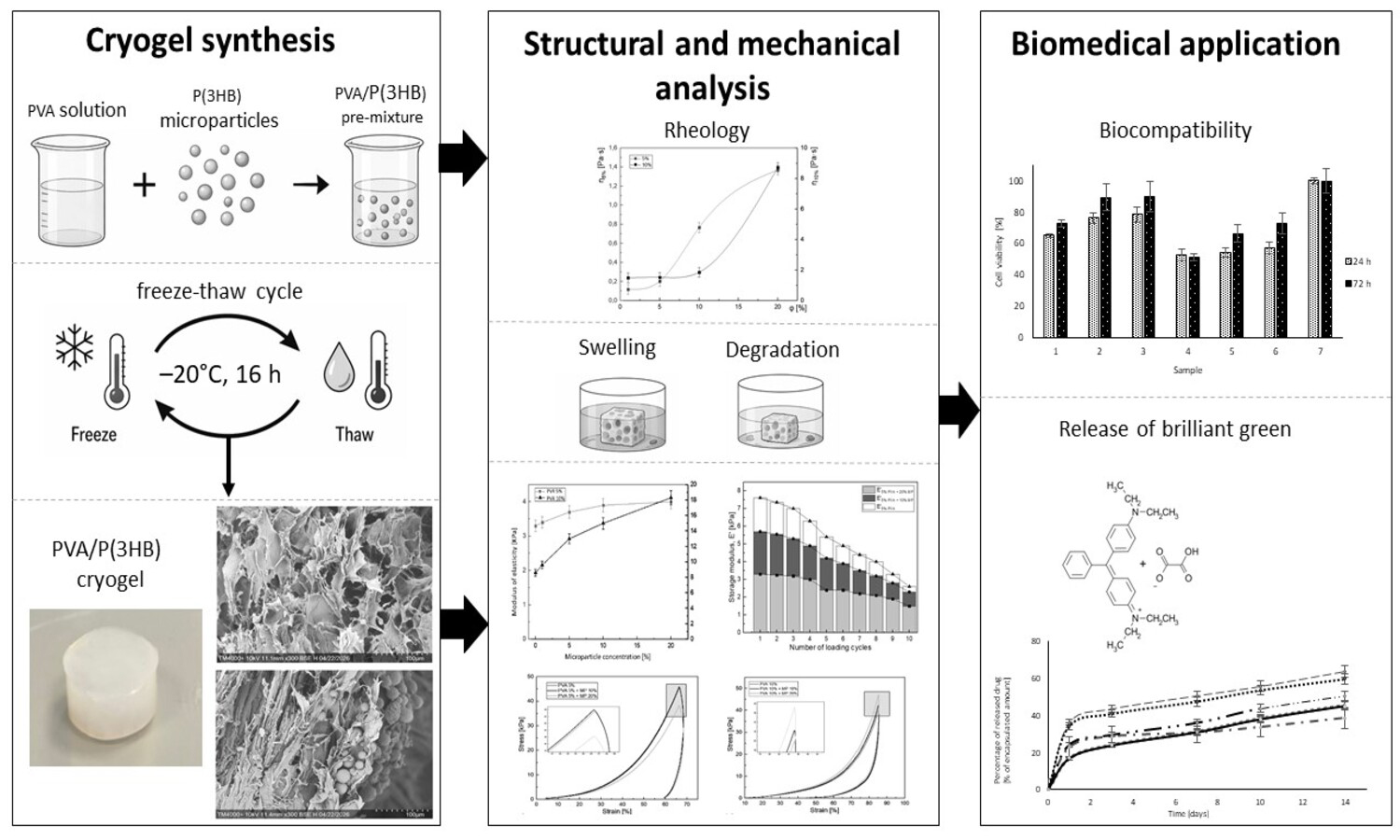
A key challenge in soft tissue engineering is developing biocompatible scaffolds with tunable stiffness and controlled degradation. Composite cryogels combining a porous polymer network, reinforcing microparticles, and encapsulation capacity address this challenge. In this study, we prepared poly(vinyl alcohol) (PVA)-based cryogels containing 5 and 10 wt% PVA and 1, 5, 10, and 20 wt% poly(3-hydroxybutyrate) (P(3HB)) microparticles (5.8–42.6 μm in diameter) by cyclic freeze–thaw. The P(3HB) microparticles reduced porosity (from 31 to 16%) and the swelling ratio (from 226 to 143%) without altering mean pore diameter (50–300 μm), with greater effects at 10 wt% PVA. Mechanical testing showed that increasing microparticle content enhanced the elastic modulus (from 8.7 to 18.3 kPa) and compressive strength (from 39 to 47 kPa) for 10 wt% PVA cryogels, whereas 5 wt% PVA cryogels showed minimal modulus improvement and reduced strength. Biocompatibility (ISO 10993-5) was confirmed for all 5 wt% PVA composites and for the 10 wt% PVA composite with 20 wt% P(3HB) (viability 72.8%). P(3HB) microparticles loaded with brilliant green significantly slowed its release from both cryogel matrices. These results establish PVA/P(3HB) composite cryogels as promising scaffolds with tunable stiffness and controlled release for soft tissue engineering.
Anthony Allen Parker, Joseph John Marcinko
Vol. 20., No.6., Pages 594-616, 2026
DOI: 10.3144/expresspolymlett.2026.45
Vol. 20., No.6., Pages 594-616, 2026
DOI: 10.3144/expresspolymlett.2026.45
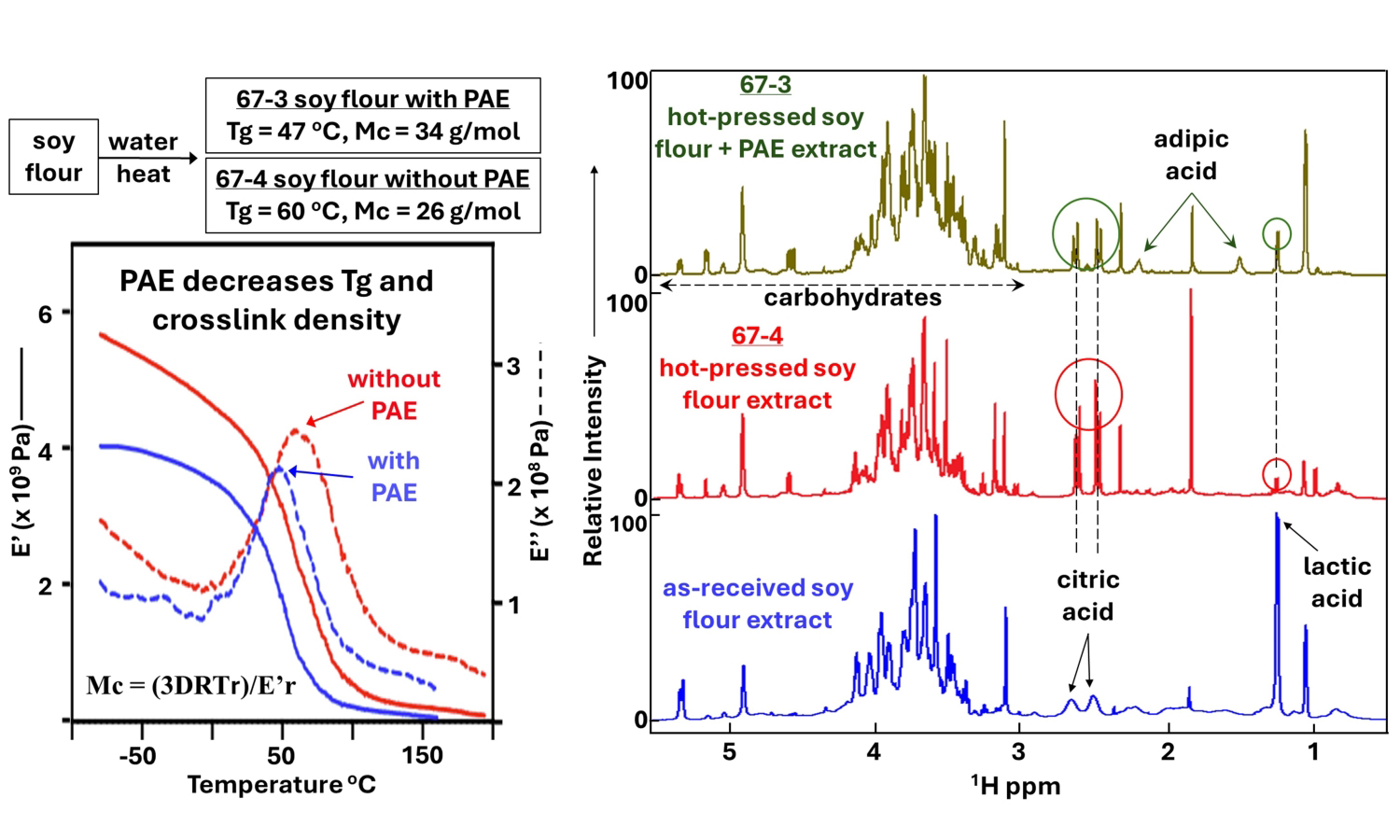
We used dynamic mechanical analysis (DMA) to evaluate soy flour adhesives made with and without a conventional crosslinking agent, polyamideamine-epichlorohydrin (PAE). Fixed-frequency and constant strain rate studies revealed that PAE contributes to a decrease in glass transition temperature (Tg), an increase in toughness, and a decrease in both the rubbery plateau modulus and onset temperature, consistent with plasticization. Fourier transform infrared spectroscopy (FTIR) and nuclear magnetic resonance (NMR) studies of water-soluble extracts from pre-cured soy flour revealed the presence of polypeptides with exchangeable protons, carbohydrates, citric acid and lactic acid. Deuterium exchange studies showed that the protonated peptides were no longer water-soluble after cure. Instead, post-cure extracts contained heat-modified carbohydrates and carboxylic acids, together with adipic acid when PAE was employed. These results are consistent with a mechanism whereby PAE not only undergoes hydrolysis and chain scission, but also competitively co-reacts with peptides and carboxylic acids to yield a plasticized chain-extended network with decreased crosslink density, counter to its anticipated function. The implications of these findings as they pertain to moisture resistance and wood adhesion will be discussed.
Xuecheng Lu, Ke Feng, Zhiqiang Zhang, Xuyan Lü, Yujie Xiao, Haijun Wang
Vol. 20., No.4., Pages 371-382, 2026
DOI: 10.3144/expresspolymlett.2026.29
Vol. 20., No.4., Pages 371-382, 2026
DOI: 10.3144/expresspolymlett.2026.29
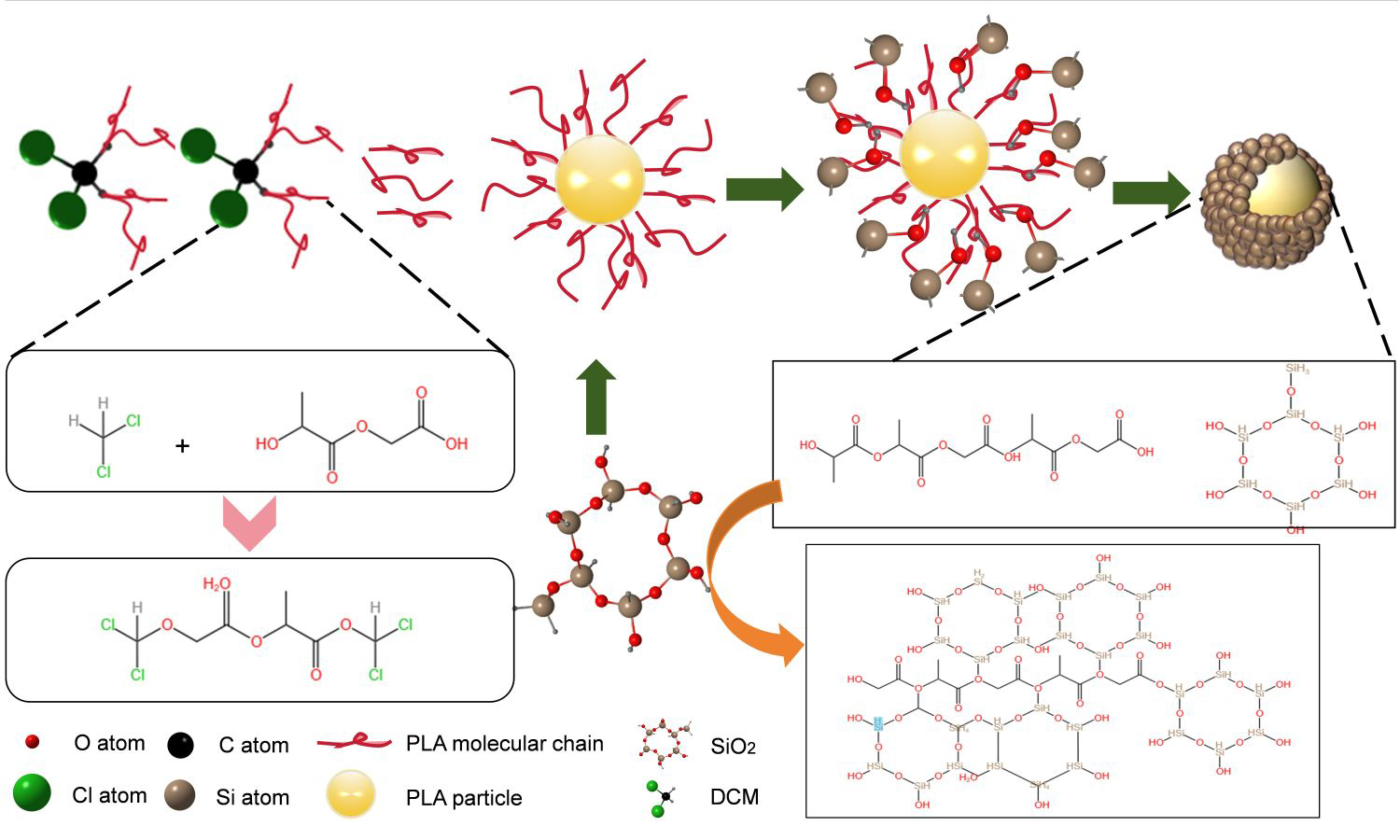
To improve the toughness, thermal stability, and melt processability of polylactic acid (PLA), this study introduced chlorinated polyethylene-polyethylene glycol (CPE-PEG, 10 wt%) into the PLA matrix and investigated the effect of the content of nano-SiO2 surface-modified with the silane coupling agent KH570 (K-SiO2) on the composite properties. Composite filaments were prepared via single-screw extrusion, and standard specimens were printed using fused deposition modeling (FDM) technology. Comprehensive characterization indicated that the composite achieved optimal mechanical properties at a K-SiO2 content of 1.5 wt%; simultaneously, the material’s thermal stability and crystallization behavior were optimized. Rheological behavior demonstrated that K-SiO2 could regulate the melt viscoelasticity, broadening the FDM processing window. This study provides an effective strategy for developing high-performance PLA composites for FDM printing.
Yi-jie Yang, Qiang Dou
Vol. 20., No.4., Pages 349-370, 2026
DOI: 10.3144/expresspolymlett.2026.28
Vol. 20., No.4., Pages 349-370, 2026
DOI: 10.3144/expresspolymlett.2026.28
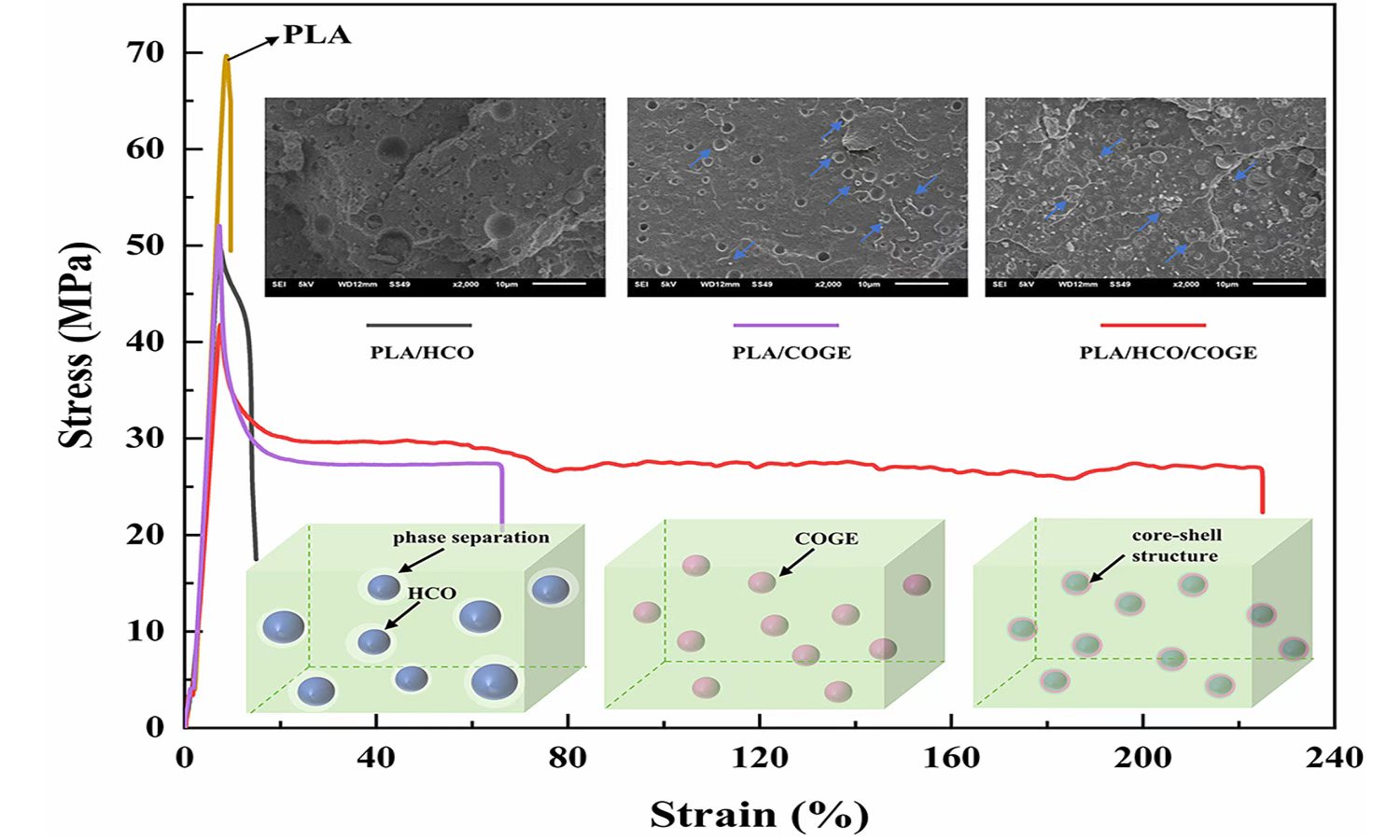
Poly(lactic acid) (PLA) has attracted much attention and shows promising applications in numerous fields. In this study, PLA was plasticized using bio-based castor oil derivatives - hydrogenated castor oil (HCO) and castor oil glycidyl ether (COGE). These eco-blends were measured using a Fourier transform infrared spectrometer, a scanning electron microscope, a contact angle test, rheology, a differential scanning calorimeter, thermogravimetry, polarized optical microscopy, and a tensile test, respectively. The findings show that a core-shell morphology of COGE-HCO encapsulation is formed in PLA matrix, and the hydrogen bonding interaction and ring-opening chemical reaction among functional groups of the components greatly improve the compatibility, ductility, cold crystallization ability, and thermostability of the eco-blends, but the melt crystallization ability is hindered. The incorporation of HCO improves the hydrophobicity and oleophobicity of the eco-blends. Due to the combined effect of HCO and COGE, the melt viscosity reduces, and the Newtonian behavior enhances; the nucleation density and spherulitic growth of PLA increase. The strain at break of the PLA/HCO/COGE (90/7.5/2.5) blend reached 221%, which is 22.6 times higher than that of the neat PLA. These eco-blends present appropriate rheological, thermal, and mechanical properties, showing application scenarios in biodegradable packaging and disposable appliances.
Dam Xuan Thang, Tong Khanh Linh
Vol. 20., No.3., Pages 246-263, 2026
DOI: 10.3144/expresspolymlett.2026.20
Vol. 20., No.3., Pages 246-263, 2026
DOI: 10.3144/expresspolymlett.2026.20
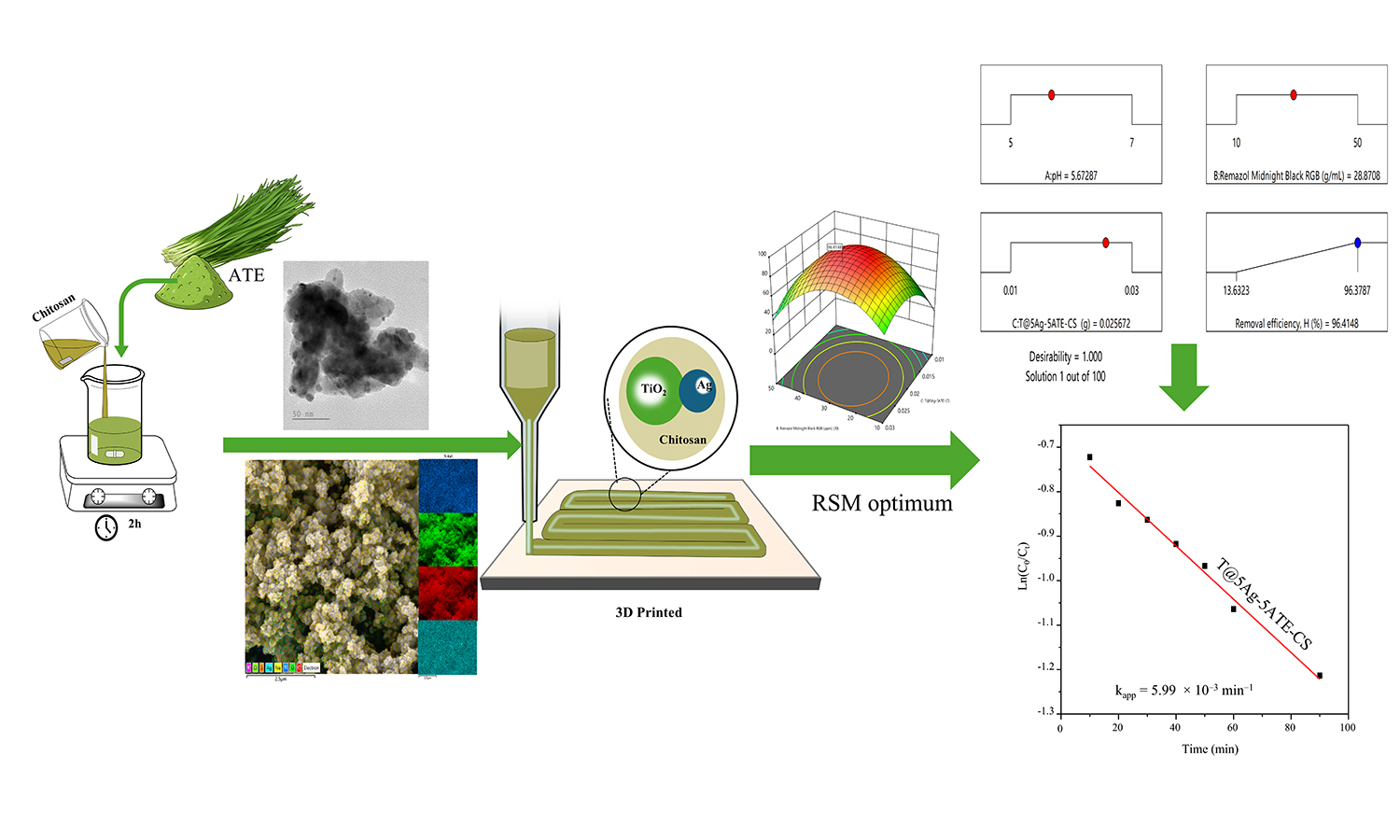
We report a green route to Ag–TiO2 nanocomposites using an Allium tuberosum extract, rich in organosulfur and polyphenolic constituents, as a dual-function biogenic reducer and stabilizer, enabling efficient Ag+→Ag0 conversion and capping of Ag–TiO2 without the use of harsh reagents. The nanocomposites are formulated into chitosan-based inks for direct ink writing (DIW) of porous, mechanically robust, reusable membranes (optimal formulation T@5Ag–5ATE–CS) with a homogeneous Ag dispersion. Multiscale characterization (SEM/TEM, XRD, FTIR, UV–vis DRS, EDS mapping) confirms metallic Ag0 uniformly decorating TiO2 and an extended visible-light response attributable to strong localized surface plasmon resonance. Under near-UV/visible irradiation, the membranes decolorize Remazol Midnight Black RGB dye with pseudo-first-order kinetics, yielding kapp up to 5.99·10–3 min–1 with R2 ≈ 0.99 and outperforming pristine TiO2. Response surface methodology identifies an optimum at pH 5.67, 28.87 mg·L–1 dye, and 0.0257 g catalyst, delivering a predicted 96.41% versus experimental 95.07% removal (validation error 1.39%) with excellent model statistics (R2 ≈ 0.995). The combined effects of Allium-tuberosum-assisted Ag plasmonics, TiO2 photocatalysis, and chitosan-enhanced adsorption underpin the high photocatalytic activity and reusability, highlighting a scalable, eco-friendly pathway to printable photocatalytic/antimicrobial membranes for wastewater treatment.