
Manufacture of a chitosan-based bioink with gelatin and hydroxyapatite and its potential application in 3D bioprinting
Sarahí Bautista Reberte, Esmeralda Zuñiga Aguilar , Solange Ivette Rivera Manrique, Carlos Alberto Martínez-Pérez
, Solange Ivette Rivera Manrique, Carlos Alberto Martínez-PérezVol. 19., No.3., Pages 326-338, 2025
DOI: 10.3144/expresspolymlett.2025.23
DOI: 10.3144/expresspolymlett.2025.23
Corresponding author: Solange Ivette Rivera Manrique 
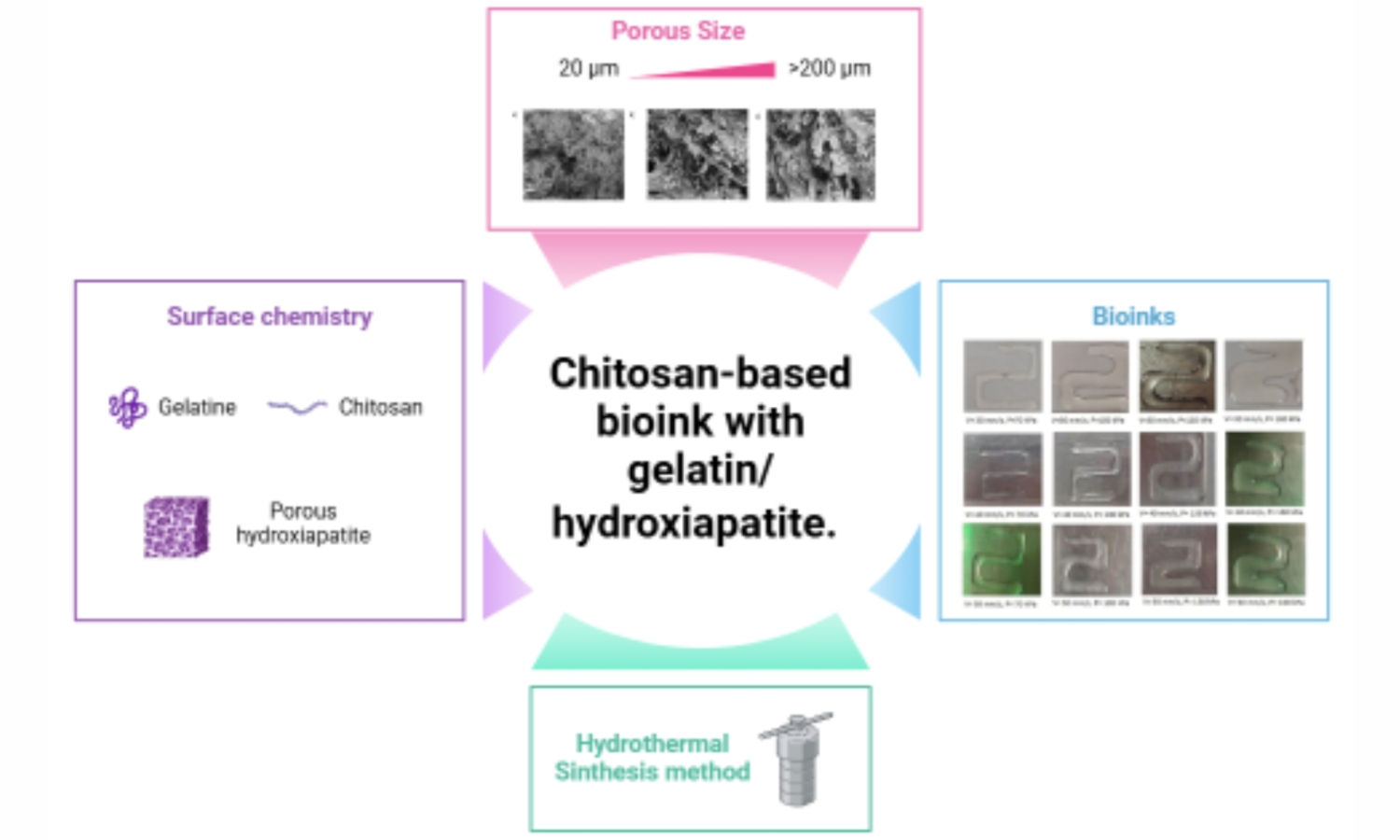
GRAPHICAL ABSTRACT
ABSTRACT
Three-dimensional (3D) bioprinting is a technique currently used for creating tissue engineering scaffolds, using bioinks as the building blocks. These bioinks are composed of biomaterials that provide structural integrity and are synthesized from organic polymers to enhance biocompatibility with the printed constructs. In this study, a series of eleven chitosan-based bioinks were synthesized using the sol-gel technique, employing chitosan of low and medium molecular weight. Three bioink formulations were selected based on their viscosity characteristics and further enriched with gelatin and hydroxyapatite (HA) to enhance their mechanical properties. Characterization tests included Fourier-transform infrared spectroscopy (FTIR), thermogravimetric analysis (TGA), scanning electron microscopy (SEM), and rheological assessments. Viscoelastic materials were obtained, and an experimental model was developed to optimize printing parameters, focusing on pressure and printing speed. Our findings indicate that a bioink formulation comprising a blend of medium and high molecular weight chitosan, supplemented with gelatin and hydroxyapatite, was found to be a promising approach for fabricating scaffolds for bone tissue repair.
RELATED ARTICLES
Karthikeyan Sowmiyadevi, Dhesingh Ravi Shankaran
Vol. 20., No.10., Pages 990-1004, 2026
DOI: 10.3144/expresspolymlett.2026.73
Vol. 20., No.10., Pages 990-1004, 2026
DOI: 10.3144/expresspolymlett.2026.73
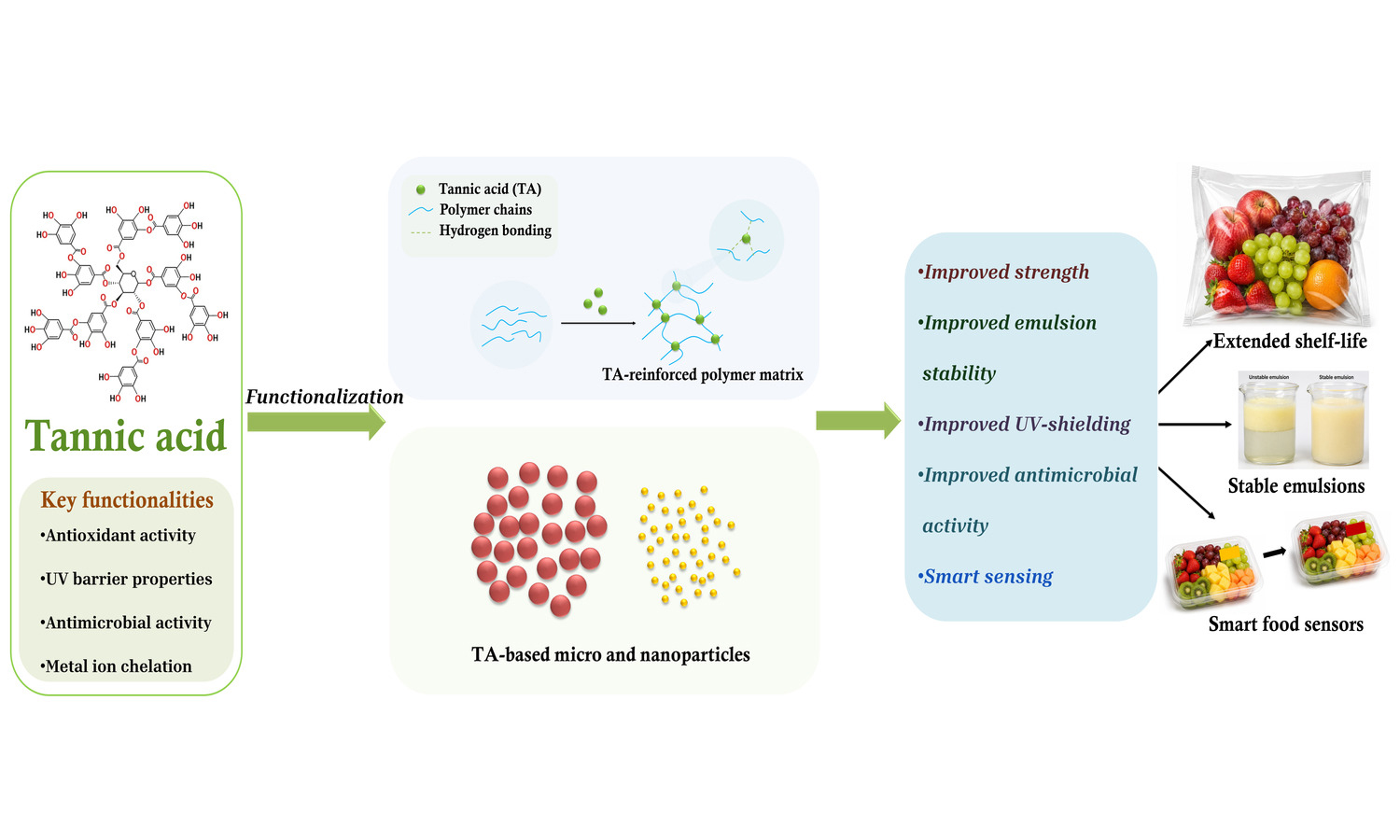
Polyphenols represent a highly abundant group of plant-derived natural compounds, characterized by remarkable structural diversity and potent antioxidant activity. Based on their chemical structures, polyphenols are broadly categorized into flavonoids, phenolic acids, stilbenes, tannins and lignans. Among these polyphenolic groups, tannins stand out for their large and complex polyphenolic frameworks and strong metal-chelating abilities. Tannic acid, a well-known hydrolyzable tannin, is one of the most extensively utilized polyphenols because of its dense phenolic composition, strong metal-chelating ability and capacity to form diverse non-covalent interactions. This review highlights recent advancements and applications of tannic acid-based micro- and nano-formulations, with particular emphasis on their roles in emulsion stabilization, enhancement of UV-barrier properties and food safety sensor applications.
Elena Pikurova, Anatoly Boyandin, Anna Sukhanova, Eugenia Raldugina, Semyon Fesik, Alexandra Mechenis
Vol. 20., No.10., Pages 1053-1071, 2026
DOI: 10.3144/expresspolymlett.2026.77
Vol. 20., No.10., Pages 1053-1071, 2026
DOI: 10.3144/expresspolymlett.2026.77
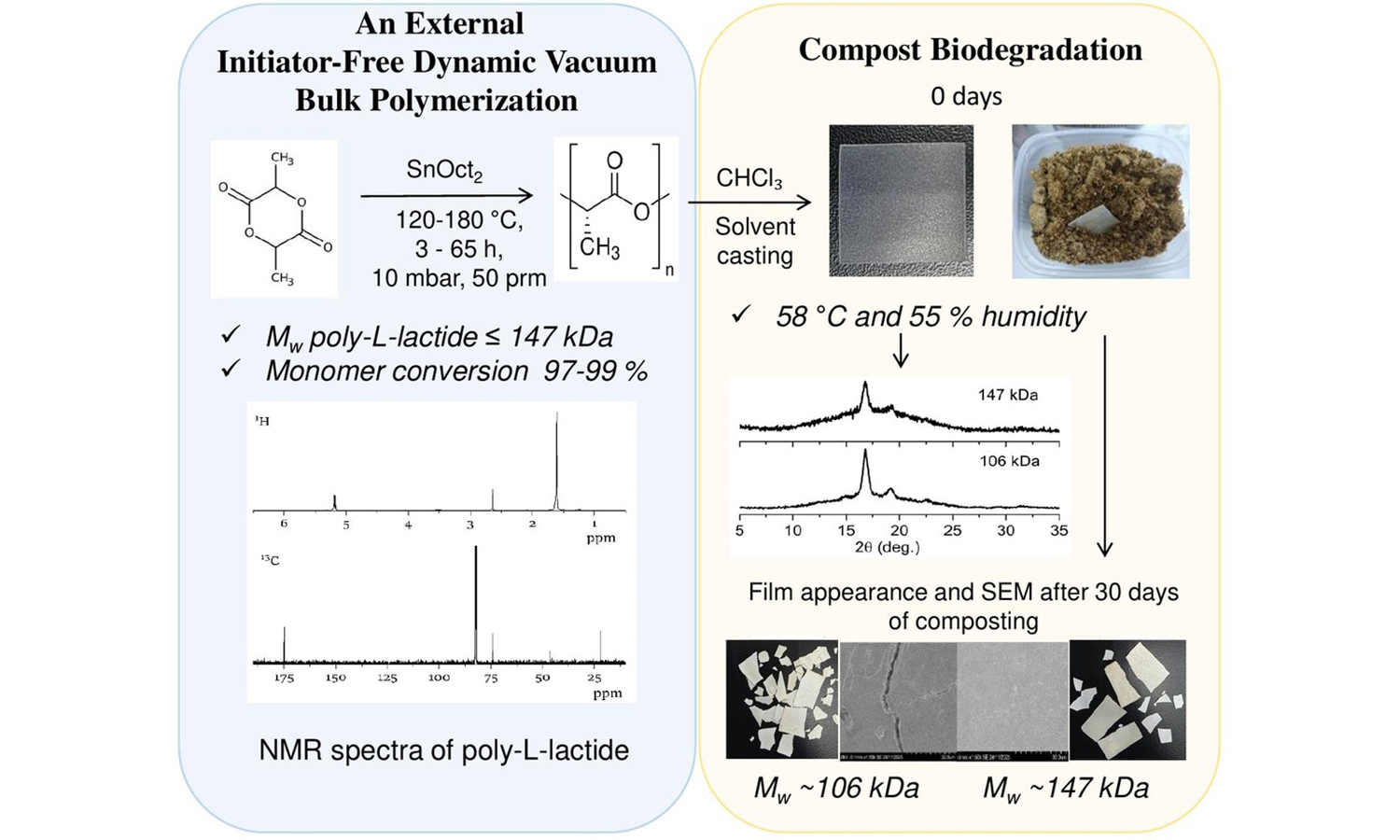
We successfully synthesized poly-L-lactide was via an advanced external initiator-free dynamic vacuum bulk polymerization technique, and achieved precise control of macromolecular weight up to 147 kDa with near-quantitative monomer conversion by varying reaction temperature and duration. Nuclear magnetic resonance spectroscopy confirmed that the stereoregular structure is predominantly preserved during the high-temperature synthesis, while any potential racemization pathways remain beneath the resolution limit of the analytical methods. Thermal analysis verified excellent polymer stability above 300 °C. To evaluate practical applicability, we fabricated solvent-cast films from the synthesized matrices. The tensile test results of the solvent-cast films showed that while the amorphous 147 kDa matrix reached a tensile strength of 28.0 MPa, the structurally optimized 106 kDa film had higher crystallinity (20.6%) and a maximum Young’s modulus of 3047 MPa. Finally, compost biodegradation experiments (58 °C, 55% moisture content) demonstrated that decreasing molecular weight from 147 to 66 kDa accelerates the disintegration rate of films from k = 0.0041 to 0.0083 day–1 due to autocatalytic carboxyl end-groups and defective interspherulitic boundaries.
Khmais Zdiri, Aurélie Cayla, Christine Campagne
Vol. 20., No.4., Pages 383-394, 2026
DOI: 10.3144/expresspolymlett.2026.30
Vol. 20., No.4., Pages 383-394, 2026
DOI: 10.3144/expresspolymlett.2026.30
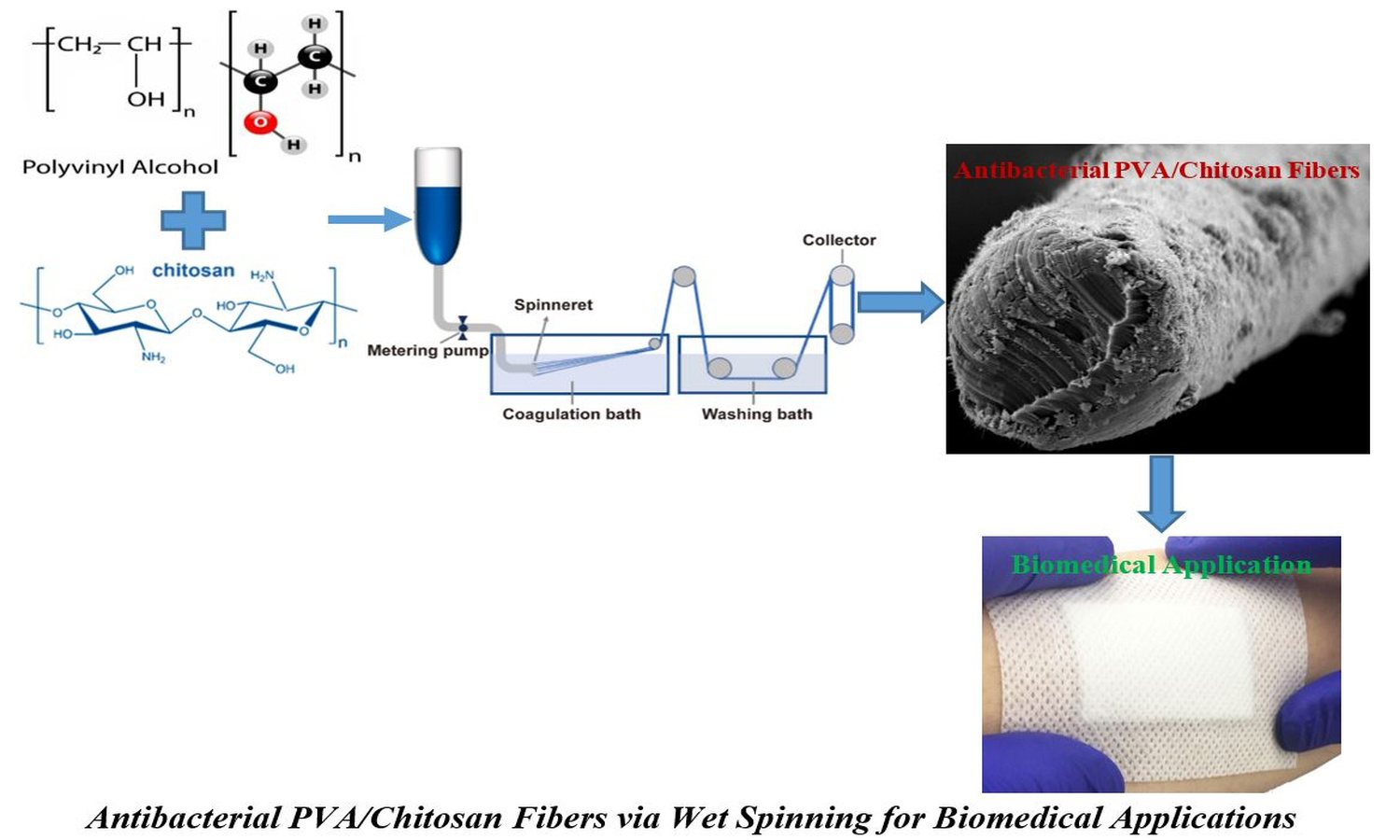
Growing interest in natural and eco-friendly materials has driven the search for sustainable alternatives to synthetic antimicrobial agents. This study aims to develop antibacterial fibers based on poly(vinyl alcohol) (PVA) reinforced with chitosan (CTS) using an environmentally friendly wet-spinning process. Morphological analysis revealed surface irregularities that increased with CTS content, confirming its effect on fiber microstructure. Thermal analyses by differential scanning calorimetry (DSC) and thermogravimetric analysis (TGA) showed that CTS incorporation decreased the melting temperature while improving thermal stability. Mechanical testing demonstrated enhanced tensile strength (σs) and Young’s modulus (E) due to strong intermolecular interactions between CTS and the PVA matrix. The highest σs (1045 MPa) was obtained at 3 wt% CTS, while E reached 7.1 GPa at 5 wt%. Antibacterial tests against Staphylococcus aureus and Escherichia coli confirmed strong activity attributed to –NH2 groups of CTS disrupting bacterial membranes. These results highlight the potential of PVA/CTS fibers for biomedical applications such as wound dressing and antibacterial materials.
Dam Xuan Thang, Tong Khanh Linh
Vol. 20., No.3., Pages 246-263, 2026
DOI: 10.3144/expresspolymlett.2026.20
Vol. 20., No.3., Pages 246-263, 2026
DOI: 10.3144/expresspolymlett.2026.20
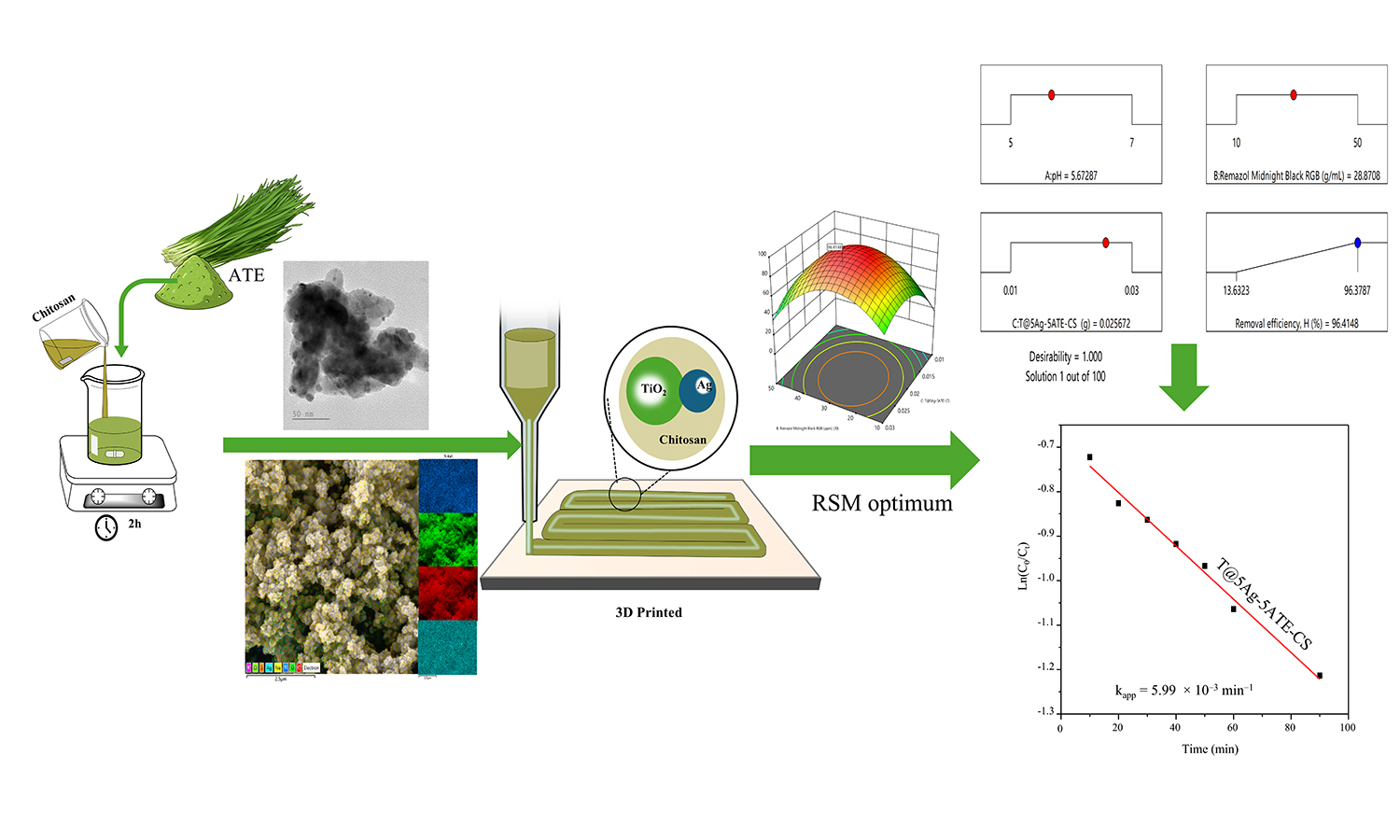
We report a green route to Ag–TiO2 nanocomposites using an Allium tuberosum extract, rich in organosulfur and polyphenolic constituents, as a dual-function biogenic reducer and stabilizer, enabling efficient Ag+→Ag0 conversion and capping of Ag–TiO2 without the use of harsh reagents. The nanocomposites are formulated into chitosan-based inks for direct ink writing (DIW) of porous, mechanically robust, reusable membranes (optimal formulation T@5Ag–5ATE–CS) with a homogeneous Ag dispersion. Multiscale characterization (SEM/TEM, XRD, FTIR, UV–vis DRS, EDS mapping) confirms metallic Ag0 uniformly decorating TiO2 and an extended visible-light response attributable to strong localized surface plasmon resonance. Under near-UV/visible irradiation, the membranes decolorize Remazol Midnight Black RGB dye with pseudo-first-order kinetics, yielding kapp up to 5.99·10–3 min–1 with R2 ≈ 0.99 and outperforming pristine TiO2. Response surface methodology identifies an optimum at pH 5.67, 28.87 mg·L–1 dye, and 0.0257 g catalyst, delivering a predicted 96.41% versus experimental 95.07% removal (validation error 1.39%) with excellent model statistics (R2 ≈ 0.995). The combined effects of Allium-tuberosum-assisted Ag plasmonics, TiO2 photocatalysis, and chitosan-enhanced adsorption underpin the high photocatalytic activity and reusability, highlighting a scalable, eco-friendly pathway to printable photocatalytic/antimicrobial membranes for wastewater treatment.
Cláudia Andréa Batista dos Santos, Bartłomiej Kryszak, Rafał Malinowski, Aleksandra Ujćič, Konrad Szustakiewicz
Vol. 20., No.3., Pages 264-278, 2026
DOI: 10.3144/expresspolymlett.2026.21
Vol. 20., No.3., Pages 264-278, 2026
DOI: 10.3144/expresspolymlett.2026.21
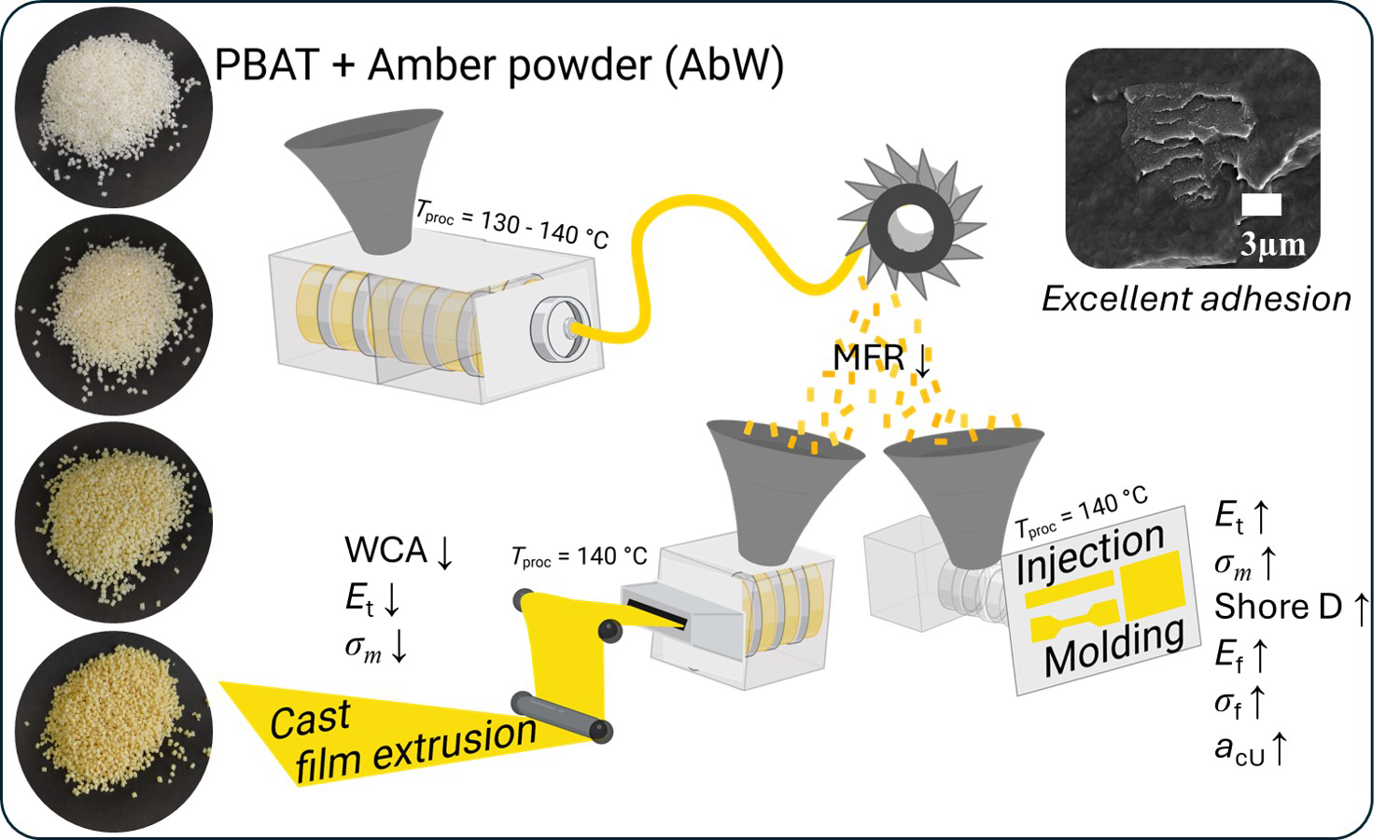
This study investigates the interaction between poly(butylene adipate-co-terephthalate) (PBAT) and amber powdered waste (AbW) from jewelry at different filler concentrations (0, 1, 2.5, and 5 wt%) obtained via melt mixing in a corotating twin screw extruder. The resulting materials were pelletized and processed using two techniques: 1) cast film extrusion and 2) injection molding. The shaped specimens exhibited excellent interfacial adhesion. Thermal behavior, as assessed by Vicat softening temperature (VST), differential scanning calorimetry (DSC), and thermogravimetric analysis (TGA), showed minimal variation among the composites. Despite similar melt flow rate (MFR) values among the samples, the incorporation of AbW affected the behavior of the polymer during cast film extrusion. Consequently, the composite films exhibited lower tensile mechanical parameters (tensile strength, Young’s modulus, stress and strain at break) compared to the neat PBAT film. In turn, the injection molded composites showed improved tensile, flexural, and impact parameters compared to their neat counterpart. Additionally, a slight decrease in water contact angle (WCA) suggested increased surface hydrophilicity of the extruded films. These findings demonstrate the potential of AbW as an additive for biopolymer composites with enhanced mechanical performance. The increased surface hydrophilicity is particularly relevant for applications targeting biocompatibility and biodegradability.