
Sustainability in the electronics industry: Recycling opportunities of printed circuit board waste
Dániel Gere , Tamás Bárány
, Tamás BárányVol. 19., No.6., Pages 554-555, 2025
DOI: 10.3144/expresspolymlett.2025.41
DOI: 10.3144/expresspolymlett.2025.41
Corresponding author: Tamás Bárány 
GRAPHICAL ABSTRACT
RELATED ARTICLES
Maja Csapó, József Gábor Kovács
Vol. 20., No.4., Pages 414-434, 2026
DOI: 10.3144/expresspolymlett.2026.32
Vol. 20., No.4., Pages 414-434, 2026
DOI: 10.3144/expresspolymlett.2026.32
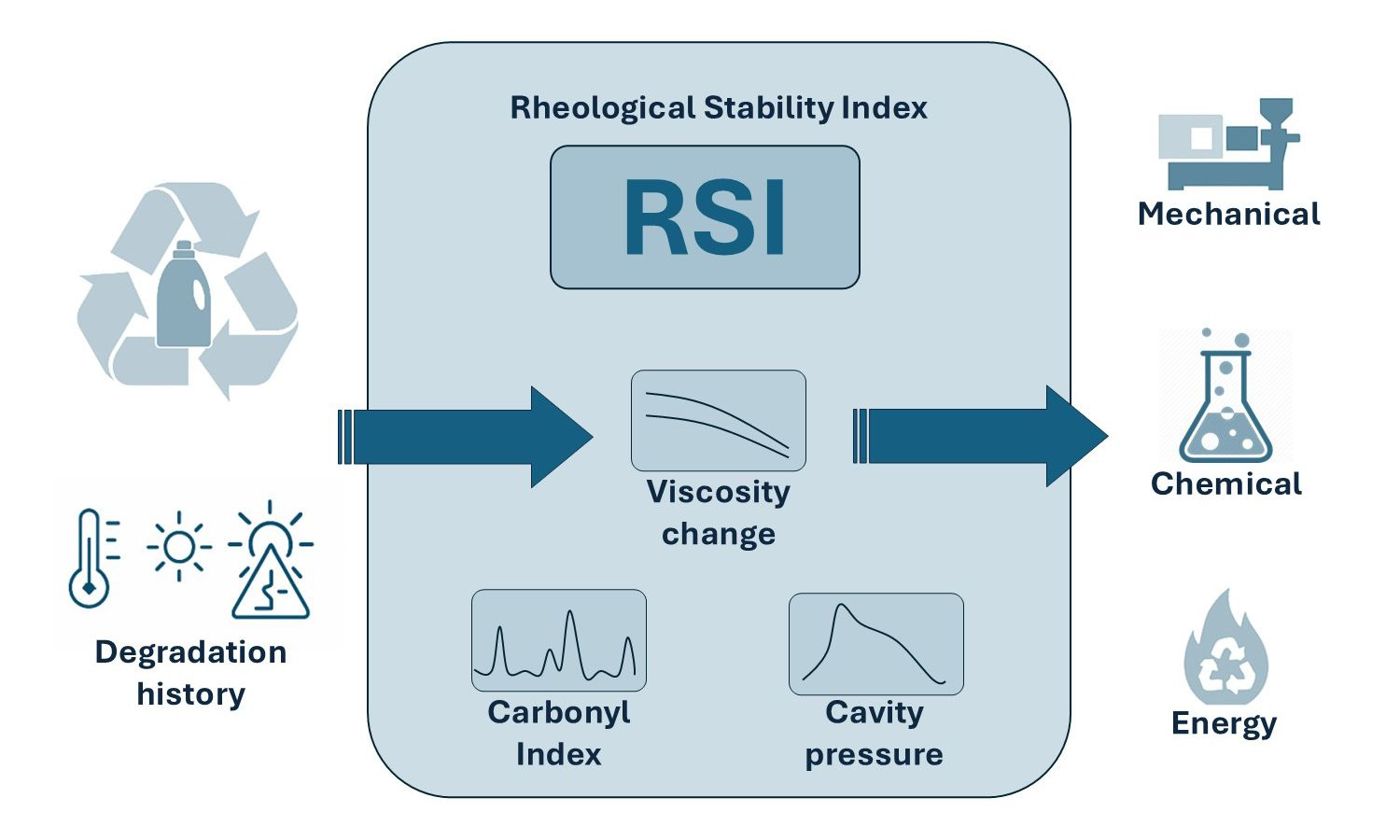
The greatest obstacle to recycling post-consumer high-density polyethylene (PCR-HDPE) is typically the degradation of properties caused by impurities and heterogeneity. However, a critical analysis of the literature reveals that the real bottleneck is not the material composition, but rather rheological stability, which simultaneously determines the degradation history of the waste stream, melt behavior, and processability at the cycle level. This review proposes a new perspective: the decision among mechanical, chemical, and energetic recycling is better made based on a unified rheological stability index (RSI), which integrates carbonyl index, viscosity change after multiple instances of melting, melt flow index (MFI) instability, in-mold pressure fluctuation, and the degree of polymer incompatibility. RSI enables the prediction of the processability of PCR-HDPE and identifies which recycling path a fraction is most suitable for. The study demonstrates how an RSI-based approach can reduce quality risk, improve cycle stability, and support circular decision-making in an industrial environment.
Joanna Smorawska-Kliza, Julia Habaj, Ewa Głowińska
Vol. 20., No.3., Pages 217-232, 2026
DOI: 10.3144/expresspolymlett.2026.18
Vol. 20., No.3., Pages 217-232, 2026
DOI: 10.3144/expresspolymlett.2026.18
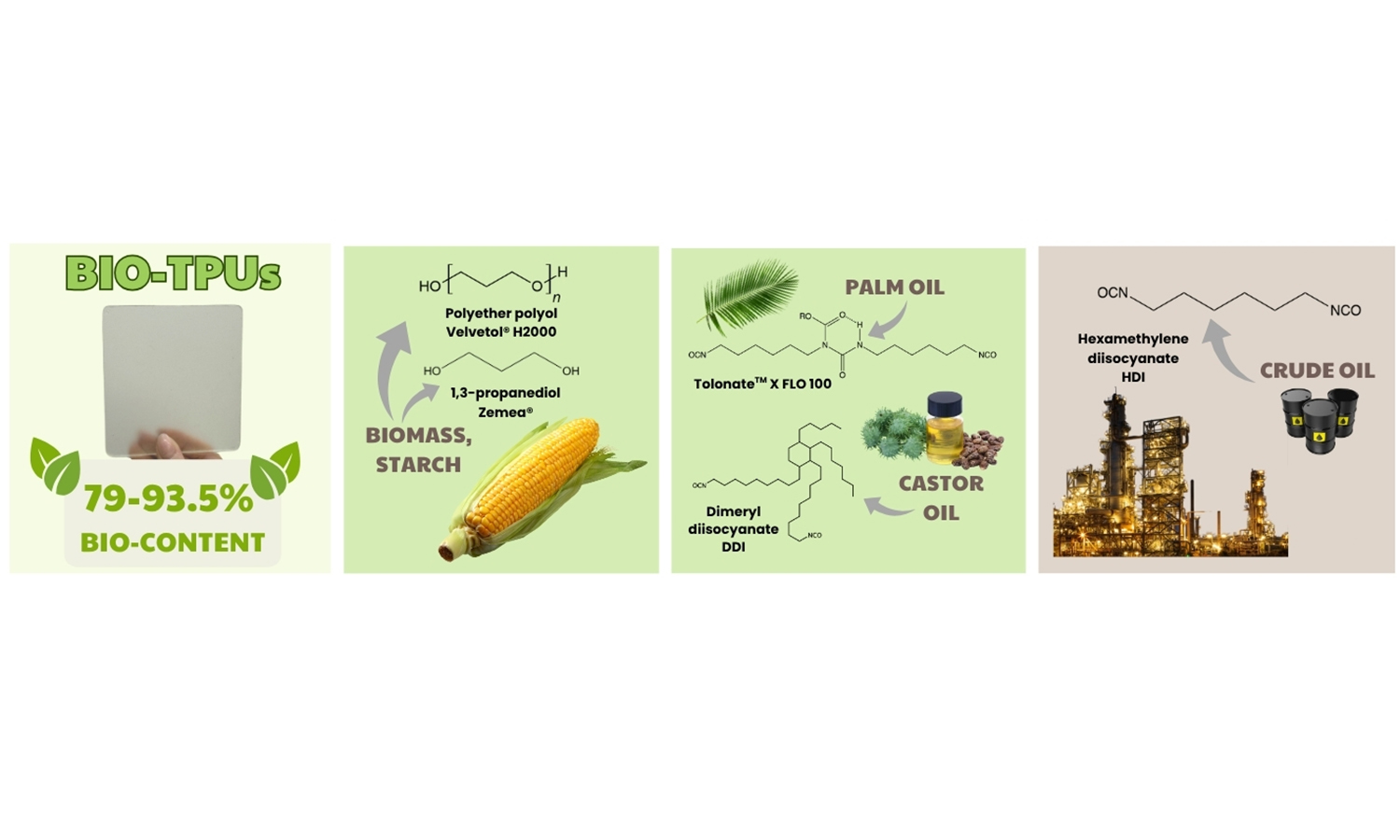
Modification of the hard segment structure in polyurethanes using isocyanate mixtures has emerged as one of the most effective strategies for developing new materials with enhanced properties and a high content of bio-based carbon. In this work, next-generation sustainable thermoplastic polyurethane elastomers (bio-TPUs) were synthesized using aliphatic isocyanate mixtures based on bio-derived diisocyanates Tolonate™ X FLO 100 and dimeryl diisocyanate (DDI) alongside hexamethylene diisocyanate (HDI). Poly(trimethylene ether) glycol (PO3G) and bio-based 1,3-propanediol served as renewable hydroxyl-terminated components. The bio-TPUs were prepared using the common ‘one-shot’ method. The resulting materials were analyzed to assess phase separation, morphology, as well as mechanical, thermal and thermomechanical properties. The results confirm the significant influence of the type of diisocyanate mixture on the properties of bio-TPU, improving their thermal stability (up to 300 °C) and reducing the melting temperature to 140 °C, which makes them suitable for low-temperature processing.
Sandra Paszkiewicz, Kamila Sałasińska, Zaida Ortega, Mateusz Barczewski, Jacek Andrzejewski, Konrad Walkowiak, Izabela Irska, Magdalena Jurczyk Kowalska, Anna Boczkowska, Marcin Borowicz, Joanna Paciorek-Sadowska, Elżbieta Piesowicz, Katarzyna Pokwicka-Croucher
Vol. 19., No.12., Pages 1286-1309, 2025
DOI: 10.3144/expresspolymlett.2025.95
Vol. 19., No.12., Pages 1286-1309, 2025
DOI: 10.3144/expresspolymlett.2025.95
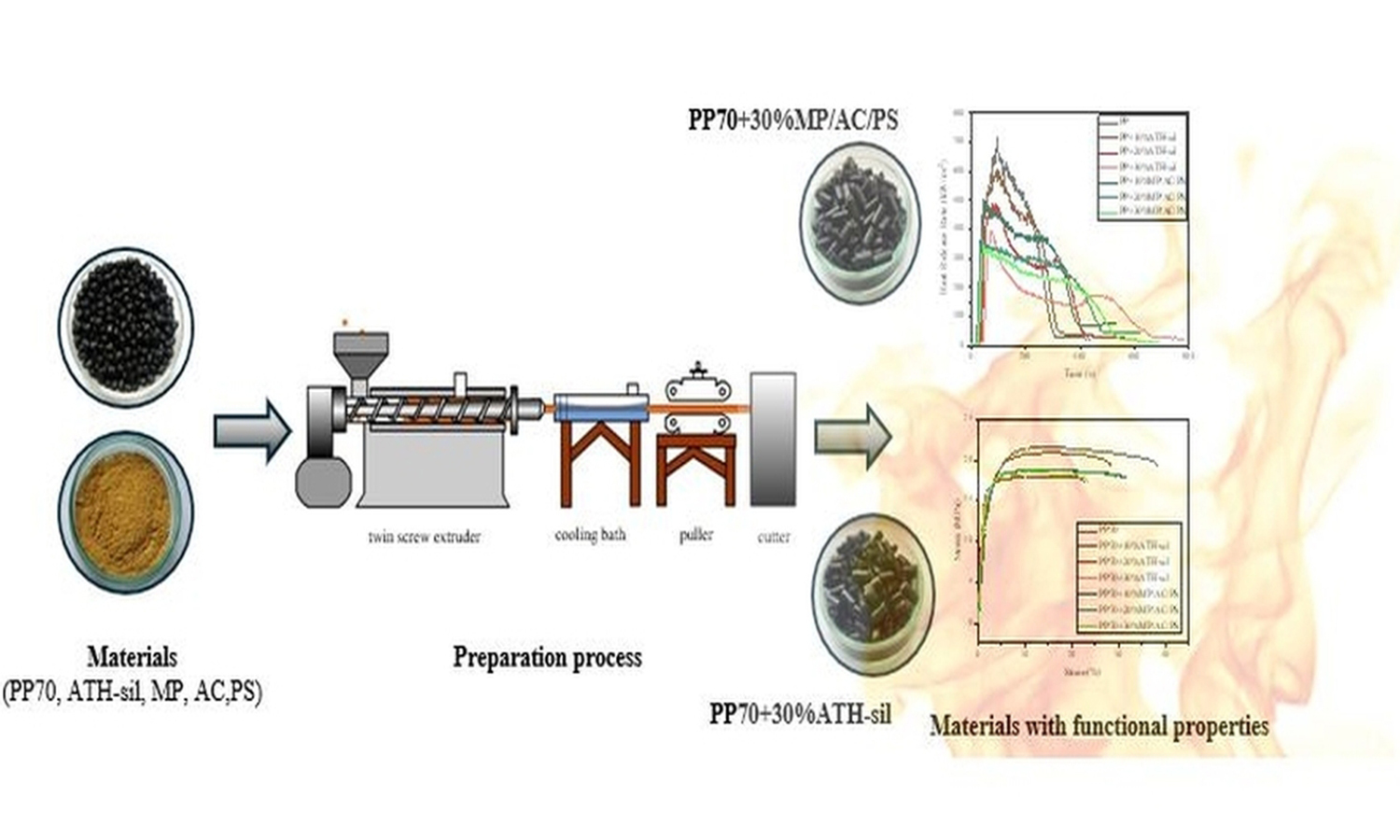
Two series of polymer blends based on post-consumer polypropylene (rPP) and tire rubber crumbs (Trc) under the trademark ECOPLASTOMER® PP70 with a mutual ratio of components 70/30 wt%, containing 10, 20, and 30 wt% of flame retardants, have been prepared using a twin-screw extruder. The influence of commercially available silane-treated alumina trihydrate (ATH-sil) with the eco-friendly system based on melamine phosphate (MP), aluminum hydroxide (AC), and peanut shells (PS), used as flame retardant agents, on the mechanical, thermal, and flammability properties of polymer blends was assessed – the incorporation of ATH-sil results in the appearance of peaks related to OH groups in the Fouriertransform infrared spectroscopy (FTIR) spectra. Similar observations are made for the MP/AC/PS system. differential scanning calorimetry (DSC) analysis revealed that using the selected flame retardants did not impact the melting and crystallization temperatures of the polymer. Tensile strength experienced a minor decrease, particularly in compositions containing more than 20 wt% of the flame retardants, while hardness remained unaffected by their share. Both flame retardants reduced the flammability of the modified polypropylene/rubber powder blends, and the most favorable outcomes were achieved with ATH-sil; however, only when employed at a minimum of 30 wt%. The formulated MP/AC/PS system proved more adept at reducing flammability and smoke emissions at lower flame retardant levels (up to 20 wt%).
Paulina Wiśniewska, Natalia A. Wójcik, Józef Haponiuk, Jacek Ryl, Henri Vahabi, Krzysztof Formela, Mohammad Reza Saeb
Vol. 19., No.9., Pages 878-892, 2025
DOI: 10.3144/expresspolymlett.2025.67
Vol. 19., No.9., Pages 878-892, 2025
DOI: 10.3144/expresspolymlett.2025.67
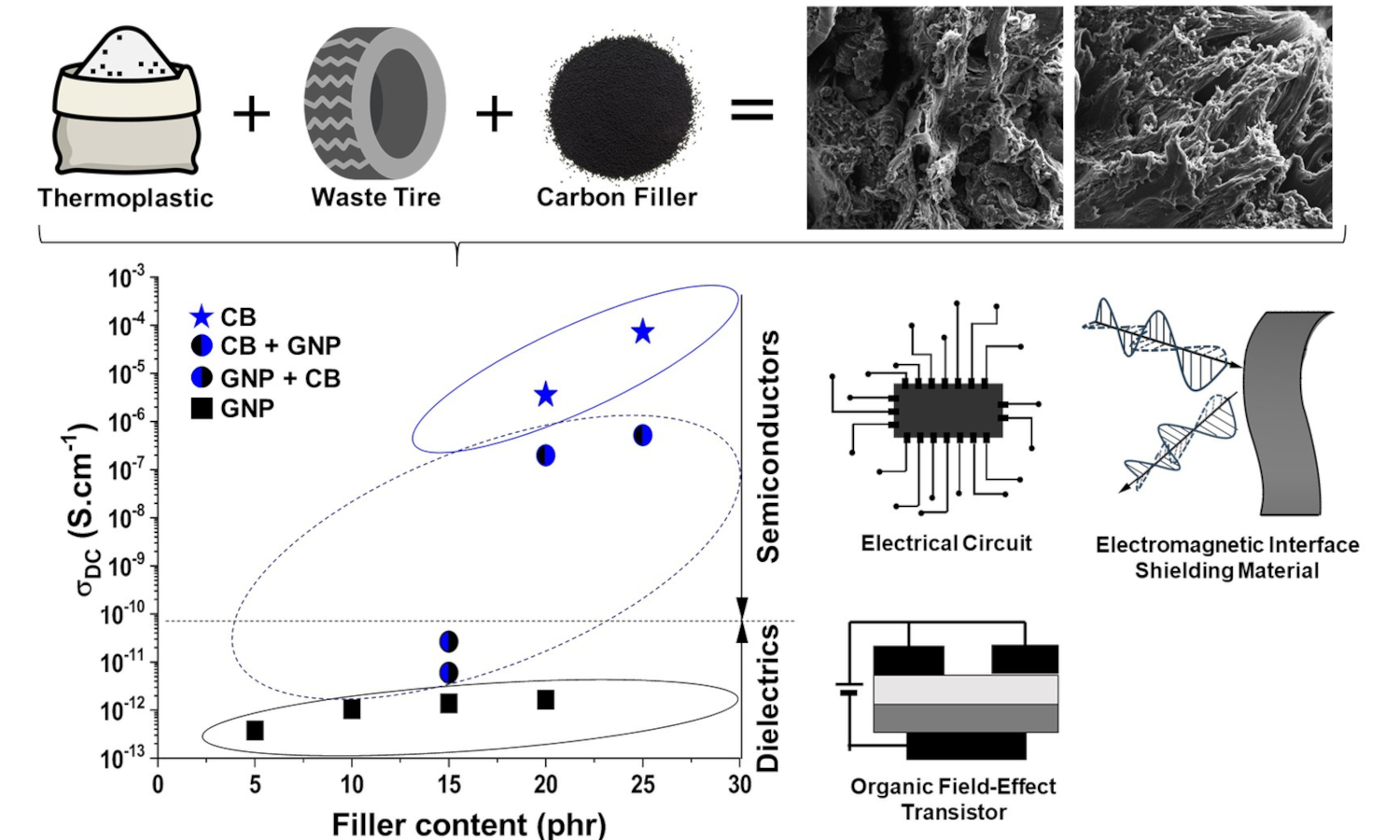
Waste rubber management through developing blends of thermoplastics with ground tire rubber (GTR) has gained significant attention for creating sustainable, high-performance materials with enhanced properties. In this work, we developed customized graphene/polymer nanocomposites applying GTR, ethylene-vinyl acetate copolymer (EVA), and graphene nanoplatelets (GNPs), taking carbon black (CB) as the reference additive. A wide range of electrical conductivity from 10–12 S/cm (dielectric) to 10–5 S/cm (semiconductor) was obtained for optimized composites containing GNPs and CB, respectively. Thermal, mechanical, and flame-retardant properties looked promising for additive manufacturing, while electrical conductivity was tailored for soft electronics. In view of processability, mechanical strength, and elasticity, GNPs-incorporated EVA/GTR composites showed an edge over their CB-aided counterparts. For example, tensile strength and elongation at break of EVA/GTR blends reinforced with 20 phr GNPs were 4.8 MPa and 681%, respectively, compared to 4.0 MPa and 651% for the composite comprising an identical amount of CB. Interestingly, combining GNPs and CB enhanced the thermal stability and flame retardancy of EVA/GTR compared to only GNPs or CB. These results were promising from both sustainability and advanced functional materials perspectives.
Katalin Bocz, Ferenc Ronkay
Vol. 19., No.9., Pages 860-861, 2025
DOI: 10.3144/expresspolymlett.2025.65
Vol. 19., No.9., Pages 860-861, 2025
DOI: 10.3144/expresspolymlett.2025.65
This is an editorial article. It has no abstract.