
Content
All issues / Volume 20 (2026) / Issue 6 (June)
Péter Tamás-Bényei, Andrea Kohári, Ákos Görbe, Lóránt Kiss, Katalin Litauszki, Ferenc Szabó, László Mészáros, Károly Renner, Tamás Bárány
Vol. 20., No.6., Pages 547-550, 2026
DOI: 10.3144/expresspolymlett.2026.41
Vol. 20., No.6., Pages 547-550, 2026
DOI: 10.3144/expresspolymlett.2026.41
This is an editorial article. It has no abstract.
Wu Qin, Rui Zhang, Long Zheng, Danling Wang, Sheng Chen, Huiming Ren, Shui Hu, Shipeng Wen
Vol. 20., No.6., Pages 551-562, 2026
DOI: 10.3144/expresspolymlett.2026.42
Vol. 20., No.6., Pages 551-562, 2026
DOI: 10.3144/expresspolymlett.2026.42
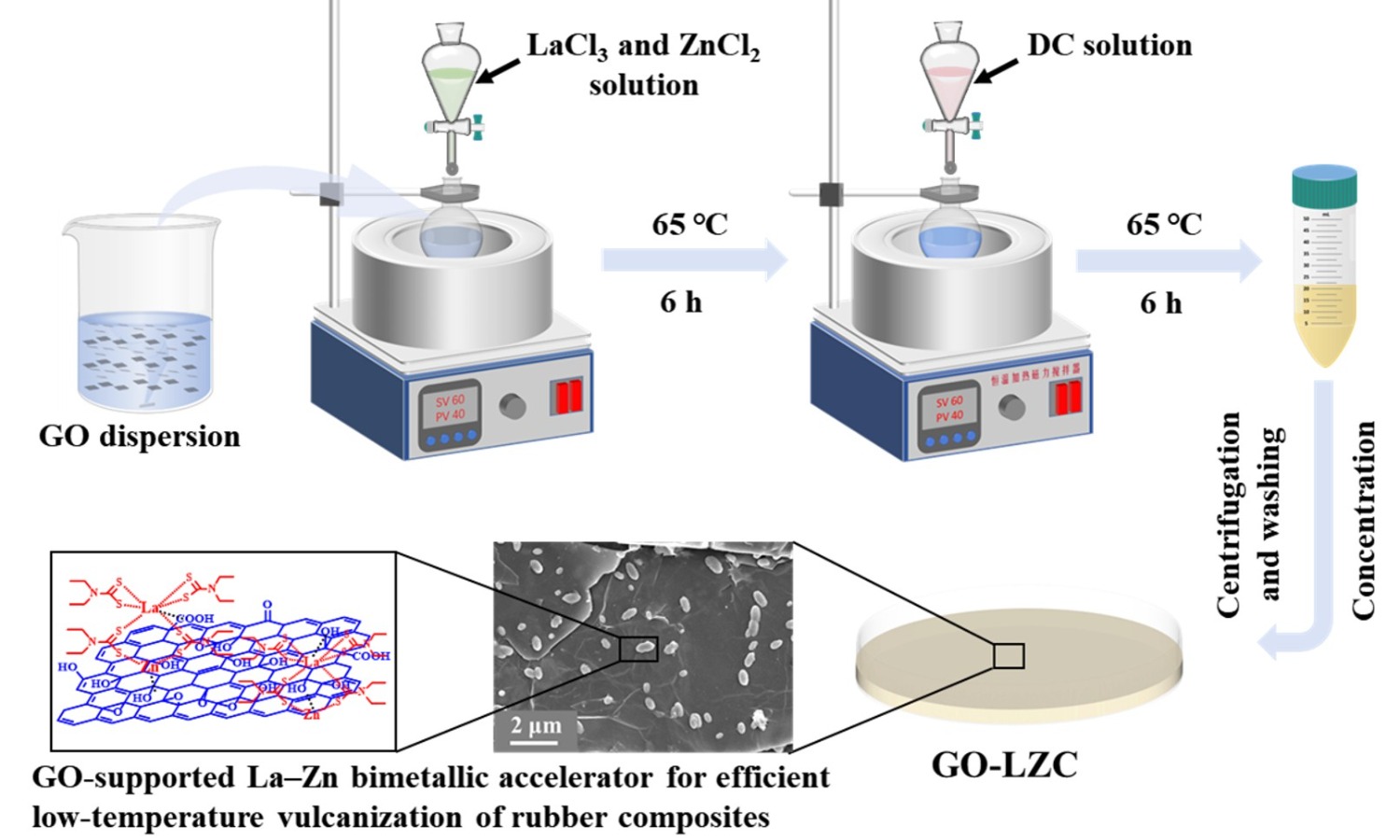
Conventional sulfur vulcanization in rubber manufacturing depends on elevated curing temperatures and zinc oxide activators, resulting in high energy consumption and increasing environmental concerns associated with zinc release. To overcome these limitations, a novel graphene oxide (GO)-supported rare-earth-containing accelerator (GO–LZC) was designed by coordinating lanthanum(III) and zinc(II) ions with sodium diethyldithiocarbamate (DC). At the same time, the oxygen-containing groups on GO further participated in ligand coordination. The resulting GO-immobilized complex exhibits a well-defined chelating structure and uniform nanoscale dispersion, which together enhance the accessibility and reactivity of active sulfurating species during curing. When incorporated into solution-polymerized styrene–butadiene rubber (SSBR), GO–LZC markedly promotes crosslink formation at reduced thermal input. Kinetic analysis reveals a substantial decrease in the apparent activation energy, and curing and mechanical tests confirm that efficient vulcanization can be achieved at 130 °C, representing a 20–40 °C reduction relative to typical industrial curing conditions. This work demonstrates a viable strategy for developing low-zinc, energy-efficient, and high-performance vulcanization systems. It highlights the potential of rare-earth/GO hybrid catalysts for sustainable rubber processing.
Yarledis Hurtado-Henao, Adriana Blanco-Leal, Nicole Butto, Andrónico Neira-Carrillo, Francisco Gracia, Omar D. Gutiérrez, María Elena Moncada-Acevedo, Estefanía Correa-Muñoz
Vol. 20., No.6., Pages 563-578, 2026
DOI: 10.3144/expresspolymlett.2026.43
Vol. 20., No.6., Pages 563-578, 2026
DOI: 10.3144/expresspolymlett.2026.43
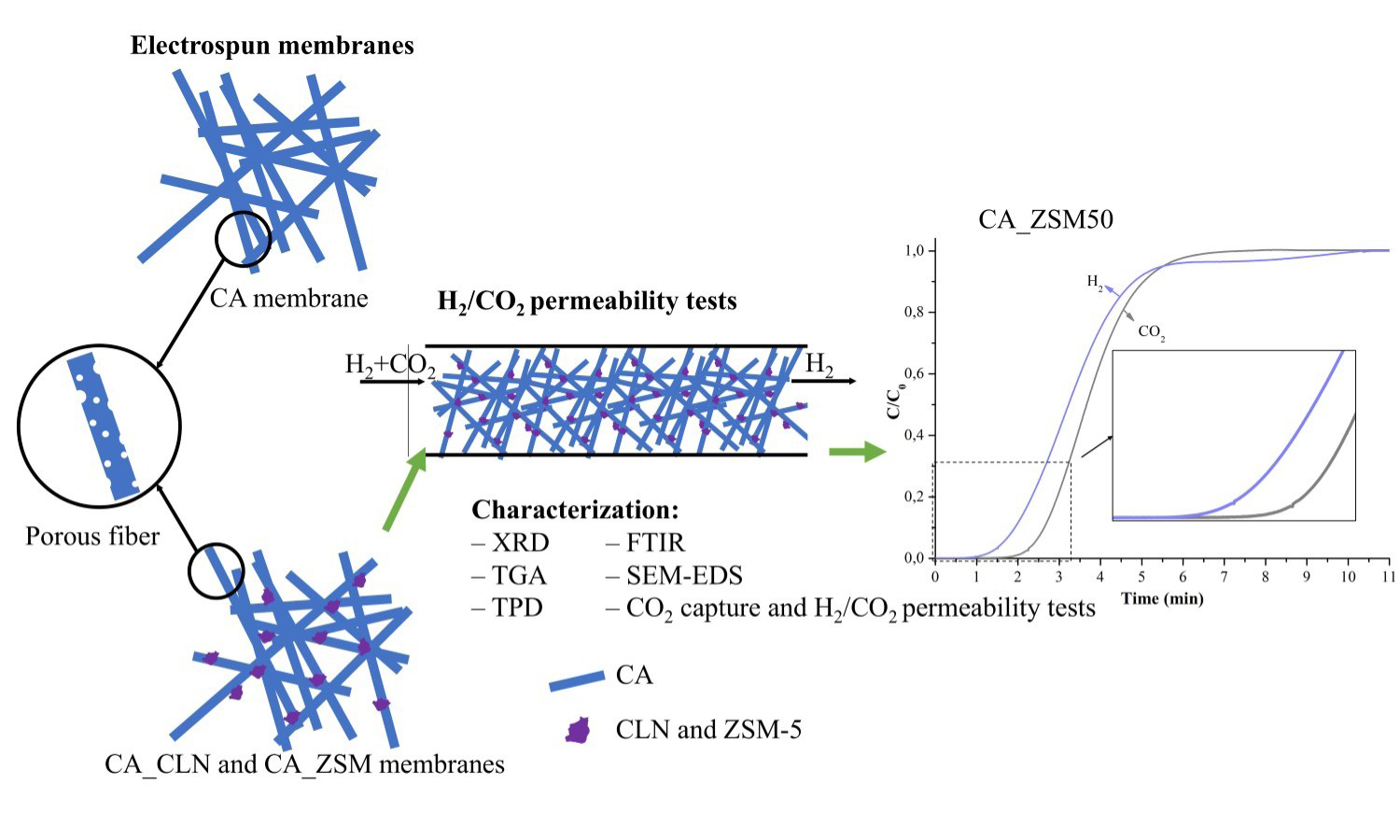
The increasing release of greenhouse gases (GHGs), particularly CO2, continues to drive global warming and highlights the need for effective mitigation technologies. In this study, porous nanostructured cellulose acetate (CA) fibrous mats were fabricated via electrospinning and integrated with natural clinoptilolite (CLN) and synthetic ZSM-5 zeolites to improve CO2 capture. Physicochemical characterization, elemental analysis, FTIR, XRD, SEM–EDS, and TGA confirmed the incorporation of zeolitic fillers and revealed their influence on fiber structure and thermal stability. We conducted CO2 adsorption and H2/CO2 permeability tests to assess the feasibility of the electrospun fibrous mats for pre-combustion hydrogen purification. CA/ZSM-5 fibrous mats showed enhanced fiber uniformity, improved thermal stability, and superior CO2 adsorption and H2 separation performance, whereas CA/CLN fibrous mats exhibited good CO2 capture but limited hydrogen selectivity. These results demonstrate that zeolite type governs the structural and functional behavior of electrospun CA hybrid fibrous mats, offering insights for developing sustainable materials for gas separation.
Anna Morawska-Chochół, João Gabriel Antoniazzi, Murilo Daniel de Mello Innocentini
Vol. 20., No.6., Pages 579-593, 2026
DOI: 10.3144/expresspolymlett.2026.44
Vol. 20., No.6., Pages 579-593, 2026
DOI: 10.3144/expresspolymlett.2026.44
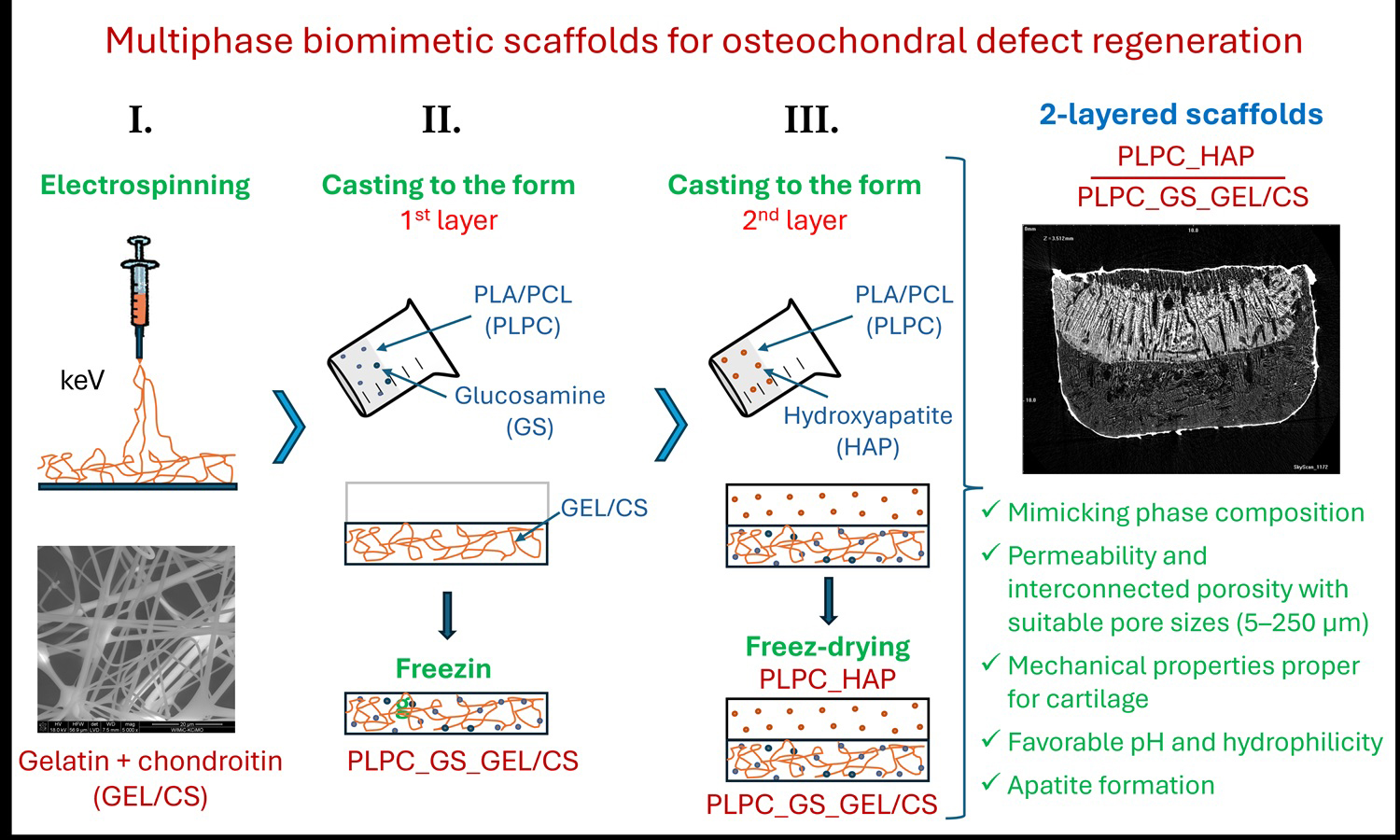
This study reports the fabrication and evaluation of layered scaffolds based on polylactide/polycaprolactone (PLPC) matrices for osteochondral-inspired designs. Bilayer architectures comprised a bone-facing layer with mineral phase (PLPC containing hydroxyapatite, HAP) and a cartilage-facing layer (PLPC containing only glucosamine sulfate (GS) or with simultaneous use of GS and an integrated electrospun gelatin/chondroitin sulfate (GEL/CS) fabric). The scaffolds exhibited interconnected porosity (55–60%) with a pore-size gradient (5–250 μm). Mechanical testing showed compressive strength up to 1 MPa and a layer-dependent compressive modulus, remaining within ranges reported for osteochondral tissues after six weeks of incubation. The layered configuration provided controlled GS release and reduced incubation-induced acidification; FTIR/XRD confirmed apatite precipitation in phosphate-buffered saline (PBS), enhanced when the GEL/CS fabric was present. After incubation, surface wettability shifted toward increased hydrophilicity, and permeability was modulated by scaffold composition, indicating tunable fluid-transport behavior. Overall, spatial separation of additives combined with a fibrous GEL/CS modifier enables control over mechanical response, release/medium evolution during incubation, and in vitro apatite-forming ability in PBS in a bilayer PLPC scaffold system.
Anthony Allen Parker, Joseph John Marcinko
Vol. 20., No.6., Pages 594-616, 2026
DOI: 10.3144/expresspolymlett.2026.45
Vol. 20., No.6., Pages 594-616, 2026
DOI: 10.3144/expresspolymlett.2026.45
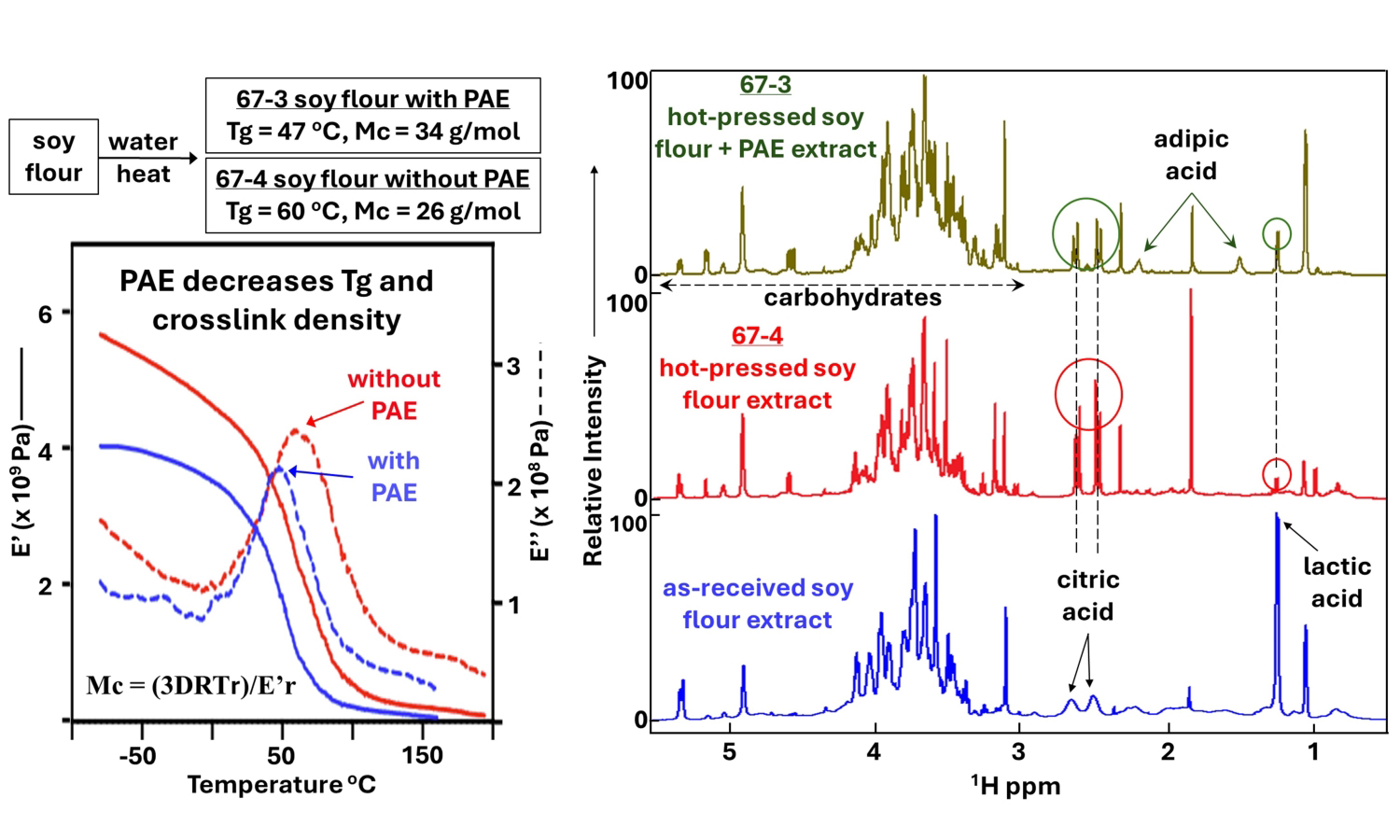
We used dynamic mechanical analysis (DMA) to evaluate soy flour adhesives made with and without a conventional crosslinking agent, polyamideamine-epichlorohydrin (PAE). Fixed-frequency and constant strain rate studies revealed that PAE contributes to a decrease in glass transition temperature (Tg), an increase in toughness, and a decrease in both the rubbery plateau modulus and onset temperature, consistent with plasticization. Fourier transform infrared spectroscopy (FTIR) and nuclear magnetic resonance (NMR) studies of water-soluble extracts from pre-cured soy flour revealed the presence of polypeptides with exchangeable protons, carbohydrates, citric acid and lactic acid. Deuterium exchange studies showed that the protonated peptides were no longer water-soluble after cure. Instead, post-cure extracts contained heat-modified carbohydrates and carboxylic acids, together with adipic acid when PAE was employed. These results are consistent with a mechanism whereby PAE not only undergoes hydrolysis and chain scission, but also competitively co-reacts with peptides and carboxylic acids to yield a plasticized chain-extended network with decreased crosslink density, counter to its anticipated function. The implications of these findings as they pertain to moisture resistance and wood adhesion will be discussed.
Minghao Chen, Bin Wang, Sisi Wang, Xiping Li
Vol. 20., No.6., Pages 617-628, 2026
DOI: 10.3144/expresspolymlett.2026.46
Vol. 20., No.6., Pages 617-628, 2026
DOI: 10.3144/expresspolymlett.2026.46
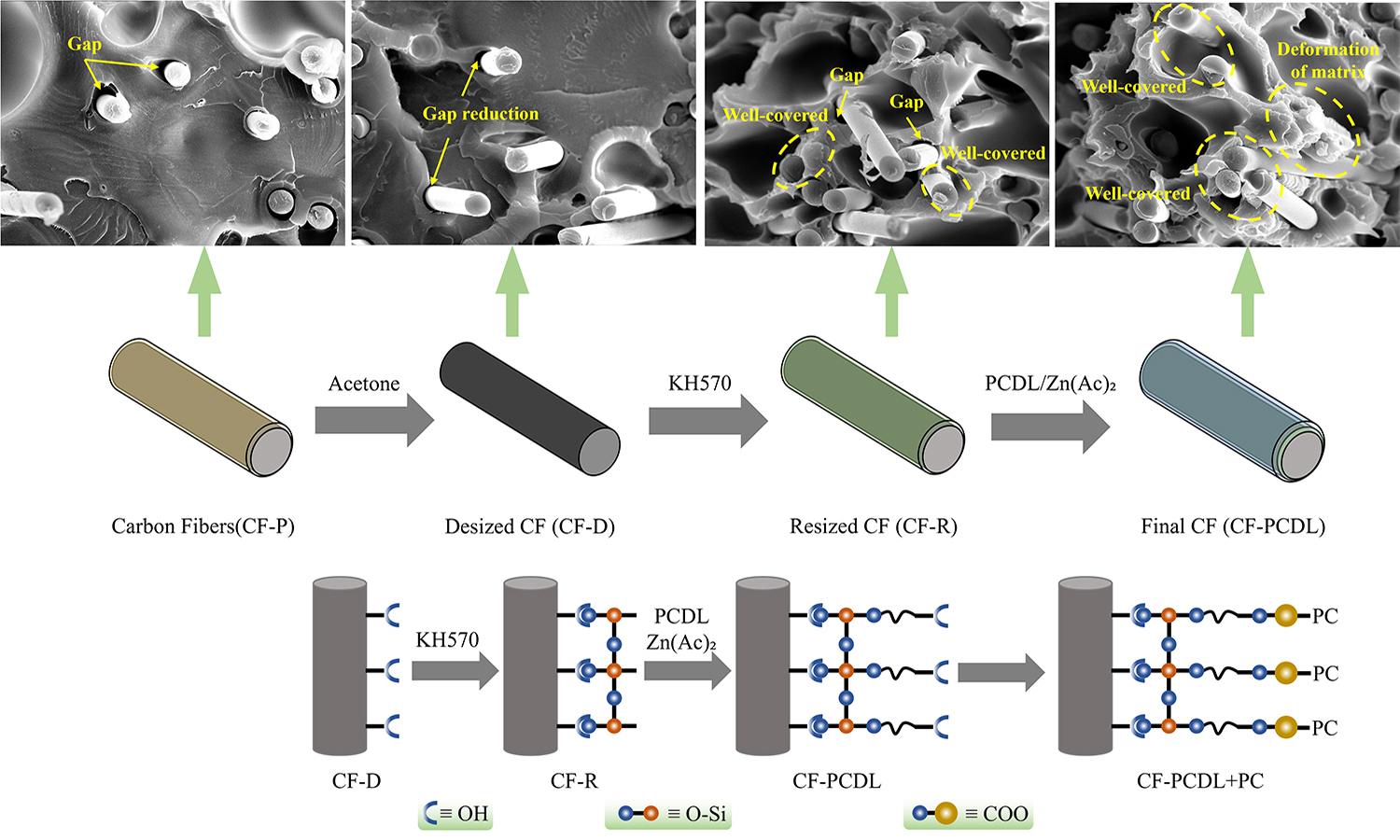
Enhancing the interfacial bonding performance between carbon fibers (CF) and thermoplastic resins is extensively researched. In this study, we propose a novel method for the synergistic surface modification of carbon fibers using a silane coupling agent and poly-carbonate diol (PCDL), which significantly improves the interfacial compatibility between CF and polycarbonate (PC). Scanning electron microscopy (SEM), Fourier-transform infrared spectroscopy (FTIR), and X-ray photoelectron spectroscopy (XPS) confirmed the successful grafting of silane onto the surface of CF and subsequent PCDL sizing. Mechanical characterization showed that the modified carbon fiber composites exhibited a 47.3% increase in interlaminar shear strength (ILSS) relative to the unmodified system. Notably, with a loading of 10 wt%, the modified fibers improved the tensile strength, flexural strength, and notched impact toughness by 36.2, 38.5, and 39.6%, respectively. The impact fracture surfaces exhibited typical characteristics of ductile fracture, with a dense and gap-free interfacial layer forming between the fiber and the matrix, indicating that the efficiency of stress transfer was effectively enhanced. The findings of this study are expected to provide a valuable technical reference for the fabrication of carbon fiber–reinforced thermoplastic composites.
Aswathy Sasidharan Pillai, Peter Polyak, Gabor Kaszas, Judit E. Puskas
Vol. 20., No.6., Pages 629-636, 2026
DOI: 10.3144/expresspolymlett.2026.47
Vol. 20., No.6., Pages 629-636, 2026
DOI: 10.3144/expresspolymlett.2026.47
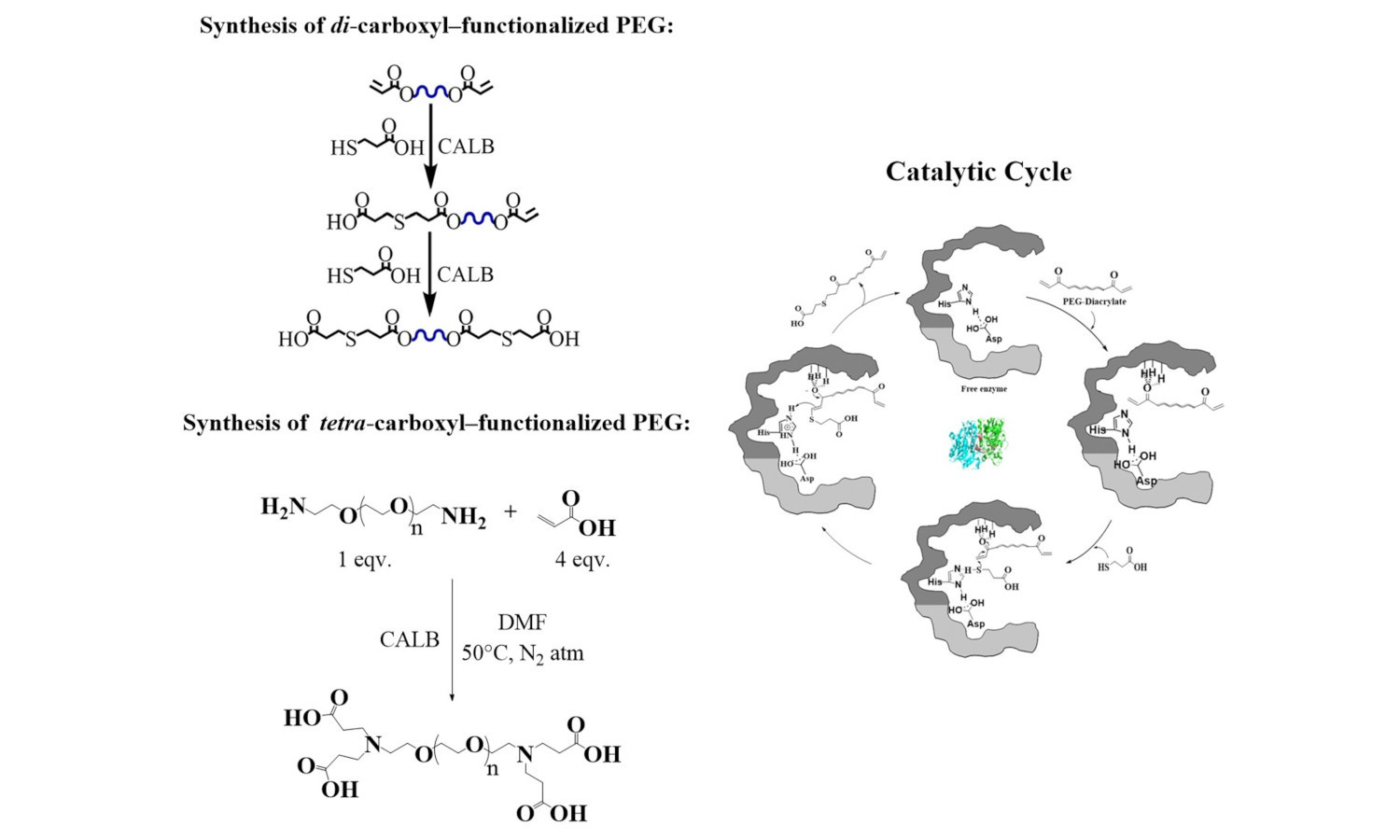
In this study, we present an effective chemo-enzymatic method for synthesizing di- and tetra-carboxyl–functionalized poly(ethylene glycol)s (PEGs) using Candida antarctica lipase B (CALB). PEG-diacid was synthesized through CALB-catalyzed Michael addition of 3-mercaptopropionic acid (3-MPA) to PEG-diacrylate. We found that the reactions proceeded in a stepwise manner, first producing monoacid. The synthesis of diacid required additional fresh CALB and 3-MPA. The structure of the products was confirmed by 800 MHz 1H NMR. PEG-tetraacid was synthesized in a single step via CALB-catalyzed Michael addition of acrylic acid to PEG-diamine. In both cases, the CALB-Catalyzed Michael addition reactions effectively produced carboxyl-functionalized PEGs.
Germán Pérez-Llanos, Anyi Jin, Omid Yousefzade, Luis J. del Valle, Jordi Puiggalí
Vol. 20., No.6., Pages 637-661, 2026
DOI: 10.3144/expresspolymlett.2026.48
Vol. 20., No.6., Pages 637-661, 2026
DOI: 10.3144/expresspolymlett.2026.48
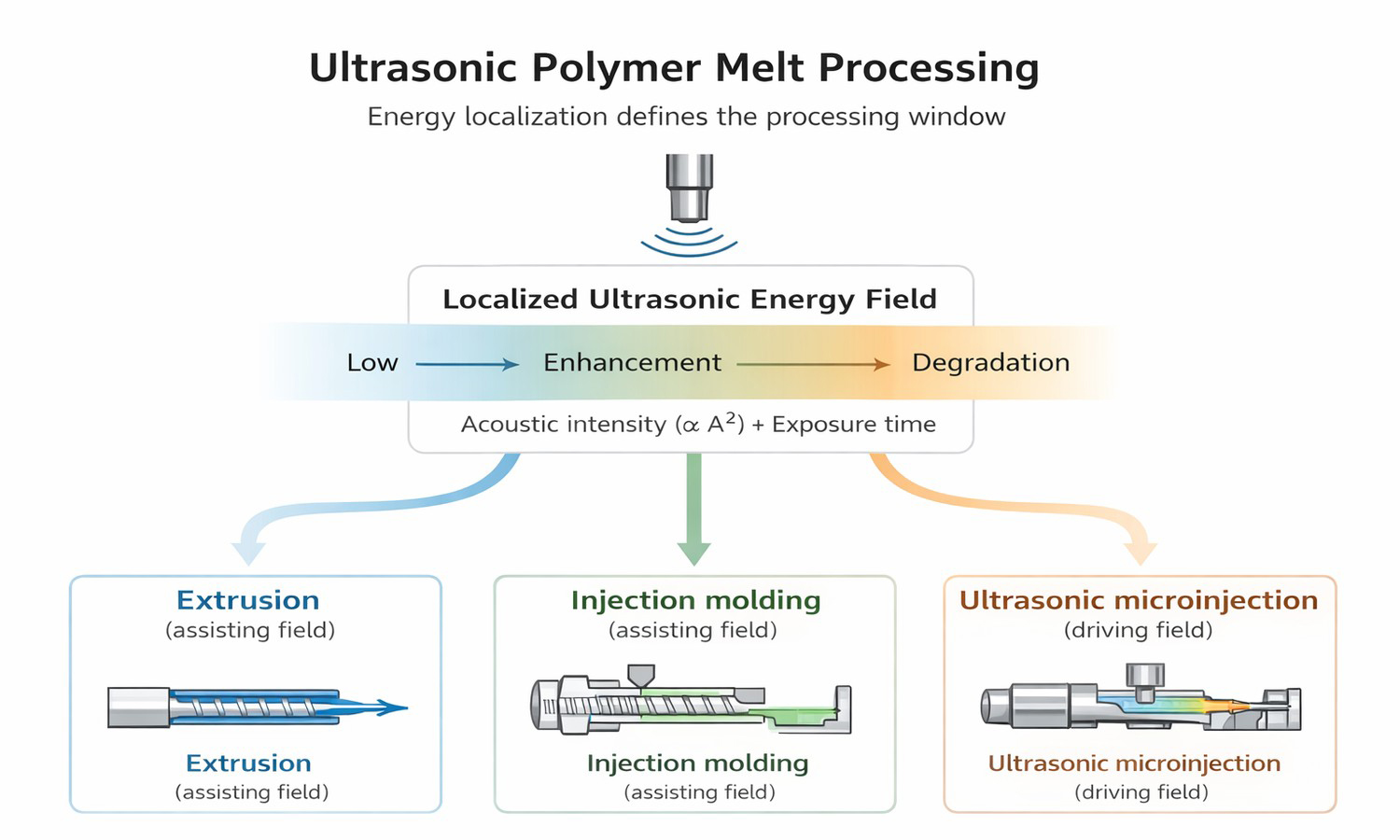
The integration of ultrasonic energy into polymer melt processing enables control of melt-state dynamics and microstructure evolution in thermoplastic systems. By superimposing high-frequency mechanical vibrations onto conventional thermal and shear fields – or directly driving polymer plastification – ultrasound can induce transient viscosity reduction in many polymer systems, depending on material characteristics and processing conditions, improve filler dispersion, influence crystallization behavior and enhance flow stability under controlled conditions. This review presents a critical assessment of ultrasonic technologies in extrusion, injection molding and ultrasonic microinjection molding. Fundamental ultrasonic–polymer interactions – including oscillatory shear, viscoelastic dissipation and localized heating – are examined in relation to processing configuration and material response. Emphasis is placed on acoustic intensity, exposure time and energy localization in defining a processing window separating reversible rheological enhancement from irreversible molecular degradation. Across processing routes, ultrasonic activation can improve cavity filling, suppress melt fracture, refine morphology and facilitate nanocomposite processing and recycling. However, challenges related to spatial energy heterogeneity, scalability and industrial integration remain. Ultrasonic technologies should be regarded as energy-localized tools capable of expanding controllable processing windows when properly optimized.